Dave Pollard's environmental philosophy, creative works, business papers and essays.
In search of a better way to live and make a living, and a better understanding of how the world really works.


June 20, 2006

What I Regret Most

Filed under: Our Culture / Ourselves — Dave Pollard @ 13:21
selfesteemparadox
Ask a person what she or he regrets most and you’ll probably learn more about them than you could from asking any other question. Many of us are defined, not by what we’ve done, but what we wish we’d done, or not done.

If the response to this question is mostly regrets about things that are outside their control — like not being born rich or beautiful or in another century, you’re probably talking to someone who makes excuses. If they’re mostly regrets about things not done, you’re probably talking to someone with low self-esteem, someone who doesn’t like themselves very much. If they’re mostly regrets about not working harder, you’re probably talking to someone who isn’t very honest with themselves!

Regrets about things not done and about things done are really two sides of the same coin. You only have so much time in your life, and so many choices, and to the extent you choose to do something you also choose not to do something else. My initial list of ‘What I Regret Most’ was almost entirely things I hadn’t done, and then I realized I could re-word each of them into a regret about what I did instead.

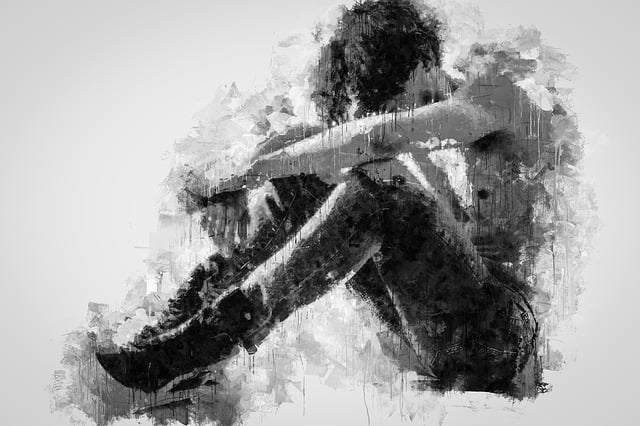
The extent to which self-esteem plays into our regrets is fascinating, but also, as the graphic above shows, a little paradoxical. It is almost as if nature furnished us with a self-regulatory ego, to keep us from getting either too full of  ourselves or too down on ourselves.

In listing your regrets, you need to follow one ground-rule. You can only list things you had (or now have) some control over. You may regret not winning the lottery, or that some celebrity you never met didn’t fall in love with you, or that Bill Gates or Bill Clinton didn’t pick you as his successor (or in my case, that I am shy, insensitive and a slow learner), but this is the stuff of daydreams, not regrets. If you confuse the two you will be a very unhappy person. There must be something you can do now that will make up for past wasted time or ignorance or foolishness, and rectify or alleviate or at least mitigate your regret. If it simply might have been, it’s not a regret, it’s a fiction.

In the interests of self-disclosure, of helping my readers to know a little bit more about me, as a self-prompt at this critical juncture in my life, and as a thought-provoker for updating my About the Author bio that you’ll find in the right sidebar, I thought I’d make a list of the ten things in my life I regret most. Here, in rough order of how much I regret these things, is the list:

  1. Buying Into Wage Slavery Instead of Living Simpler: I spent over 60% (an average of ten hours a day) of my waking hours for over 60% (thirty years) of my adult life doing meaningless work, and tasks (commuting, driving the kids to the baby-sitter etc.) required by that meaningless work. I had no model of any other way to live, so this was a failure of imagination. In the 1950s and 1960s where I grew up everyone was a wage slave. I rebelled, as most of us did in the 1960s, but when I got hungry and scared it was so easy to fall into the same pattern. You get wage increases, promotions, get a bigger house with a bigger mortgage that costs more to look after, and you set yourself up to have to maintain a certain material standard of living and level of financial ‘security’. That standard is also meaningless, and that security is illusory, but it is highly addictive and tightly tied up with how you are perceived by others, and hence with your self-esteem. Once you’ve been seduced from the Edge to the Centre of the System, they’ve gotcha.
  2. Not Making More Friends and Lovers: When I was young I was shy and when I got older I became jaded and picky about the company I chose. There were two brief windows, in the 1960s and later in the 1970s, when I opened up, and those were the happiest times of my life. They were the times I loved, and ached, without limit. They were times when I accepted and loved people for what they were, when my damned judging of people and my damned idealism didn’t get in the way of getting really close to people. I remember caring about friends so deeply that I rejoiced over their successes and cried over their misfortunes as profoundly as if they were my own. I remember a young lady who believed in spending every available minute of every day making love, and I remember the sheer joy of just spending time with her, until her intensity and polyamory openness scared me away.
  3. Not Loving Myself More and Not Looking After Myself Better: I’ve spent much of my life as my own worst critic, beating myself up for not doing anything about things that were way outside my control, never giving myself a break. I am in good physical condition now, but for most of my life I have not been, and as a consequence spent much of my life unnecessarily exhausted and depressed. I still have not learned to meditate. I still have not learned yoga, or any other technique to get in touch with my body. For most of my life I ate badly, and I still have not learned to cook well for myself. It is as if I have been an observer of my own life rather than a participant. And a hyper-critical observer at that. As Joni Mitchell put it, “I’ve spent my whole life in clouds at icy altitudes.” Fear will do that to you.
  4. Not Spending More Time in Wilderness, in Nature, with Animals and in Play: You can’t reconnect with Gaia, with the natural world, with your senses and your instincts, until and unless you’re comfortable with that world, and that takes some experience and practice. I haven’t had nearly enough practice. And animals can show us how to love. And both animals and children can show us how to really play, where it isn’t about winning, it’s about imagination and being real, here, now, in the moment.
  5. Spending Too Much Time on Information and Entertainment Activities that Don’t Matter: Reading, watching and listening to stuff that is not important, not especially interesting, and not actionable. Why do I do this? Because it’s easy, and comfortable. We do what we must, then we do what’s easy, then we do what’s fun. All the time spent in school and university studying things that don’t matter. Almost all the time spent watching TV, and reading newspapers, and reading stuff online. Wasted, because after doing what had to be done I rewarded myself by doing what was easy and fun. Instead of realizing that much of what I thought had to be done didn’t really have to be done.
  6. Getting Angry or Upset With Others, or Over Events Over Which I Had No Control: Not only did this sometimes hurt people I loved, it accomplished nothing except to make me, and others, unhappy.
  7. Eating Meat: My single greatest, and most easily avoided, contribution to the suffering of, and our society’s continued cruelty to, animals.
  8. Not Creating a Natural Enterprise With Others: Since I stopped being a wage slave, I have mostly tried to make a living as a sole proprietor. Understandable, but foolish — the chances of success, and the joys of success, are much higher when you create a more substantial business in partnership with others with complementary skills.
  9. Wearing Clothes: Nudity forces you to do several useful and important things: Not take yourself (or others) too seriously, be aware of and look after your body, realize that fashions (of all kinds) are irrelevant, and be more open, more honest, more sensitive, more human (i.e. more animal), more yourself.
  10. Not Learning to Be More Self-Sufficient: I have used my lack of manual dexterity and coordination skills as an excuse for not learning a host of critical life skills that would make me more attentive, more creative and more self-sufficient – learning to make and fix things, to draw, to dance, to live in the woods. If most of the world suffers from Learned Helplessness, mine is, ironically, self-imposed.

Things happen the way they do for a reason, and there is a perfectly reasonable explanation why I did, or failed to do, the things that I now regret doing or not doing. There is no going back, and grieving about the past is futile and self-destructive. I became a wage-slave (regret #1) instead of creating a natural enterprise with others (regret #8) because, at the time, I didn’t know better. As a result of that I was too tired and disheartened to take good care of myself (regret #3), or to spend time in nature (regret #4), and therefore got upset easily (regret #6) and indulged in meaningless escapism (regret #5). I didn’t make more friends and lovers (regret #2) because I was shy and insensitive, and learned social graces slowly. I ate meat (regret #7) because I didn’t know better, and I wore clothes all the time (regret #9) because, until recently, I didn’t have the privacy to do anything else. Also until recently, I had failed at everything I tried to do that involved manual dexterity, so I had given up trying to learn self-sufficiency skills (regret #10).

What I need to do, to strike each of these regrets off my list so that, when I die, I can honestly say I did everything I wanted and hoped to do, and had no regrets, is pretty self-evident, once you know why I regret them now. Taking stock of your regrets now, understanding why you regret them, and then resolving to do the obvious things that can put them behind you, can be a useful process. In fact, once you’re aware of the regrets that were/are in your control, and understand why you regret them, you seem to sub-consciously start to make the changes needed to alleviate them.

Alas, it takes a great deal of self-knowledge both to take stock of your regrets and to understand what underlies them. Most of us live such complicated and busy lives that we have neither the self-awareness nor the time to do so. We go through life knowing we’re not really happy but not really knowing why.

Just to be provocative, I’ve also put together a list of three things I don’t regret not doing, because I’m sure they would appear on many people’s Regrets List:

  • Not Having (Biological) Children: Even though my son and daughter are not my biological children, I love them every bit as much as if they were (at least, I can’t imagine loving them more). Not for one second have I ever regretted not having children of ‘my own’. Don’t let anyone tell you your life can’t be ‘complete’ unless you’ve brought children into the world.
  • Not Traveling More: I’ve been to more than a dozen countries, but never anyplace that exotic, or for very long (nine months was the longest away from ‘home’). As I get older my desire to travel gets less each year, and not because it’s tiring — it’s not. I’m just learning how much there is to explore, to discover, to learn, right here in my own community. I was just so numbed, so blasÈ I didn’t realize it, didn’t notice the wonder all around me.
  • Not Saying ‘I Love You’ More: I keep hearing about how important it is to say this often to people you love, in case they’re suddenly gone and you didn’t say it often enough. I don’t get this at all. “I love you” is just a three word phrase. Saying it doesn’t make it so, any more than saying “We had reliable intelligence that Saddam had WMD” makes it true. What’simportant is showing it, with your actions, not saying it.

What would your Regrets List look like? Remember the ground-rule: Only include things that you had (or now have) at least some control over, things that there is something you could do now to rectify, alleviate or mitigate that regret. Do you understand why you regret them? And if so, have you already subconsciously started to change your life to put them behind you?

June 19, 2006

Now How Am I Going to Make a Living?

Filed under: Working Smarter — Dave Pollard @ 14:29
TNEI‘m thinking of changing the title of my book The Natural Enterprise to Now How Am I Going to Make a Living? When I originally wrote it, I wanted to share with young people in university and high school the wisdom I had learned from advising over 150 entrepreneurs over my career with Ernst & Young. Specifically I wanted to explain to them, through real-life examples, how so much of the conventional wisdom of entrepreneurship is wrong. Specifically I wanted to debunk these powerful myths:
  • That entrepreneurship is a lonely, solitary undertaking.
  • That entrepreneurship has to be stressful and an enormous amount of work.
  • That entrepreneurship, while it may be ‘worth it’, is not much fun.
  • That entrepreneurship requires mortgaging your company and soul to bankers or venture capitalists.
  • That entrepreneurs have to constantly grow to stay ‘competitive’, and sometimes must compromise their principles to do it.
  • That entrepreneurship requires a lot of up-front detailed planning.
  • That entrepreneurship, to succeed, requires a bit of genius and a lot of luck.
  • That entrepreneurs should be clever imitators rather than innovators.

I certainly know plenty of entrepreneurs who believed these things, and some of them succeeded, if rather joylessly. But I also know some entrepreneurs whose extraordinary success belies all of these myths. Entrepreneurs who are enormously collaborative, and trusting of their partners. Entrepreneurs who lead such ‘easy’ lives that they are almost embarrassed by the “Oh, you must have to work so hard to have succeeded so well!” comments of admirers, and who shun the limelight as a result. Entrepreneurs who love getting up each day and going to work, who owe nothing to anyone, who choose not to grow because they make more than enough just doing good work for delighted customers. Entrepreneurs who do everything experimentally and improvisationally, and find that their decisions are far better than those who plan way in advance in excruciating detail. Entrepreneurs who aren’t especially smart, but are keen observers of unmet needs, and excellent researchers.

When I have spoken to graduating classes in universities, to teenagers, and to young people just starting out in low-paying jobs for companies and bosses that they don’t particularly like but who tease them with the promise of promotion, they were astonished to hear this, and wanted to learn more. They had never imagined themselves as entrepreneurs because they’d heard the conventional wisdom bulleted above and concluded they just didn’t have what it takes.

That was the genesis of The Natural Enterprise. It was to be a book to give struggling and unhappy young people the knowledge and courage to start and operate their own sustainable business, with others who shared their passion and values. Having learned a lot of useless information in school and MBA classes, they would be asking themselves the question Now How Am I Going to Make a Living? with the emphasis on the last word. My book would help them answer that question, and free them from a life of wage slavery.

But as I wrote the book, and started to spend time with boomer generation people who were being outsourced, downsized, offshored, early-retired, or just plain hated their jobs and were itching to quit, I realized there were even more of them asking the same question, but with the emphasis on the first word: Now How Am I Going to Make a Living? They have since become the main intended audience for the book.

Thanks to the insights from my wonderful agent and some very generous publishers, the book has been evolving quickly from a ‘how to’ manual (still reflected in the chapters I have published online) to more of a conversation with the reader about:

  • my own decision to leave a well-paying job that I no longer enjoyed (after 27 years!), and what I have since learned about the process of deciding what to do next,
  • the stories of several unusual entrepreneurs I know who are having the time of their lives doing what they love and do well, successfully and sustainably in accordance with their personal principles and values, easily and joyfully working with people they love, trust and respect, and
  • the unhappy stories of some other entrepreneurs I know who made fatal errors, mostly by following conventional wisdom but sometimes just through easily-avoided errors of judgement, and failed miserably (their names, of course, will be anonymous in the book).

The book is hence becoming a map of the journey to joyful, successful, natural entrepreneurship, that will help readers, young and bewildered or old and disenchanted, to find their way, no matter where they are starting from today. Its purpose will be to help the reader decide whether she or he is ready for entrepreneurship (by debunking the myths and explaining what entrepreneurship is really about), and, if so, to help her or him decide what entrepreneurial business to establish, and, just as importantly, with whom. That will probably, now, be the scope of the book — explaining the work of actually getting it up and running will be deferred to another book, or perhaps, because it is so context-dependent, may become a service I offer (online or off) rather than the subject of a book at all. Perhaps that service will be my own Natural Enterprise.

The online forum that was to accompany the book will still exist, but its emphasis will be more on helping readers talk through the issues of the book (is entrepreneurship right for me, and if so, in what business and with whom) in their own personal context, rather than sharing of ‘how-to’ tips on Natural Enterprise startups and day-to-day operations. I hope that it will become a popular enough destination that it will be the site of choice for people looking for like-minds with whom to establish a Natural Enterprise.

I still like the idea of The Natural Enterprise, and it will probably continue to be the model used in the book. I believe strongly (and my experience with successful Natural Enterprises reinforces that belief) that there are inherent advantages to

  • a non-hierarchical ‘partnership’ form of enterprise, with partners who have complementary skills, 
  • building your enterprise for sustainability, and financing it organically, rather than making it dependent on continuous growth and outside capital, 
  • basing your enterprise on a shared (with your partners) set of values and principles that include responsibility not just to ‘shareholders’ but to the whole community in which you do business, and
  • ‘naturally’ starting by discovering unmet needs you can fill innovatively, and letting customers market your innovations virally for you, rather than starting with ideas and solutions and then trying to sell them to a market.

I’d be grateful for your thoughts on where the book is going. Would you buy a book called Now How Am I Going to Make a Living? If the book was focused on helping you decide what you want to do to make a living, and with whom, rather than on how to set it up, would that make it better or worse? And is there room for the Natural Enterprise model in it, or am I being too idealistic and trying toforce this model too far ahead of its time?

June 18, 2006

As Long As You Believe It

Filed under: Working Smarter — Dave Pollard @ 12:40
gore
AP Photo by Aaron Harris
Over the years I’ve attended a lot of conferences and conducted a lot of attendees’ reviews. A lot of factors differentiate good speakers from bad ones, but one of the top ones, which to me shouldn’t be that much of a factor, is a mysterious combination of energy, enthusiasm and self-confidence that might be called presence. It conveys to the audience:
  • That the speaker knows what she’s talking about.
  • That the speaker has something very important or very interesting to say.
  • That the speaker cares about what she’s talking about.
  • That you should care about what she’s talking about.
  • That the speaker is paying attention to, and cares about, you.

You can try to fake some of these things, but the audience will see right through you. I’ve seen very slick, highly paid people speak, but behind the theatrics there’s a deadness in the eyes that says “I don’t really care” that only really inattentive audience members would miss. I’ve seen speakers try to mask ill-preparedness or nervousness with false bravado, but that “caught in the headlights” look in their eyes is a dead giveaway. You either have presence, or you don’t.

There is much to say for preparation and practice as a means of overcoming lack of self-confidence. When you simply read your speech, no matter how brilliantly composed, your audience will conclude you aren’t prepared — and be annoyed that you didn’t just send them the speech so they could read it themselves.

Proper sleep and a modest shot of caffeine can ensure you have lots of energy. But nothing can make you care about the subject if you don’t. To really care, both about what you’re talking about and about your audience, you have to have something really novel, fascinating and/or important to say, to convey to or persuade your audience.

You have to have skin in the game — your success or failure at conveying your message or persuading your audience has to mean something to you and to them. What distinguishes a presentation most from a written report is that with a presentation you know immediately when it’s over whether it’s succeeded. The difference between an audience riveted and animated by what you’re saying, and polite applause at the conclusion of your presentation, is all the difference in the world.

We all want attention and appreciation more than anything else from our fellow human beings. The fact that presentations, like stand-up routines, give us the opportunity to get both, or to miss the opportunity and get neither, is what makes the stakes so high, and what makes so many people nervous about public speaking. Sometimes they try to mask that nervousness with an appearance of being indifferent or nonchalant. Big mistake — that will come across as either arrogance or disengagement, or as what it really is, a sign of nervousness and hence ill-preparedness.

There’s another self-destructive impulse of a lot of speakers not to spend a lot of time going over and over their material until it’s polished and until they know it cold. There are a number of possible explanations for this surprisingly common quirk:

  • They find the material kind of boring, so they don’t really want to spend too much time on it in advance. So they convince themselves they’re too busy to prepare thoroughly.
  • They are afraid if they over-rehearse, they’ll come across as wooden and mechanical.
  • The whole point of all the bullet points on their slides is to remind them what to say, so they don’t have to prepare.
  • If the presentation bombs, they have an excuse.

Whatever the cause, under-preparing is a bad habit, and it’s a bit of an insult to the audience. Although I confess I’m still lost without my notes, I no longer use bullet-point slides and I am getting better at this, because it really pays off. The best speakers have only pictures and graphics on their slides, and work without notes.

I’m still a mediocre speaker, and it’s taken me years to reach that level. I’ve learned from experience that there are some things you can do to come across as better than you really are:

  • If the audience is small enough, and likely to care about the topic (not just there because the company paid for the jaunt), lay out some useful, interesting, new (to them — you need to know your audience) information up front, throw out some questions or intractable problems that the audience has likely been grappling with, and draw them into a conversation. The audience likely has more useful information to share with each other than you have to give them, so facilitate them to do so. Facilitation is a different skill set from speaking, and requires a deft touch, but it can be a more effective, more valuable to the audience, and easier to do. But it doesn’t work in large groups or when the audience is disengaged.
  • Give the audience more than what you cover in your presentation. If you know the size of the audience, hard-copy handouts of well-written in-depth articles, and useful graphics, give the audience something to take away in addition to what you’ve told them. At the very least, give them an annotated reading list and/or annotated links to online articles for further reading on the subject.
  • Start with a story from your personal experience. Tell it using fable or other proven story structure. Make sure it’s interesting and has a powerful moral. Practice it on others (to ensure they think it’s interesting) and rehearse it so you don’t need notes to tell it.
  • Tell people what to do about what you’ve told them. This may seem condescending or patronizing, but it often works, even with sophisticated audiences. If they’ve been paying attention, they have probably already formulated an action plan in their own mind, and if your short ‘what to do’ list at the end of the presentation resonates with what they’d already decided to do, they’ll say aha! and congratulate themselves (and you) for ‘getting it’. If your list usefully augments what they’d already decided to do, they’ll think you’re a genius. Your ‘what to do’ list should include at least one thing that isn’t obvious, something that shows some imagination. And your list should be practical and not too long.

While these hints may give you a bit of a safety net, they don’t compensate for the lack of presence. So, no matter what:

  1. Know your stuff,
  2. Focus on what’s really important, really novel or really interesting, and
  3. Only speak on subjects you care about to audiences you care about.

Number 3 is the most important. As important as knowledge and focus are, passion is even more important. I’ve seen nervous, tongue-tied speakers muddle through presentations extraordinarily well simply because they obviously felt very strongly and deeply about what they were saying — so the audience made allowances. When people sense that you really care about and believe in something passionately, and want to convey that passion to them, they will go out of their way to pay attention.

The same applies, in a way, to writing. A blog doesn’t give you the immediate and intense feedback that you can get in a presentation or face-to-face conversation, but the comments, e-mails and amount of buzz each article creates give you a pretty good idea of what your audience thought of it.

Much online writing is almost purely matter-of-fact — links to other online information, distillations of books or lists or summarizations of the most pertinent points on any important subject. Many of my most popular posts are synoptic, and their value comes in saving readers’ time and, sometimes, provoking their thinking. Passion is not essential to such communications. But the articles I’ve written that are argumentative, that have a point of view, that take a stand, are the ones that draw the most comment, evoke the most emotion and action, and attract regular readers as opposed to opportunistic ones.

In writing, as much as in oral discourse, what you know and what you can tell are interesting and useful, but what you really believe in, what you instill with every ounce of passion in your heart and soul, is what people remember, what changes them. And what can save the world.

June 17, 2006

Links for the Week – June 17, 2006

Filed under: Our Culture / Ourselves — Dave Pollard @ 14:31
TorontoSkylineDDI
Toronto Skyline shot by Sam Javanrouh at Daily Dose of Imagery. Wallpaper version available here.

Unrest in Oaxaca Produces More Police Violence: As Mexico gets closer to a July 2 election that could be won by an anti-imperialist, anti-free-trade candidate Lopez Obrador, there have been a series of violent confrontations in Mexico between protesters and out-of-control police gangs, that some believe have been deliberately orchestrated to engender a sense of fear and lawlessness favourable to the incumbent government’s right-wing law-and-order candidate. Media sympathetic to the protesters have been raided and shut down, women protesters have been reportedly gang-raped in prison, and in the latest protest by teachers in Oaxaca, several people including children have reportedly been gunned down by police.

Scripts for Lists on Your Blog/Website: Lots of ready-to-use scripts to incorporate vertical or horizontal lists, tabs and navigation bars on your site. Thanks to Dale Asberry for the link.

Opposing Animal Cruelty is Not About Faith: Kevin Cameron at Bastish deconstructs the phony argument that refusal to eat meat from animals raised in cruel and inhumane conditions is a ‘religious’ decision rather than a moral and rational one. “I wonder if it is only with the advent of our modern religions that people have come to believe that disrespect for other living beings is the norm, and that having respect for other living beings constitutes ‘religion’.”

Why Our Food Choices Matter: On a similar theme, Elizabeth at Half Changed World reviews The Way We Eat, Peter Singer’s new book, and links to a recent Salon interview with Singer. Some interesting insight into the thorny choices between locally-grown versus organic, and eating vegan versus eating meat from humanely-raised animals. There’s also some interesting insight on the savagery of kosher slaughter and the ‘disposition’ of hens who no longer lay eggs, on the energy savings of eating vegan versus driving a Prius, and, of course, on the evils of factory farms.

Are All Organized Religions in Decline?: Columnist David Warren argues that the rise of fundamentalism — whether in Christianity or in Islam — is the death-gasp of an organized religion in long-term and permanent decline. Thanks to Good and Happy for the link.

Ayahuasca as Depression Therapy: Cyndy at MouseMusings reviews a National Geographic report on the use of the Brazilian drug ayahuasca, used by some native tribes and attracting increasing attention for its greater effectiveness and lower side-effects than SSRIs in the treatment of depression and anxiety disorders. Add it to the aÁai berry, stevia and hemp in the list of tropical plant products that the big multinational corporations don’t want you to know about.

Great Passages: Here are some of the passages that commenters to my March 1 article suggested as candidates for the Greatest Passage Ever Written:

The last paragraph of “The Dead”: A few light taps upon the pane made him turn to the window. It had begun to snow again. He watched sleepily the flakes, silver and dark, falling obliquely against the lamplight. The time had come for him to set out on his journey westward. Yes, the newspapers were right: snow was general all over Ireland. It was falling on every part of the dark central plain, on the treeless hills, falling softly upon the Bog of Allen and, farther westward, softly falling into the dark mutinous Shannon waves. It was falling, too, upon every part of the lonely churchyard on the hill where Michael Furey lay buried. It lay thickly drifted on the crooked crosses and headstones, on the spears of the little gate, on the barren thorns. His soul swooned slowly as he heard the snow falling faintly through the universe and faintly falling, like the descent of their last end, upon all the living and the dead. Also, the last graf of Gatsby is beautiful. [Scott Smith]

You know, mine is one line, by Lorca from a Poet in New York. Translated into English it goes like this: “There are spaces that ache in the uninhabited air.” Amazing image. [Chris Corrigan]

In the beginning, there was a river. The river became a road and the road branched out to the whole world. And because the road was once a river it was always hungry. In the land of beginnings spirits mingled with the unborn. We could assume numerous forms. Many of us were birds. We knew no boundaries. There was much feasting, playing and sorrowing. We feasted much because of the beautiful terrors of eternity. We played much because we were free. And we sorrowed much because there were always those amongst us who had just returned from the world of the Living. They returned inconsolable for all the love they had left behind, all the suffering they hadnít redeemed, all that they hadnít understood, and for all they had barely begun to learn before they were drawn back to the land of origins. There was not one amongst us who looked forward to being born. We disliked the rigours of existence, the unfulfilled longings, the enshrined injustices of the world, the labyrinths of love, the ignorance of parents, the fact of dying, and the amazing indifference of the Living in the midst of the simple beauties of the universe. We feared the heartlessness of human being, all of whom are born blind, few of whom ever learn to see. The Famished Road by Ben Okri, 1991 [Judith]

Ignoring many examples from The Snow Leopard, or Bruce Chatwin, or Barry Lopez, Iíll offer this, from Desert Divers, by Sven Lindqvist. ìThis morning I saw a marabout, the sepulchre of a holy man, its distant walls reflecting the light like a beacon. It takes about an hour to climb up to the stillness and solitude. There is nothing there. Nothing but a few lizard tracks in the sand. Nothing but a few unglazed, cracked and crumbling jars, the tombstones of the poor. Nothing but a few large split palm trunks, grey with age, their timber like pressed straw. And then the marabout door glowing acid-green and sulphur-yellow in the morning sun. Far down below, a man is hacking in the dry riverbed and some dark men are spreading out their dark, moist dates to dry beyond a low mud wall. I go down to them, where it is already hot in the sun. But when they greet you, the menís hands are still cool, almost cold ñ as if the night had remained behind in their bodies. The only language we had in common was our hands.î [pohanginapete]

My love of reading. From ‘My Fater’s Library ‘ by Finn-Olaf Jonese. Appeared on Forbes.com 2005. A lifetime of written wisdom has gently settled like silt on some distant ocean bed, and somewhere within, the long conversation between man and books continues, though ever quieter. Love disappears, wealth disappears, desire disappears. But good books stay absorbed in the soul, and a soul, if educated, endures. Or at least that’s what some pretty good books say. [Cindy]

El mar es un alma que tuvimos, que no sabemos donde esta y que apenas recordamos nuestra… El mar es un alma que siempre es otra, en cada uno de nuestros malecones … “La Casa de CartÛn” MartÌn Ad·n  (A translated approach: The sea is a soul we once had, that we know not where it is, that we slightly remember ours….The sea is a soul that is always another in each one of our sea shore walks.) [Mariella]

Every passage I read by Annie Dillard is the best I’ve read yet, as I read it. So, from her Pilgrim at Tinker Creek, Chapter 14: Northing: “The woods were as restless as birds. I stood under tulips and ashes, maples, sourwood, sassafras, locusts, catalpas, and oaks. I let my eyes spread and unfix, screening out all that was not vertical motion, and I saw only leaves in the air—or rather, since my mind was also unfixed, vertical trails of yellow color-patches falling from nowhere to nowhere. Mysterious streamers of color unrolled silently all about me, distant and near. Some color chips made the descent violently; they wrenched from side to side in a series of diminishing swings, as if willfully fighting the fall with all the tricks of keel and glide they could muster. Others spun straight down in tight, suicidal circles. Tulips had cast their leaves on my path, flat and bright as doubloons. I passed under a sugar maple that stunned me by its elegant unself-consciousness: it was as if a man on fire were to continue calmly sipping tea. In the deepest part of the woods was a stand of ferns. I had just been reading in Donald Culross Peattie that the so-called “seed” of ferns was formerly thought to bestow the gift of invisibility on its bearer, and that Genghis Khan wore such a seed in his ring, “and by it understood the speech of birds.” If I were invisible, might I also be small, so that I could be borne by winds, spreading my body like a sail, like a vaulted leaf, to anyplace at all? Mushrooms erupted through the forest mold, the fly amanita in various stages of thrust and spread, some big brown mushrooms rounded and smooth as loaves, some eerie purple ones I’d never noticed before, the color of Portuguese men-of-war, murex, a deep-sea, pressurized color, as if the earth heavy with trees and rocks had pressed and leached all other hues away.” [Barbara W. Klaser]

The first and the last passage of the first two pages of “The Bone People” by Keri Hulme – and it¥s not a nomination but a recommendation, and I cannot even quote it because I don¥t have it in English – which suits me fine: I think the mountain’s peak is tied to its base. [Cristosova]

Thought provoking or social commentary? I can think of two short passages that have captured my attention for what they say. Both by Ernest K. Gann 1) They must never, for fear of official ridicule, admit other than to themselves that some totally unrecognizable genie has once again unbuttoned his pants and urinated on the pillar of science. 2) For loneliness, I thought, is an opportunity. Only in such a state may ordinary minds, spared comparison with superior minds, emerge victorious from thoughts that might prove perilous to explore in company. Loneliness is not deadening, even for dullards who contrive against the condition because it forces them to think. Unless men are transformed into true imbeciles and simply stare at nothing, or play with their physical toys, then loneliness can form a magic platform which may transport the meek to thoughts of courage, or even cause a scoundrel to examine the benefits of honesty. Yet to be lonely is to be pitied, which is an insult, since pity is most loudly offered by the patronizing and hypocritical. Pity for the lonely speaks of uncleanness and rejection; thoughts so often nursed by those terrified of separation from the masses. [Michael McNally]

Our generation of scanners might not appreciate poetry instead of prose, still my vote goes to the poets. One of my favorites Emily Dickinson:
“I felt a Funeral, in my Brain,
And Mourners, to and fro
Kept treading–treading–till it seemed
That Sense was breaking through–
And when they all were seated,
A Service like a Drum–
Kept beating–beating– till I thought
My mind was going numb–
And then I heard them lift a Box
And creak across my Soul
With those same Boots of Lead, again,
Then Space– began to toll,
As all the Heavens were a Bell,
And Being but an Ear,
And I and Silence some strange Race,
Wrecked, solitary, here.
And then a Plank in Reason broke,
And I fell down, and down–
And hit a World at every plunge
And Finished knowing then–
Too often I hear the treading, feel a plank break and the tumble.”
[Marty Avery]

The last passage from an essay in James Baldwin’s “Notes of a Native Son. The author begins the essay in 1943 with an account of driving to his father’s funeral through what he calls a “wilderness of smashed plate glass”. He then deftly walks us through the history of Harlem race riots, while at the same time, attempts to come to grips with his own experience of being alienated from both his father and his country. By the end of the essay, he emerges victorious over both the bitterness that engulfed his father’s life and the racial hatred that threatens his own. “hatred, which could destroy so much, never failed to destroy the man who hated…” He then concludes with this passage: “It began to seem that one would have to hold in mind two ideas which seemed to be in opposition. The first idea was acceptance, the acceptance totally without rancor, of life as it is, and men as they are: in the light of this idea, it goes without saying that injustice is a commonplace. But this did not mean that one could be complacent, for the second idea was of equal power: that one must never in one’s own life accept these injustices as commonplace but must fight them with all one’s strength. This fight begins however, in the heart and it had now been laid to my charge to keep my own heart free of hatred and despair. This intimation made my heart heavy and, now that my father was irrecoverable, I wished that he had been beside me so that I could have searched his face for the answers that only the future would give me now.” The second idea that came to mind was an idea I came across while reading Barry Lopez, Arctic Dreams. He puts forth the idea that “the wilderness is an antidote for the alienation experienced by urban people” it was more the idea that resonated with me than the prose. It reminds me that a wilderness is not a national park or a protected space but a place completely wild and hostile that has a healing effect. [Theresa]

June 16, 2006

Why We Hate Complexity

Filed under: Working Smarter — Dave Pollard @ 14:58
ontologies
Natural and social systems are complex — that is, not entirely knowable, unpredictable, resistant to cause-and-effect analysis, in a word, mysterious. For our first three million years on Earth we humans, like every other species on the planet, accepted that mystery. We adapted rather than trying to change our environment. We evolved by learning to accommodate ourselves to our environment. Those unable to accommodate perished.

But with the invention of civilization, we stopped accommodating change and started imposing it on our environment so we wouldn’t have to change. Burn wood (and when it runs out, oil, and when that runs out, ah…oops) and you can change an intolerably cold climate into a comfortable one. No need to grow thick fur when you have technology that allows you to appropriate the fur of other animals.

The problem is, our brains are severely limited in what they are capable of understanding. The need for a more sophisticated brain is only as old as civilization — ten to thirty millennia. Not nearly enough time for biological evolution to occur. Our cultural evolution is therefore constrained by our biological evolution — our outmoded, rudimentary brains. We’ve tried to develop artificial intelligence to evolve faster, but we can only imagine intelligence of the kinds we see every day, so AI is really just a copy of our own inadequate intelligence.

Once we invented civilization, and started to need to change our environment a lot, we needed to invent science. Science is nothing more than models of the real world, some of them quite interesting, a few of them useful. None of the models is perfect, but most of them function well enough to have a superficial understanding of how things work, and therefore provide us with a means to change or exploit how things work, to material advantage.

Even scientists loathe the imperfections in their models. They desperately want to believe that there was a single event that created the universe, that the universe is infinite, that there is some fundamental particle that is not made up of anything even more fundamental, and mostly that there is a single unifying theory of everything. They would have us believe that it is just a matter of time before we find these things, prove them with certainty. But whenever we seem to get close, a new discovery reveals that the quark/gluon model doesn’t quite explain everything, that relativity and quantum theory and even string theory have some annoying inconsistencies and flaws in them, and so the search goes on. The mystery is destined to outlast us.

One of the principles that stresses scientists, mathematicians, philosophers and theologists the most is the concept of infinity. Scientific models do a dreadful job of handling and representing infinity. Even our languages struggle with the concept.

The reason for this is that, to survive very well in a healthy ecosystem, there is no need to worry about infinity. The fact that everything is more complex than what we perceive, that a butterfly wing in Chile can be the tipping point that produces a tsunami in Indonesia, the fact that infinity is everywhere and everywhen and everywhat, doesn’t prevent us from doing very well in the small, apparently and functionally finite speck of time and place in which we ‘live’.

It is only when our human systems get larger (beyond the tribal level), or when we attempt to change or understand things outside our speck of time and place (like dealing with global poverty or global warming) that we fail, utterly and abjectly. We fail because our brains aren’t up to the task of understanding complexity. And why should they be? Until thirty millennia ago, a mere flash in time, we had no need for such brain-power.

So today we are changing things, using simple and complicated technologies, that give rise to intractable, ‘wicked’, complex problems, far beyond our capacity to comprehend let alone control. Managing complexity has always been nature’s job, and always will. By the time we develop the mental power to manage what we are now doing, we will have rendered most of life on the planet extinct, including our own horribly technology-dependent and interdependent species.

This loathing for complexity is evident everywhere:

  • Religions have always attempted to reduce the complex to the simple. Some deity in human form created the universe in a few days, and he has all the answers. Just read this book — it makes it easy for you. Everything you don’t understand has a simple explanation — it’s his will. The simpler (more ‘fundamental’) the religion, the greater number and more fanatical its adherents.
  • Our political systems try to reduce every choice of political action to a choice between Tweedledum and Tweedledee. We like it that way. The media pander to this oversimplification by reducing everything to sound bites and by simply not covering complex issues at all. “No need to worry your pretty little head about that.” Big brother, or god, or the global corporate superstar CEO, or some other Authority will look after it.
  • We love centralization because conceptually it seems simpler and therefore more efficient. We want one government, one culture, one economic system, one uniform educational system, one variety of corn for the whole planet. Alas, in complex systems, efficiency is enormously vulnerable to all the unforeseen and unknown forces — an infinite number of them. It is inevitably unsustainable. That’s why nature is effective, not efficient — that’s what works when you ‘simply’ can’t predict what will happen.
  • We love technologies that are simple, intuitive — the telephone, the television, the gun. We hate technologies that are complicated — such as every tool produced by corporate IT departments, and every tool that we have to be taught how to use.
  • Most people love being told what to do and how to do it. It has taken me a lifetime to appreciate this, because it runs counter to everything I believe. But it’s true, and the reason is that it’s easy. Most people don’t really like to think. They’d rather just do.
  • We love solutions. That’s what most businesses and politicians sell. A problem without a simple, neat answer vexes us. A game has to have a winner. A crime has to be solved, and the criminal must be punished, even if we have to keep him alive in order to exact it. A story has to have a resolution, one that ties things up simply and happily.
  • We hate admitting we don’t know. We don’t know what to do about Afghanistan, Iraq, Darfur. About global poverty and global warming. About crime and terrorism. About how to create a health system, an educational system, a social security system, that actually works. We’ll accept any answer as preferable to ‘we don’t know’, even if it’s proferred by an ideological psychopath. Or an economist.
  • We set up simple things and then refuse to accept that they don’t work in a complex world. The Corporation is deliberately designed to be acquisitive, ruthless, amoral. But when this produces rampant corporate crime and corporate disdain for social and environmental responsibility, we refuse to acknowledge that the model just doesn’t do the job, that it’s utterly dysfunctional. We wait for someone to come up with another simplistic model.

In my recent visit to the US this abhorrence of complexity really hit home. I saw everywhere a cult of leadership, a longing for authority and decisiveness. Most Americans seem to be aching for some super-human to take all the complex and difficult problems of the world and make them simple, and then fix them, quickly and painlessly. They believe this is possible, and that failure to do so is somehow an admission of the failure of the whole American belief system — the “we can do anything if we set our minds and hearts to it and work hard” belief system. It appears unthinkable, unimaginable, unforgivable to admit that we don’t have any answers for these problems. There must be a simple answer, they seem to be saying. Just try something, anything, until you hit on it. Even false bravado is better than humility.

I listened to some flacks on a sports network talk about the US’s 3-0 loss to the Czechs in the World Cup. They were offended by the loss, but more offended at the businesslike way the underdog Americans played. One commentator said that at the end of the game they should have “taken out” a couple of the Czech players, even if that involved a red card. “At least then we could say they played like men,” he said. The US losing in a sport they are inexperienced in was to them simply a problem that required an immediate answer, and anything was better than doing nothing. The commentators went on to say: “Now they’re psyched, and when they’re psyched, they can do anything they’ve made up their minds to do.” They were therefore “50-50″ to beat Italy in their next game, they predicted, and hence advance to the next round.

These guys were living in absolute denial of reality. Everything was simple — American ingenuity and heart could and would accomplish anything. It reminded me of all those ridiculous Hollywood movies where Americans stop mile-wide invulnerable aliens, intercept comets, and restart the spin of the Earth’s core.

It’s perhaps unfair to pick on Americans, but that’s where, to me, this obsession with illusory simple solutions seems most obvious and ubiquitous. I saw security people everywhere, but they all struck me as completely clueless. They were being vigilant and diligent and going through the procedures that someone told them to go through, but they clearly provided no substantial security at all. It was just the appearance, the illusion of security that they provided, in their emblem-covered uniforms. Just do something, anything to make us feel more secure. Even if it’s completely ineffective, expensive and dysfunctional. Just do something. Pretend you have the solution.

Why? Why do we hate complexity, and refuse to acknowledge that there are no silver-bullet answers and that there is nothing we can do that will ‘solve’ most problems, just things that will help us cope with them, adapt to them, maybe mitigate their effect?

I think the reason is that the acknowledgement of complexity, of a system’s being beyond our understanding and analysis

  • reduces our sense of power and control
  • increases our sense of helplessness and insecurity, and
  • reduces our confidence in the predictability of the future.

Complexity is therefore an affront to our “we can do anything if we set our minds and hearts to it and work hard” belief system. It is one thing to acknowledge that we, individually, are not in control of our own destiny, It is another thing again, and far more frightening, to acknowledge that no one is in control. It is difficult for us to take dangerous actions, like quitting our jobs or invading another country, when we have to admit we can’t predict the outcome, that there are just too many unforeseeable variables. Better not to admit it, then, and blame the ultimate failures not on our failure to predict but on “faulty intelligence” or poor implementation of what was certainly a fine plan, even in retrospect.

And if the news of the day is going to make us feel more helpless and insecure, please don’t tell us. We don’t want to know.

We want everything to be simple, and we want to go on believing that if we set our minds and hearts to it and work hard, we can accomplishanything, with absolute certainty. Don’t you dare tell us anything different.

June 15, 2006

Customer Anthropology: The Art of Observation

Filed under: Working Smarter — Dave Pollard @ 13:18
gatesOne of the fastest-growing disciplines in business goes by several names, but it’s all about observing customers (and potential customers) at work as a means of discovering unmet needs that your organization can fill. You won’t read much about it on the Web because it’s still competitive-advantage stuff: What I know about the science of it I cannot disclose under a confidentiality agreement, and most of the companies doing it (Steelcase, Intel, Volkswagen, Microsoft — that’s Bill Gates in the pith helmet at right, from a recent Forbes Small Business magazine article on the subject) aren’t talking about it much. Mostly it’s called cultural or corporate anthropology or ethnology, but I prefer the term Customer Anthropology — the study of your customers’ people and behaviours in their ‘natural habitat’.

While I can’t talk about the science, I can talk about the art, and anyone who’s a decent observer with a critical mind can quickly devise their own methodology for doing it from that.

If you’re a birdwatcher — one who’s really into animal behaviour and not just ticking another species off on your list — you’re halfway there already. Customer Anthropology is a lot like birdwatching in that you want to try to make yourself invisible to those you’re watching — you want to see what they would do if you weren’t there, not witness their performance for you. That means that you need to get permission to observe your customers and putting them at ease. From experience I can tell you that getting permission is easier than it sounds — the companies I’ve spoken to are delighted to permit it, provided they are debriefed on it so they can (a) learn something about what’s not working in their own organizations themselves, and (b) learn about Customer Anthropology so they can do it with their customers.

The trick is introducing yourself to the people you’ll be observing in a non-threatening way, so they don’t see you as a ‘spy’ for their bosses. This requires being friendly and a bit self-deprecating — it doesn’t hurt to portray yourself as a bit of a tourist and shrug a bit about your assignment. Your visit should not be a surprise — you need to ghost write an explanation of your visit for your customer’s managers and have them send it to their employees before you arrive. It should say that your visit is to find out what your company can do to serve them better, to make their jobs easier, and not to evaluate or report on their performance.

Once you’re in, you need to bring all the observational tools you can. Cameras, video and audio recorders, observation checklists — not all that different from birdwatchers’ tools! You need to use them discreetly — turn off the flash, and make as little noise as you can. Find a ‘perch’ where you can observe a lot without getting in people’s way.

What you are looking for is anything that clearly does not work properly or effectively, such as:

  • Workarounds: Things people do that the process, tools and facilities obviously were not designed to accommodate, e.g. extra manual worksheets that are maintained because the computer reports don’t do the job.
  • User Torture: Evidence of obvious physical or psychological discomfort, e.g. people with phones cradled in their neck because they don’t have headsets.
  • Obstacles and Barriers: Signs that people can’t do their job properly because something is physically or procedurally in their way, e.g. people who leave their station for inordinately long times because they need to ‘get approvals’.
  • Repurposed Objects: Tools designed for one thing that have been appropriated for something else because no other suitable tool was available, e.g. makeshift doorstops to increase airflow or light in a factory.
  • Wear Patterns: Evidence of stress or overuse, e.g. damaged power cords or hinges.

It’s useful to observe not only your company’s clients but your competitors’ company’s clients as well, so you can see what your products’ and services’ relative strengths and weaknesses are and how they can be exploited.

As you observe, keep in mind the reason why you are doing this: Most organizations don’t really know what’s not working or why. There are many reasons for this.

  • It’s usually easier and less hassle for employees to find workarounds than to complain to management  and wait for them to act.
  • Some of these workarounds circumvent management directives, so employees don’t want management to know about them, and won’t admit to doing them.
  • Most managers are out of touch with what really happens on the front lines of the organization, so there’s no point asking them.
  • Many employees don’t even notice what doesn’t work — they just get used to putting up with it or automatically finding workarounds, so there’s no point asking them either.
  • Surveys and interviews presuppose (often incorrectly) that you know how and why your customers are (and aren’t) using your products and services.

Being an anthropologist takes a certain mindset. You need to be patient — the devil is in the details, and it takes awhile before you start to appreciate what is happening, and why, and start noticing things that you will initially miss. It takes concentration and focus, and an ability to bring all your senses to bear (body language can convey a lot, for example) in your observation. Going back and looking at/listening to your recordings can help you pick up things you missed the first time around, and letting other people watch/listen can also pick up what you miss. Watching someone do the same task twice, differently, or watching two people do the same task, differently, can be very informative.

The techniques I suggested last week for becoming a more effective listener can also be applied to become a more effective observer.

Always keep in mind that things happen the way they do for a reason. The reason will not always be obvious, and you have to keep an open mind and not jump to conclusions about the reason. Interviewing people afterwards to ask them why they think something is happening or is done a certain way can improve your perspective, but sometimes people just don’t know. The anthropologist’s job is to objectively record what is happening, and figure out why.

What you will end up with is a list of things that are clearly not working properly or effectively, and some validated hypotheses about why they aren’t. Each of these is an opportunity (for you to do something with your product or service that will make it work better and fix what isn’t working effectively), and a threat (if your competition’s product or service beats you to it).

But beyond this, there is enormous value in customer anthropology in increasing your people’s understanding of your customers’ businesses and industry, which can provoke all kinds of ideas for innovations, for new markets and product lines, and for expanding your presence with your customers to do more for them. This understanding will also improve your ability to strategize and improvise, re-energize your passion for what you do, and deepen your relationships with customers.

I’ve heard customer managers so impressed with the insight and understanding that came out of customer anthropology that they gave their observers the ultimate compliment: “In some ways it seems as if you now know our businessbetter than we do”. Now that’s a powerful business tool.

June 14, 2006

Cultural Divergence After the Crash: Thoughts on The Only Life We Know

Filed under: Our Culture / Ourselves — Dave Pollard @ 19:31
NaturalCommunity

Regular readers of How to Save the World know that I have been struggling for a couple of years with my novel The Only Life We Know. The novel takes place at the dawn of the 23rd century, a hundred years after a combination of events have conspired to cause our civilization to crash. The human population has reached a stasis level of a few hundred million people after a precipitous collapse. Attempts by the survivors to immediately recreate civilization culture failed for a whole series of reasons revealed through the stories in the novel.

The successive generations, unfamiliar with what pre-crash civilization was about (other from what they can glean from books and digital recordings), are therefore indifferent to it, and therefore go about creating a set of completely new cultures. These new cultures are based on the physical place of the community (so the desert culture in the book is very different from the oceanside culture, and each is appropriate to its place), and based on studying the cultures of wild animal communities native to those places. The young people use animal cultures as their model because they are only models they can see that actually work. They rebel against and ultimately ignore the pleas of the ‘older generation’ of humans, who remember what civilization was, and want the young people to learn from civilization’s lessons and rebuild it. The only thing that the young people can see to learn from in their study of civilization is that it failed, horribly.

One of the theses of the novel is that while there is much we can learn from information media, we can’t really know what it’s like to live in another culture unless we experience it physically. While the immediate survivors of civilization’s collapse struggle to recreate the only life they know, the generations that follow have no tie to, or real appreciation of, such a ‘civilization’ culture, because they have no first-hand experience of it. Some technologies have survived, including books, and hand-crank operated ‘electronic’ information tools, but with the end of oil, the collapse of the energy grid, and the subsequent collapse of social, economic, business, educational and political infrastructure, most of these tools are abandoned, not because they can’t be made to work, but because they no longer ‘make sense’ in the context of a new world with no apparent use or need for them.

So these new generations of humans, using nature as their model, and salvaging whatever tools and information they find intuitively useful from the era of civilization, go about crafting, from the bottom up (there is no ‘top down’ any more), bold new human communities that work for them. Because these communities are far-flung, remote from other communities, and of necessity self-sufficient and tied to the ecology of their physical location, the cultures of these communities end up diverging wildly, and appear to the observer (and the reader) as different from each other as Incan culture was from Inuit culture. This divergence occurs despite the fact there is some cultural exchange and trade, and substantial information exchange between the cultures. A single ‘common’ language evolves, learned by everyone but secondary to each culture’s ‘native’ language, and a basic ‘natural community model’, illustrated above, also emerges, although it manifests itself in very different ways.

This natural community model reflects the fact that, to survive and be good citizens of our communities, we all need to acquire and practice certain indigenous capacities (listed on the right side of the chart) that minimize conflict, enable collaboration and demonstrate respect for others and for Gaia, of which we are (finally and again) an integral part. In addition to these capacities, we also, each individually, find that our strengths and our passions tend to be focused in one or more of the nine competency areas shown in the diamonds on the chart. Deciding how, and who to make a living with, is a matter of assessing how your strengths and passions in these areas dovetail with those of others, and how they collectively provide something of value to the community. Regular readers will recognize this as the ‘sweet spot’ at the intersection of your Gift, your Passion and your Purpose, that I’ve written about often recently, and will recognize the result of finding and working together with those whose collective Gifts and Passions meet a shared Purpose as the model for what I have called The Natural Enterprise.

Here’s a quick overview of the nine competency areas I’ve depicted above, and how they work together (I’ll have more to say about this in a future Natural Enterprise article):

  1. Explorers: Scientists, researchers, anthropologists. People whose work is to study, observe, perceive and learn. Their work-product is discovery.
  2. Interpreters: Teachers, philosophers, story-tellers, activists. People whose work is to teach, coach, provoke, ‘make sense’ of things, add insight to information. Their work-product is understanding.
  3. Inventors: Innovators, writers. People whose work is to imagine, conceive, make stuff up, figure out how stuff might be applied. Their work-product is ideas.
  4. Designers: Chefs, jewelers, architects. People whose work is to craft, specify, template, make patterns and recipes. Their work-product is models.
  5. Generators: Artists, producers, manufacturers. People whose work is to make useful or enjoyable physical stuff. Their work-product is ‘goods’.
  6. Nurturers: Gardeners, guardians, nutritionists, preventative health practitioners. People whose work is to cultivate and help people (and Gaia) do what they do best. Their work-product is well-being.
  7. Menders: Doctors, nurses, servicers, repairers, renovators. People whose work is to restore what is damaged. Their work-product is sustenance.
  8. Actors: Athletes, entertainers. People whose work is to stimulate, ‘recreate’ and refresh. Their work-product is fun.
  9. Connectors: Distributors, travelers, nomads. People whose work is to distribute or redistribute stuff — ‘goods’, information, or ideas. Their work-product is communication. They are the principal physical link between communities.

The first seven competency areas flow, sort of, one to the next. Discoveries are interpreted to produce understanding, which provokes ideas, which are designed into models, which are produced as ‘goods’, which provide well-being, which is sustained by menders.

Young people in these communities are encouraged to try their hand at all of these things, to learn what their real strengths and passions are. They are also encouraged to be Nomads — to travel to and live among other communities in order to find the people they love and would love to make a living with, and to act as Connectors in that capacity.

This model is just an emergent shared framework of community roles, not a taxonomy of roles that, once chosen, defines your position in the community for life. It’s a personal navigation tool, not a pigeon-holing structure. It’s implicit in the way the communities depicted in the book operate, but is not explicit.

The novel is told in the ‘voice’ of a young Nomad recounting her experiences in twelve different communities (the book’s twelve chapters). But she changes her ‘voice’ to reflect the utterly different cultures of these communities as she becomes immersed in and part of each. So the novel is actually a collection of twelve short stories.

The novel aspires to do three things:

  1.  First, it portrays the future as a utopia, not a dystopia, both to give people hope that, when civilization does collapse, the life that comes after will not be short, nasty and brutish, but actually quite wonderful, and to explain how and why it will be this way.
  2. Secondly, it attempts to entertain and stimulate the imagination by telling credible and interesting stories, one per chapter, set in very different 23rd century communities, each community wildly divergent from the last. As you can imagine, this takes a lot of imagination, perhaps more than I or anyone is capable of. Each story, in addition to describing a different way to live, will also reveal something fundamental about the human condition and human nature, and will hopefully be fun (and provocative) to read as well.
  3. Thirdly, the novel as a whole will be a mystery novel, as it reveals through the stories clues as to how and why the crash of civilization occurred and how and why certain surprising events followed the crash. Not just a whodunit with the Earth and modern society as the murder victims, but a mystery about human resilience, the astonishing power of human imagination, and what happens when we do what we must.

At this point I’m not expecting you to ‘buy’ the plot — I haven’t given you enough here to do that. What I’d like from you, dear reader, are two things:

  • Your thoughts on the Natural Community model. What’s missing? What essential roles of an egalitarian community of, say, 150 people do not fall into any of these categories? What essential roles in a Natural Enterprise of, say 30 people within a Natural Community do not fall into any of these categories? Is there anything ‘unnatural’ about the model? It’s based on my amateur reading of anthropology and biology books and on my own observations of how things seem to work in nature and (when management permits it) in highly effective businesses.
  • Some ideas on characters for the novel. I don’t want heroes. These communities have no need for heroes and not much adversity to overcome. Or perhaps it would be better to say everyone in these communities is in a way a hero. The stories are about relationships, about love, about re-learning to have fun, about sustainability. But they aren’t preachy do-gooder stories. They’re about people discovering what makes sense, and just doing sometimes-crazy stuff that is part of being human. The characters I want are big-as-life, eccentric, charming, in-the-moment, out-on-the-edge people. People who you could not imagine living in this civilization. Don’t worry about their physical appearance — I’ve got that covered (for example, one of my communities has a preponderance of Explorers — scientists — who adorn themselves in face-paint and masksthat react to light, sound, pheromones etc.) I’m looking for personalities. People completely different from anyone else you have ever met, or could imagine. They can be real or made up. They just need to be way out there.

People whose ideas I use will, of course, be acknowledged in the book.

June 13, 2006

Hello SLA Members

Filed under: Working Smarter — Dave Pollard @ 20:11
I‘d like to thank the organizers and attendees at the annual Special Libraries Association conference in Baltimore for giving me such a warmwelcome today. You can find the Harvesting Knowledge reading list here, and (until it is put up on the SLA’s site) you can get the PowerPoint deck by e-mailing me here.

Reality TV: Insulating Ourselves Against Sadness

Filed under: Our Culture / Ourselves — Dave Pollard @ 20:02
ValuesQuadrants1
[Posted from Baltimore]  

Recently, I glimpsed a few scenes from so-called Reality TV shows while visiting the homes of family and friends. I found them so ghastly, so offensive, so warped, that I had to ask Why anyone would watch such crap. There seems to be no limit to the depths to which producers of this cheap, sleazy, exploitative junk will sink.

On the amateur talent ‘Idol’ shows, many of the programs appear 100% devoted to people who deliberately abase and humiliate themselves just to get on TV. Those who survive are subjected to humiliation and torture by self-proclaimed, egomaniacal ‘judges’, and then again by no-talent, preening, smarmy, blathering ‘hosts’ who torture the ‘contestants’ (and the audience) for much of the show by teasing them about whether they have been ‘eliminated’, ‘fired’, ‘kicked off the island’ or whatever loser-humiliation the program wallows in. This isn’t clever people playing the court jester to the clued-out king. This is those with power rubbing it in the face of the powerless, throwing the Christians to the lions stuff.

On a do-it-yourself ‘reality’ show, a celebrity repeatedly berates her ‘apprentice’ candidates, accusing them of being lazy, incompetent, valueless. She says there is no work ethic, no pride in achievement anymore. On another, the celebrity literally screams at the ‘apprentices’ that he is the boss, that they are workers, that anything he says, or his wife says, is to be done immediately without question, and that any “worthless” candidate who doesn’t like it will be unceremoniously kicked out because “there are thousands of others who are dying for the opportunity” to face this obnoxious piece of crap’s abuse.

What is going on here? Why do people watch this garbage?

I considered several theories about this before I decided on one that made sense. Here are four theories that didn’t:

  • The Conservative Propaganda Theory: Conservatives rail about the fact that people don’t respect authority anymore, that they don’t appreciate the need and importance of hard work anymore. They will tell you that people are morally debased and inherently sinful: lazy, stupid, uncaring, spoiled, unfocused — and need to be constantly whipped into shape “for their own good”. These programs, by elevating the rich and famous to Godlike status and having them abuse their obsequious underlings, seem to be reinforcing this worldview. But the viewers I spoke to don’t see this moral/class war at all. In fact, they seem to delight in the foolishness, foppishness and excess of the power celebrities as much as that of the ‘contestants’. 
  • The Schadenfreude Theory: These programs, like most current comedy series that feature people behaving badly and being punished for it, could be seen to be a means to make people feel better about their own situation by depicting people in a much worse situation. This same grim tendency is also apparent in current horror films, which eschew suspense in favour of gruesome, prolonged and pointless torture of innocent people. The idea is that we vent our anger and frustration by relating to the physical and psychological violence inflicted on others. The fact that the victims are not ‘bad’ people, just innocent people ‘like us’ is precisely the point: They are the sufferers, we are fortunate by contrast, and therefore feel better about our personal situation, horrific as it may be. But the viewers I spoke to actually seem to feel sorry for the losers on these programs, and even relate to them and feel a little outraged at the blatantly unfair treatment they are receiving.
  • The Hero Myth Theory: One of civilization’s most enduring myths is that of the ‘average Joe’ who rises to become a hero by overcoming astonishing adversity. Most Disney movies, fables and business biographies are re-tellings of this myth. In reality, success, fame and fortune almost never come to those who overcome great adversity — they are mostly inherited or acquired by extraordinary good luck. But the few exceptions keep the myth alive, which is fortunate because it’s doubtful whether our current economy would survive if people stopped believing in it. The problem with this theory is that the heroes don’t win. The guys who win are the ones who are the most popular, not the most talented, or the ones that overcame the most adversity. The most popular are the cutest or most charming or folksiest. The lesson of the hero myth is not “nice guys finish second”, which seems to be the message of Reality TV. 
  • The Attention Deficit Theory: We are so exhausted, distracted and numbed after addressing the needs of the moment and the requirements of our jobs that at the end of the day we don’t want to work hard watching TV. We just want to ‘veg out’. I love mysteries, clever programs and films that require a lot of attention and energy, but I can’t take them every day. I just don’t have the bandwidth left. For the attention-deprived, special effects, graphic violence, and programs that we can follow without watching, or while multi-tasking, are all most people have the attention and energy to handle. The problem with this theory is that if you have a scarcity of something (time, energy and attention) the last thing you want to do is squander it on something stupid and meaningless. You want to spend it doing something that makes you happy (e.g. listening to good music, puttering with your favourite hobby, doing something with people you love, or making love), not something that leaves you worked-up and angry. 

The other day I heard an interview with an award-winning (and very funny) Canadian stand-up comedian who is moving to Europe because he is disgusted with the thinness and cheap vulgarity of his fellow North American stand-ups, and the indifference of our crowds to the quality of comedy. He suggested that this generation has been ‘dumbed down’ and now expects less quality, so those ‘selling it’ need not and do not bother to demand quality. That got me thinking — is this all about lowered expectations, and if so, why?

The theory that answers this question, and does make some sense to me, is the Self-Preservation Theory, and it holds that we are intuitively so pessimistic about our future that we need to insulate and inure ourselves against the sadness and suffering that we are likely to face. A recent study suggests that people who are prepared for pain report it as less intense, when it occurs, than people who are surprised by it. While the average person continues to think his/her life is, and will continue to be, better than average, we are overwhelmed with evidence that this ‘average’ is getting worse and will continue to worsen. Subconsciously, perhaps, we are preparing for the worst, numbing ourselves to anguish by witnessing it happening to others and preparing for it ourselves. It is our nature to lower our expectations when things get bad: During Great Depressions, wars, and in the face of personal tragedy, it takes less to make us happy and more to really make us miserable. We adapt.

Generations X and Y clearly have lower expectations of the future than our boomer generation had at the same age. They are the ones whose behaviours increasingly exhibit signs of anomie, fatalism, thrill-seeking and other tendencies (psychopathies?) illustrated in the lower right corner of the above chart. They are the ones who go to see movies with graphic violence and horror that we fund repulsive. And they are the ones (disproportionately) watching Reality TV. Maybe they’re just steeling for a future that will see even more horrific abuses of power, greater disparity between rich and poor, more suffering and misery for all. 

Or am I just getting old, and just don’t ‘get it’? What do you think? If the amateur talent ‘Idol’ programs only showed the ultimate winners, in glorious concert, and if the ‘apprentice’ competitions only showed hard-working fast-learning novices accomplishing remarkable things by working together, would anyone watch?

Whimsical postscript: Is it just a coincidence that we learned this week that one of Canada’s highest-paid ‘celebrities’ is the teeth-grindingly glib and talentless moron who ‘hosts’ Canadian Idol, who also happens to be the son of a former prime minister who so abused his power that his hundred-year-old political party waswiped out and taken over by a regional fringe party? What better evidence that wealth and power does not come from talent, hard work and integrity? — Oh, I forgot about the POTUS. Never mind.

June 12, 2006

Stumbling on Happiness: Why You’re Less Likely to Be Happy in the Future Than You Think

Filed under: Our Culture / Ourselves — Dave Pollard @ 14:40
rosieDaniel Gilbert’s new book Stumbling on Happiness is a great summer read — you can polish it off in an afternoon or two and it will make you think about — and question — what you want to do with the rest of your life.

The book is about why the future we imagine, plan for and work towards ends up so often being both very different from and less satisfying than we expected. This is due in part to not knowing ourselves, and how we are changing, and not knowing what makes us happy and will make us happy:

Some people…tell you sternly that you should live every minute of your life as though it were your last, which only goes to show some people would spend their final ten minutes giving other people dumb advice…We treat our future selves as though they were our children, spending most of the hours of most of our days constructing tomorrows that we hope will make them happy…Why [then] do they [our future selves] experience regret and relief when they think about us, rather than pride and appreciation…when we gave them the best years of our lives?…Shouldn’t we know the tastes, preferences, needs and desires of the people we will be next year?

Gilbert explains why we have the propensity to imagine the future (such thoughts take up about 12% of all out thinking). “Why can’t we just be here now?”, he asks. His answer: “Thinking about the future can be so pleasurable that sometimes we’d rather think about it than get there”. It has practical value, too. Anticipation can mitigate the impact of unpleasant events, and imagining them can motivate us to try to avoid them. We have an innate desire to control our futures, and become unhappy and hopeless when we feel we have lost that ability. But we are terrible at imagining our future, and the happiness it will (or won’t) bring us, because of what Gilbert calls illusions of foresight.

Most of the book is devoted to describing these illusions, which fall into three categories:

  • The illusions of realism: “Imagination works so quickly, quietly and effectively that we are insufficiently skeptical of its products.” We idealize the future. We conjure up perfect stereotypes of behaviours and events. We omit details of the future in our future imaginings that will powerfully affect how we will feel. We fail to imagine what won’t happen. We make compound errors both of ‘filling in’ and ‘leaving out’ in our imagined vision of our future selves and future lives. As a result, what we plan and strive for is unreal, a complete fiction. And when we get there, we are bound to be disappointed.
  • The illusions of presentism: “Imagination’s products are…well, not particularly imaginative, which is why the imagined future often looks so much like the actual present”. We tend to project the future, and not anticipate or allow for discontinuities. We are rooted in the present, and can’t imagine things (like a post-civilization world without oil) that are very different from the way they are now. And what we love (or loathe) now can diminish through habituation. The future will not be a projection of the present ”only more so”, so our plans based on imagining such a future are bound to be inappropriate, even useless.
  • The illusions of rationalization: “Imagination has a hard time telling us how we will think about the future when we get there. If we have trouble foreseeing future events, then we have even more trouble foreseeing how we will see them when they happen”. The ‘future you’ will be different from the ‘present you’, and the job, or love, you dreamed about will likely turn out not to be what the ‘future you’ really wants at all. We are much more resilient than we think, and possess what Gilbert calls a “psychological immune system” which “cooks the facts” (shades of Lakoff) and provides us with comforting illusions about ourselves and our situation. We see ourselves more positively than objectively, and while we do most things subconsciously, we positively rationalize ‘conscious’ reasons for what we do, and don’t do, in order to make ourselves feel better, and more ‘in control’. We regret inactions more than actions. And illogically we view situations that we perceive as inevitable more positively than very similar situations over which we have some choice.

So what can we do about this? How can we ‘see our future’ and anticipate how we will feel about it more accurately?

Gilbert examines and discards several alternatives, including practicing imagining (just retrenches the illusions) and asking others for opinion or coaching (they just reinforce the same myths that cloud our own imaginations). Instead, he advocates finding ‘surrogates’ — people who are now in a situation similar to the one you think you might be in in the future, and asking yourself if you would be happy if you’d done what they did and were doing what they’re doing. Less imagination, and more research. This entails learning more about what the future will probably be like when you get there, so that you have a richer context for understanding what your life might be like, and then searching for people who have already made a similar journey — people whose present is as much as possible like what your future, as objectively as you can imagine, will be like. Then study them, and learn about your future self. In other words, get real.

Gilbert does an interesting job dissecting the argument that we’re all unique, and that no surrogate could possibly teach us about our future or how happy we will be in it. Buy the book to read this, and just for the fun of reading this ‘anti-self-help book’.

In the afterword, Gilbert suggests the ideas in this book have particular application in making the three most important decisions about our future that we make in our lives: Where to live, What to do, and Who to do it with. I suspect his next book will tackle these issues specifically. I hope it will tell us how to go about finding these ‘surrogates’.

So now we have three ‘finding people’ challenges. Finding who to live with, and who to make a living with, two subjects I’ve written a lot about on this blog. And now, who to learn about the ‘future you’ from. Ideally, since the third one has a substantial impact on the first two, we should probably start with it. So much of what I’m learning these days keeps coming back tofinding models to learn from.

Time to go visit some intentional communities, and talk to some people there who are about ten years older and wiser than I am.

« Newer PostsOlder Posts »

Powered by WordPress