I‘ve been a member of the Green Party for many years, but I’ve frequently duelled with them over their preoccupation with getting candidates elected rather than getting good legislation passed. In Canada, although ‘private members’ bills’ have an uphill battle to get time on the legislative agenda, they are often introduced and occasionally even passed into law. I can appreciate that, a hundred years ago, it may have been necessary for elected politicians to hammer out legislation in smoke-filled back rooms. Communications and travel were slow and law-making is an iterative process, requiring not only consensus-building but also multiple redrafts to incorporate matters that the original draft forgot to consider.
But today there is no reason why the legislative (law-making) process cannot be completely transparent and draw on the collective wisdom of many citizens. In order for that to happen, I would propose a radical change to the way in which that legislative process occurs:
Such a process would have a number of benefits:
This proposal is directly analogous to the Wisdom of Crowds process I’ve recommended to devolve authority and decision-making in organizations from overpaid, isolated executives to a much broader, more informed (collectively) and more representative groups of employees and customers.
It’s not a panacea. It would reduce but not eliminate the need for comprehensive, real campaign finance reform towards a fully publicly-funded system. It would not reduce the need for the elimination of partisan, gerrymandering redistricting groups in favour of independent electoral boundary commissions. It would reduce but not eliminate the need for single transferable voting or other proportional representation systems of election.
I know, it’s a radical change and one that will be loathed and opposed by politicians and big political parties because it strips them of power. But it would not be at all difficult to do, if there was the political will to do it. We might even get groups like the NRDC and the Green Party to start the ball rolling by setting up sites to collectively draft scientifically-supportable, concrete, workable environmental laws and regulations, and get political candidates of all parties to announce where they stand on adopting them before the next elections. If that worked, such that instead of debating vague and emotionally-charged policy planks we were debating real legislation, we just might find that this becomes the way a true 21st century democracy operates.
|
April 30, 2007
An Open Source Legislative Process
April 29, 2007
Sunday Open Thread – April 29, 2007
What I’m planning on writing about soon:
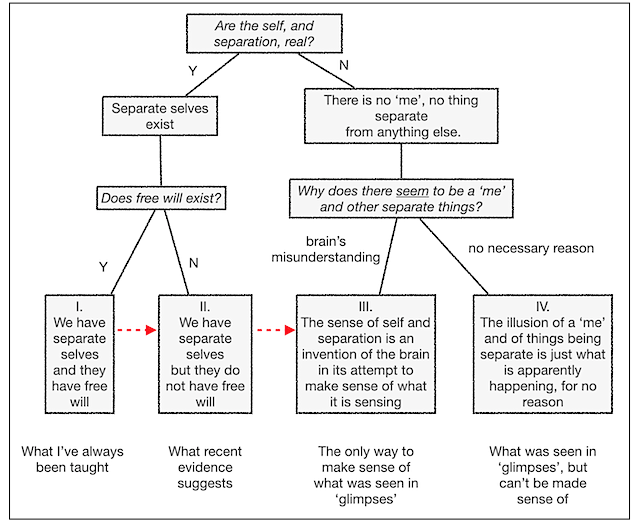
Living species, including humans, are emergent properties of (what Daniel Dennett has labeled) the ‘pandemonium’ of the body’s semi-autonomous processes — We are a complicity of the separately-evolved creatures in our bodies organized for their mutual benefit i.e. we are an organism. And our brains, our intelligence, awareness, consciousness and free-will, are nothing more than an evolved, shared, feature-detection system jointly developed to advise these creatures’ actions for their mutual benefit. Our brains, and our minds (the processes that our neurons, senses and motility organs carry out collectively) are their information-processing system, not ‘ours’.
I think it is necessary to strike a balance between closing yourself off to contrary points of view too early (which I think we are by nature predisposed to do) and getting so ‘rapt up’ in the debate that it becomes an end in itself and an excuse for permanently deferring action. I also think many debaters, and listeners to debates, are dishonest — the debaters too often are really seeking to reassure themselves, and the listeners too often selective in their listening to only hear what agrees with their preconceptions. And to me a dishonest debate is a waste of time and worse than no debate at all. And finally, debate can only put what we think we know and believe intellectually up to scrutiny — much of what we know and believe is emotional or sensory or intuitive, and our languages are just inadequate to debate these, and so debates tend to belittle non-intellectual knowledge, which biases us against this important knowledge and renders much debate merely academic. [PS: there's a fascinating story in today's NYT about the "curious" debate - "more like a dialogue" between French leftist candidate for President SÈgolËne Royal and the third-place finisher in the first round FranÁoisBayrou]
Lots to think about here. I’d welcome your thoughts on these, or anything else that’s on your mind. |
April 28, 2007
Saturday Links for the Week — April 28, 2007
![]() Painting, Lions Gate Studios, by my neighbour Laura Tomona What it all means this week: The Coming Geriatric Crisis: The New Yorker points out yet another looming crisis that we’re not prepared for: the explosion of geriatric patients that no one is trained to, or wants to, care for. Some frightening data: We cling to the notion of retirement at sixty-fiveóa reasonable notion when those over sixty-five were a tiny percentage of the population, but completely untenable as they approach twenty per cent. People are putting aside less in savings for old age now than they have in any decade since the Great Depression. More than half of the very old now live without a spouse, and we have fewer children than ever beforeóyet we give virtually no thought to how we will live out our later years alone.
Equally worrying, and far less recognized, medicine has been slow to confront the very changes that it has been responsible foróor to apply the knowledge we already have about how to make old age better. Despite a rapidly growing elderly population, the number of certified geriatricians fell by a third between 1998 and 2004. Applications to training programs in adult primary-care medicine are plummeting, while fields like plastic surgery and radiology receive applications in record numbers. Partly, this has to do with moneyóincomes in geriatrics and adult primary care are among the lowest in medicine. And partly, whether we admit it or not, most doctors donít like taking care of the elderly [they're difficult patients to care for and their illnesses are unglamourous and often incurable]. Research That Matters: Aaron Swartz is collecting examples of research that, if it were acted upon, could change the way we think about and work to solve intractable problems. The response to date is remarkable and thought-provoking. Kind of like a collaborative freakonomics. Bookmark this page! Thanks to Jeff Donner for the link. Visualization Tools: An interesting visualization portrays 100 different visualization tools you can use to add meaning and value to information. Thanks to Craig De Ruisseau for the link. More Ideas for Greening the World: Anti-poverty crusader Jonny Platt offers 155 ways you can fight climate change. How Bush is Closing Down US Society: Naomi Wolf explains how authoritarians shut down societies to curtain opposition and dissent, and how the Bush regime is following precisely in their footsteps.
Powers cites Ethan Zuckerman as saying this is why Africa is such a great place to focus problem-solving attention: Something thatís very important in technology research is problem selection. If you choose a boring problem to solve, you get boring technologies. If you choose a fascinating problem and are able to solve it, you can start a revolution. Right now, there are much more interesting problems in African technology than there are in the developed world, in my opinion. I think that smart computer science students around the world should be looking at the developing world for challenges to address ñ power usage, wireless networking, non-verbal interfaces, computer-based systems for microentrepreneurship. Itís a huge advantage for African innovators to be surrounded by interesting, worthwhile problems.
So, says Powers, if we think about energy problems from a North American perspective, our thinking is constrained by our awareness of the coming End of Oil and our addiction to it. But in much of Africa the End of Oil is not a significant constraint, and other problems take centre stage. What we need to do is develop and reconcile what Powers calls our Local Soul (that which knows and appreciates local context) and our Global Soul (that which can draw upon radically different contexts and ideas that have arisen in them). One way to do that, he says, is through stories, like those that the Totnes Transition Culture intentional community is compiling about a post-oil future. As these stories enrich our understanding of the context of the future, it can help us to better design ways to transition to that future. Truly Radical Islam: Irshad Manji fearlessly challenges the misogyny, fear-mongering, self-oppression and scapegoating of much contemporary Islamic thought and dares Muslims to rediscover and embrace Islam’s proud and peaceful roots, reports PBS. Thanks to fellow Torontonian Mahjong Cory for the link. Lawyers Doing Good Work: I trash lawyers a lot on these pages, but the lawyers at EarthJustice are doing some good work. They have a good library for environmental activists, and need our help boycotting farmed salmon. …And Judges Doing Despicable Work: The US supreme court, in a strictly ideological and partisan decision, has upheld the Bush abortion ban, and stripped doctors of the ability to make medical decisions in the best interests of their patients. So much for the last shreds of its credibility. Layoffs Are Bad for the Economy: James Surowiecki eloquently challenges the conventional wisdom that poor profits (and falling stock prices) can be remedied by layoffs. |
April 26, 2007
Walking Away to the Next Human Culture
![]() Last month I reported on the first part of Curtis White’s two-part article in Orion, lambasting self-righteous and passive environmentalists, called The Idols of Environmentalism. At that time I included these extracts: We can, however, look at ourselves and see all of the ways that we conspire against what we imagine to be our own most urgent interests. Perhaps the most powerful way in which we conspire against ourselves is the simple fact that we have jobs. We are willingly part of a world designed for the convenience of what Shakespeare called ‘the visible God’: money. When I say we have jobs, I mean that we find in them our home, our sense of being grounded in the world, grounded in a vast social and economic order. It is a spectacularly complex, even breathtaking, order, and it has two enormous and related problems. First, it seems to be largely responsible for the destruction of the natural world. Second, it has the strong tendency to reduce the human beings inhabiting it to two functions, working and consuming. It tends to hollow us out. It creates a hole in our sense of ourselves and of this country, and it leaves us with few alternatives but to try to fill that hole with money and the things money buys…
Needless to say, many people with environmental sympathies will easily agree with what I’ve just said and imagine that in fact they do what they can to resist work and consumption, to resist the world as arranged for the convenience of money. But here again I suspect we are kidding ourselves. Rather than taking the risk of challenging the roles money and work play in all of our lives by actually taking the responsibility for reordering our lives, the most prominent strategy of environmentalists seems to be to give back to nature through the bequests, the annuities, the Working Assets credit cards and long distance telephone schemes, and the socially responsible mutual funds advertised in Sierra and proliferating across the environmental movement. Such giving may make us feel better, but it will never be enough… We’re willing to be generous in order to ’save the world’ but not before we’ve insured our own survival in the reigning system… Even when we are trying to aid the environment, we are not willing as individuals to leave the system that we know in our heart of hearts is the cause of our problems. We are even further from knowing how to take the collective risk of leaving this system entirely and ordering our societies differently. We are not ready. Not yet, at least. Now Orion has posted the second part of the article, entitled The Ecology of Work. White is so eloquent that, rather than try to paraphrase, I wanted to tease you to read the full article (and to subscribe to Orion) with these additional extracts (emphases mine): I don’t believe that capitalism can become green, simply because the imperatives of environmentalism are not part of its way of reasoningÖ Ever the optimistic gambler with other people’s money, the capitalist is willing to wager that, while there may be costs to pay, he won’t have to pay them. Animals, plants, [future generations], impoverished people near and far may have to pay, but he bets that he won’t. If called upon to defend his actions, he will of course argue that he has a constitutionally protected right to property and the pursuit of his own happiness. This is his “freedom.” At that point, we have the unfortunate habit of shutting up when we ought to reply, “Yes, but yours is a freedom without conscience.”
[And so the world of nature is externalized in our minds to become merely] a place to go for a weekend hike before returning to the unrelenting ugliness, hostility, sterility, and spiritual bankruptcy that is the suburb, the strip mall, the office building, and the freeway (our “national automobile slum,” as James Howard Kunstler puts it). The violence that we know as environmental destruction is possible only because of a complex economic, administrative, and social machinery through which people are separated from responsibility for their misdeeds. We say, “I was only doing my job”Ö It is only possible to conclude from our behavior for the last two hundred years that ours is not a human society; that it is a society outside of the human in some terrible sense…The kind of work provided by capitalism [is] alienating. That is, it [has] made us something other than what we are. It [has] dehumanized usÖ We all have our place, our “job,” and it is an ever less human place. We have two options: First, we can simply wait for the catastrophic failure of global capitalism as a functioning economic systemÖ[Or] we can start providing for a different world of work now, before the catastrophe. We need to insist on work that is not destructive…[This requires] leaving a culture based on the idea of success as the accumulation of wealth-as-money. In its place we need a culture that understands success as lifeÖ Most of us want to believe that our quarrel is just with [a few] rogue corporationsÖand not with capitalism as such. But thinking this is simply a form of lying. We deny what we can plainly see because to acknowledge it would require the fundamental reshaping of our entire way of living, and that is (not unreasonably) frightening for most people. The risk I propose is simply a return to our nobility. We should refuse to be mere functions of a system that we cannot in good conscience defend. And we should insist on a recognition of the mystery, the miracle, and the dignity of things, from frogs to forests, simply because they are. [This] would entail a refusal to play through to the bloody end the social and economic roles into which we happen to have been born. What lies beyond the environmental movement is not only the overcoming of capitalism but self-overcomingÖThe deeper problem is our own integration into an order of work that makes us inhuman and thus tolerant of what is nothing less than demonic, the destruction of our own world. White is telling us we must do what Daniel Quinn has been telling us to do for a decade: walk away from civilization culture. He acknowledges how frightening the prospect of doing this is. He acknowledges that instinctively we know that this is what we must do. And he acknowledges that what I have called Let-Self-Change is the first, hardest step. It requires that we let go of the only life we know, to pursue, as a matter of intuition and faith, a better way of living, one that, for now, we know nothing about, that we are not equipped for, and which could, in the short run, cause us and our loved ones considerable hardship. We will be like the pioneers first landing on a new continent, except, unlike them, we in our overcrowded world will have to do that pioneering right in the midst of the culture we are walking away from, and liberate the land and ourselves from that culture. And we will have to do it with almost none of the self-sufficiency skills that previous pioneers had. We will be looking (we are already looking) for leaders who can show us the way. We will look in vain until it is too late, until our culture collapses and we have no choice but to try to create a new one in its ruins, when we will have no resources or time left to do so and when all our energy will be expended just trying to stay alive. We’ll be carried along on the long right tail of all civilizations in their slow, final slide into oblivion. Though there are no leaders to follow, there is a model on which we could, together with other brave new pioneers, create a new culture, now. It is the model by which every non-human creature on the planet lives, if we only cared enough and paid close enough attention to see it. It is a model where land and the rest of nature and all-life-on-Earth are treated with respect. It is a model of abundance, not scarcity, of living in balance, not in conflict. It is a model of joy, not suffering. It is a model of partnership, not hierarchy. It is a model of caring for, not competing with, each other. It is a model of responsibility, not exploitation. It is a model of steady-state slow evolution, not rapid growth. It is a model of community, not empire. It is a model of well-being and self-sufficiency. It is a model of constant learning and adaptation. It is a model of love and of peace. It is a model where we are always home, and never homeless. It is a model that exists and thrives all around us, in the midst of our culture, yet is not a part of it, is free from it, untouched by it, indifferent to it. If we learn, quickly and soon, to listen, to imagine, to pay attention, at least some of us might, in community, find the courage (and courage is really just not having any other conceivable choice) to walk away, to live lightly and freely and joyfully, to join our fellow creatures in another, thriving, healthy culture in the midst of our terrible, struggling one. The answer is right in front of us, and our patient, furred and feathered fellow citizens of Earth are calling us, waiting to welcome us home. I will be writing another article on how we might do this, soon. In the meantime, help me imagine how such a Next Culture, much more radical (in the true sense of the word) than anything White or Quinn has envisioned, might emerge right in the midst of dying civilization culture. What if we just opted out of civilization’s economic and political systems, like the Anasazi and some others who saw their civilizations collapsing did. Renounced citizenship, liquidated all we owned and put it in a shared trust, for emergency use only, by a trustee we could really trust. Refused to recognize ‘ownership’ of land. Commenced a long migration to a land where we could gather natural, healthy food naturally, where we would need no permanent shelter, no heat, no clothing, nothing to buy or own, no place to have to stay. Where we could spread out so that our presence would have a light touch and not oppress the land we occupied. A new triberelearning how to live in balance with the rest of life on Earth. Can you imagine that? Category: Let-Self-Change
|
April 25, 2007
A Methodology for Web 2.0 Collaboration Experiments (in Reluctant Organizations)
![]() I‘ve been having a lot of conversations lately about how to help organizations become more effective at enabling collaboration. The people I know who have tried to do this keep running into three walls:
So any methodology that hopes to help improve collaboration in an organization needs to be very adaptable, modest in resource demands, sponsored, and attuned to the complexity of collaboration challenges. I think I’ve come up with a methodology that meets these requirements, and it’s illustrated above. Here’s how it could work:
I think these groups need to self-organize, rather than waiting for senior management to organize them or approve their work. That means the champions must have the passion to invest some personal time into this, and the courage, perhaps, to charge ahead (intelligently) and ask forgiveness instead of permission. The ‘respected sponsors’ need to be coached, not only to deliver the elevator pitch to others for new collaboration methods and tools, but also to actually use these methods and tools effectively.
Most important is understanding the current state: Things are the way they are (i.e. not very collaborative) for a reason, and the team needs to know that reason.
Once they understand the current state, they can start to identify feasible, small-scale experiments that have the greatest chance of success, and select appropriate tools to implement them. They should then self-form into one or more peer-to-peer steering groups to monitor and oversee the implementation of the experiments. To do this they will need patience ñ the initial pre-conceptions about the opportunities for greater collaboration are likely to be largely wrong, and it will take time for real, new sustainable collaboration successes to emerge, and with them, a better understanding of the real collaboration problems and needs of the organization.
Some of my collaboration colleagues believe the champions should work to break down barriers that are preventing successful uses of collaboration methods and tools. I’m ambivalent about this: I prefer to trust the judgement of the self-managed collaboration team to break down barriers as they see fit. I’m not sure we need a ‘Chief Collaboration Officer’ out there doing that job.
I should note that this methodology is just intended for web 2.0-enabled collaboration projects. There are other types of collaboration (peer production and idea markets most notably) that organizations may benefit from as well, that would perhaps require a different approach. I’d like to thank New Paradigm for facilitating a workshop today, and also the bright participants in the workshop from a couple of dozen organizations, who helpedcrystallize my thoughts on this. I’d also like to thank my online collaboration colleagues and the members of my Toronto KM breakfast club, for their contributions to these ideas.
Category: Collaboration
|
April 24, 2007
present, tense
![]() the end of winter this year is long and cold, but veek does not mind. his feathers, fluffed up for the night as he sleeps with his flockmates in their dense evergreen roost, keep him perfectly warm. as he awakens in the early dawn he becomes aware of zif, his play-mate, nestled into his side, still asleep. he chirps in her ear: wake. morning. she stirs slowly, enjoying the comfort and warmth and companionship of their bodies together. soon the dawn chorus begins: the males of the flock each take turns serenading the females, one-to-one, calling them by name, welcoming them back to waking life, and the females return the song. this is what chickadees do, an expression of their love for each other. veek and zif’s flock is ten chickadees strong, the alpha breeding pair and eight juveniles, unrelated to any others, who have joined the flock from neighbouring flocks to vary and enrich the potential gene pool, and perhaps vie for the rights, this year, to be the breeding pair for this twelve acres (five hectares), this flock’s home. in the morning sun the birds shake off their night-time torpor as their body temperature rises as much as ten degrees celsius (eighteen degrees fahrenheit) to equip them for the day’s activities. veek preens zif’s feathers, gently. she sings to him: hungry. thirsty. let’s play. come. she soars up, 150 metres (500 feet) into the sky, and calls: catch me. veek replies with a scolding cluck: there are hawks and eagles about, and such play is dangerous. she shrugs him off, just flying, joyfully, silently. reluctantly veek joins her, and soon two other juveniles of the flock soar up as well, unable to resist this cosmic dance, this expression of boundless freedom and happiness. let’s migrate, she calls. go a mile high and thirty miles (50 km) an hour. chickadees rarely migrate, but when conditions are harsh or numbers too high to be comfortably accommodated, small spontaneous migrations to a different part of their natural habitat will occur. zif settles back on the branch beside veek. he climbs onto her tail feathers. she chastises him: get off, silly. we’re not the breeding pair. we could be, veek replies. sex ten times a day, lovely cloacal kisses? besides, she continues, play-mating is just as much fun. the pleasure of flirting without the responsibility of the consequences of breeding. farik, the slow, wise chickadee, is going away, alone, observes veek. he always tells us useful things, but he is too slow now to escape the owls and eagles. spiders, yum, signals zif. humans are foolish, sings veek. look. this one runs around in circles for no reason. see, the grouse bird jumps on his shoulder as he runs to tell him so. ’slow down’, she tells him. ‘be with me, here, now’. but he keeps running. the silent creature the human wears on his wrist looks like a parasite, but seems to tell him what he must do. he looks at it, and then he runs faster. maybe this parasite is like our slow, wise chickadees. but its advice makes no sense. see, he looks at the parasite again, and now he stops running and, exhausted, walks back into his big cage and locks himself inside. nothing these humans do makes sense! and they’re so ugly. i am happy that there are no ugly birds. the humans are parasites themselves, zif replies. look at that one, climbing into the big noisy creature they call ‘car’ that only runs in straight lines. these poor car-creatures do nothing by themselves. they are kept in cages like the humans’ cages only smaller. they only move when the humans tell them to. and the humans feed them, a strange food that smells like the bones of dinosaurs and makes their poop smell foul. we keep telling and showing these humans how to live, to be part of all life on Earth, to set free their ‘car’ slaves and free themselves from the parasites they wear on their wrists, but they don’t hear us. they’re not listening. i’m glad they leave us all the food outside their cages, veek trills, but if they were all to suddenly disappear that would be good too. oh look!, cries veek. that little bird flies into the invisible wall of the human’s cage. ouch! when i fly into something, i hurt. i want to stop his hurting! it is sad, replies zif, but there is nothing we can do for him. if he’s strong, he will fly again. if not, he will be like the slow, wise chickadees and go away, returnto the Earth. we must not grieve. what is done is done. come. enough sorrow, she sings, urgently. fly with me. be one with me, with all life, here, now, in joy. we must be strong. we must show the little ones the way. and the foolish ones the way home.
Category: Fable
|
April 23, 2007
A Crooked Broker Society: The Mainstream Media as Pimps and Panderers
![]() Reader caution: rant ahead A while ago I wrote an article about Bill Maher’s proclamation that the job of the media is to make what’s important interesting. The media are now so universally loathed that even lawyers and real estate speculators rate higher in public opinion. You can’t blame us, especially after last week’s disgraceful spectacle. The mainstream media have Maher’s advice exactly backwards: They’re trying to make what’s interesting (to the dumbed-down public, in the most lurid and sleazy sense) important in some way, when it’s not. In that sense they have become, in every sense of the word, nothing more than pimps and panderers. As the chart above shows, the world’s affluent nations are becoming (and North American nations have already become) Crooked Broker Societies. The rich and powerful no longer get their hands dirty actually doing anything of value. They merely use their money and power to intermediate between desperate vendors and weak, addicted buyers. And as James Surowiecki has pointed out, they’re not ‘honest brokers’ either, balancing the interests of vendor and buyer and mediating for a reasonable fee. They have divided up the brokerage role into two parts: an exploiter role, designed to subjugate and oppress the desperate supplier, and a procurer role, designed to pander to and gouge the weak buyer. The exploiters and procurers then collude (and sometimes merge to play both roles), paying the supplier next to nothing and charging the buyer a huge amount for worthless crap. The chart above shows how these roles siphon wealth from both suppliers and buyers, providing nothing of value in return, in just about every sector of our modern society. You see this in struggling nations, and in areas like North America’s inner cities, where poverty, desperation and lawlessness are endemic. The fact that this same tawdry oppression of suppliers and gouging of purchasers is now occurring everywhere attests to the dysfunction of our political, social and economic systems, and the growing sense of market anarchy, where any behaviour is justified if it is profitable, and where the ends always justify the means. It is evidence of a culture in the terminal stages of decline and disintegration. Nowhere is this more evident than in the mainstream ‘information’ media. This should probably not be surprising, when these media are owned by a corporatist oligopoly that measures success by profit, not by the quantity or quality of information it delivers. For the past week we have been subjected to the sorry spectacle of these media fawning over a single deranged man who set them up with the video and audio and the violence they needed to justify lazily and irresponsibly passing this off as somehow newsworthy. They were able to play this up for a week and it cost them essentially nothing. The consequence was to stir up enough hysteria to sell a lot of newspapers and attract enough bored ambulance-chasers to make the entire undertaking enormously profitable. The conservative politicians and corporatists loved it, too — it took attention away from rampant political and business corruption and incompetence, and allowed fear-mongers to advocate more crime laws, conservatives and preachers to lament the decline of moral values in our society, and propagandists of every stripe to exploit the event for the media circus it was. The message for publicity-hounds was clear: If you’re desperate to get a lot of global publicity in a hurry, make sure to (a) kill a lot of people, (b) do it in an affluent nation, (c) do it in a spectacularly gruesome way, and (d) pre-create and edit your own audio and video for the media so they can’t screw your message up. Whether or not it means anything, or there is any lesson to be learned from it, is irrelevant. In the meantime, between the propagandists, the media conglomerates and the advertisers, lots of profits were made and lots of political points were scored, and the citizenry was left as dumb as ever. Even more dumbed down, in fact, because of all the events that received little or no coverage while the mainstream media gleefully and rabidly pimped for a suicidal loser, political interest groups exploited the ‘event’ by misinforming the public about its ‘meaning’ (with no challenge whatever from the reporters), and shareholders and advertisers raked in the extra dough the publicity generated. It was a shameful, disgraceful performance but it’s one we are getting terribly used to from exploiters and procurers in every aspect of our lives. Whether it is the misogyny, sleazy product marketing and violence-promotion of rap videos, or the willful broadcasting of blatant corporatist lies in ‘advertising’, or the abrogation of responsibility for investigative journalism (and the ignoring of citizens’ whistle-blowing and investigation, lest it offend advertisers), or the obsession with the crime blotter while crises facing our world remain ignored because they’re too complex or too expensive to work on, the mainstream ‘information’ media show themselves to be nothing more than pimps and panderers, wasting our time and public bandwidth. Fiddling with sensationalist minutiae while the world burns. We need to liberate hard-working producers and beleaguered customers from the bullying freeloaders and corporate-welfare bums in the middle two columns of the chart above, fat, lazy, overpaid, greedy, obscenely powerful do-nothing middlemen all of them. Let’s start throwing out the crooked brokers who stand between us and reasonably-priced, socially and environmentally responsible, quality products and services and important, actionable information. Let’s peer-to-peer them all out ofbusiness. /rant Categories: Corporatism & Distorted Markets, and The Media
|
April 22, 2007
Sunday Open Thread – April 22, 2007
![]() Cartoon from the New Yorker by Frank Cotham. Buy prints of his amazing cartoons here. What I’m planning on writing about soon:
What I’m thinking about:
What are you pondering these days? |
Saturday Links for the Week – April 21, 2007
What it all means this week:
Imaginative Thinking to Address Complex Problems: A fascinating TED talk by 19-year-old biochemist Eva Vertes hypothesizes that cancer is not a disease but an attempt by the body to fight disease and injury. The implications if she’s right are staggering. When Einstein said we cannot solve intractable problems with the same thinking that led to them, this is what he was talking about. Thanks to reader Ed for the link. Why This is Our Final Century: If you’ve read Flannery and Monbiot, you know that we need to reduce greenhouse gases quickly and dramatically to save our planet from climatic disaster. If you read this blog, you know why I, and others like John Gray, believe such drastic action will never occur. This week, we heard a new report from EU scientists saying that we will have to reduce emissions in affluent nations by 95% in the next forty years. And we heard the Canadian conservative government, ideologically in lockstep with the US Bush conservatives, declare that even the feeble and inadequate Kyoto targets would wreck the Canadian economy and as such are “unthinkable”. At a time when a leap far beyond Kyoto is desperately needed, it looks likely that Canada’s conservatives will choose to fight an election (and according to recent polls, do so successfully) on the grounds of reneging on Canada’s Kyoto commitments, propagandizing against both climate change dangers and the economic benefits of addressing them, and putting the immediate economic interests of the conservatives’ corporatist friends ahead of the survival of our civilization. Shameful, terrifying, and completely expected. Jeffrey Sachs Hopes Against Hope: The BBC has the broadcast and transcripts of the 2007 Reith Lectures featuring anti-poverty activist Jeffrey Sachs. What’s fascinating to me is the audience reaction to Sachs’ arguments: The majority, hearing the facts of the state of our world laid out starkly, see free-market-skeptic Sachs as a pessimist and ask whether his self-proclaimed optimism is misguided. But the most informed minority, like Sir Christopher Meyer, see Sachs’ almost religious belief in “mass political awareness and social mobilization” as absurdly naive and unsupportable. Thanks to Jutta Ried for the link. Ways to Go Green: Although it’s a bit bizarre to find on a website that promotes credit cards, Frugalist’s list of 57 ways to live more environmentally responsibly is a good one. The Need for Debate: Dave Snowden, an accomplished debater, argues that learning and creativity are aided more by informed and articulate debate than by consensus-seeking. I see his point, but in my experience, most debates are neither well-informed nor articulate, and debaters too often have their minds already made up and are poor listeners. But, being Canadian (we are consensus-seekers to a fault) I lack the self-confidence and sense of urgency to debate Dave on the matter. The Dark Side of India’s Economic ‘Prosperity”: Arundhati Roy, who has tried to explain to the world the horrific life (and suicide rate) of India’s destitute farmers (now mirrored in Australia), explains what’s really happening in India, events that we here almost nothing about in affluent nations. Thanks to Jon Husband for the link. China Building a New Coal-Fired Power Plant Every Four Days: The cost of China raising even a small minority of its desperate underclass out of poverty is the destitution of the world. “Ocean Desalination Does Not Work”: There is no simple techno-fix for looming global fresh water shortages. Thought for the Week, from Brian Eno (thanks to Andrew Campbell for the citation): “One of the things I’ve formulated recently, as a little rule of thumb for myself, is to say, a computer program should always allow you to continue working in the physical world that that activity suggests anyway. So if you’re working with a music program, you don’t have to keep going back to typing and using your mouse. People think that’s being kind of picky, and rather stupid, but I’ve always had this theory that the body is the large brain; it’s not like, this bit of you doesn’t matter and this bit does. The whole physical experience is what you make things with. Anyone who works with any tactile art form knows this. And with any tactile instrument. They know that a lot of your intelligence about what you’re doing is not happening, here [the head], it’s happening all over other parts of your body. It’s how your body feels about this sort of thing. Well, unfortunately, computer interfaces are so crude they’ve completely ignored that possibility. So, if I want drawing programs that automatically work with a pad or a pen or whatever – I have one in fact! – then I want music programs and I want synthesizers that give me that same kind of physical relationship, that physical musical relationship.”
|
April 20, 2007
Innovation in eHealth
![]() I attended a presentation last week put on by Paul Artiuch and Tim Warner of Don Tapscott’s group New Paradigm, talking about the most important trends in Web 2.0, and in eHealth in particular. Some of the content is proprietary to members, but most of it was reasoned opinion, pointers to interesting websites, and intriguing trends and observations from their research that I thought might be worth sharing with readers. If your organization is one of the collaborators in the New Paradigm IT & Competitive Advantage program, you might want to contact your organization’s representatives in the consortium, and get involved. What I like about them is their pragmatism ñ for example, they explain the value of social networking tools in a way that is accessible to senior executives and anticipates and addresses most executives’ lack of knowledge, common misconceptions and security/control fears about them. And they encourage multiple parallel small-scale experiments using these tools, in the context of addressing specific organizational problems, so that participating organizations can actually become leaders in the use of new technologies and ideas, instead of just abstractly understanding their potential. Here were, for me, the shareable highlights of the presentation:
New Paradigm is quite positive on social networking applications in organizations, especially internal applications within healthcare organizations (rather than aimed at the general public), and especially blogs, wikis, IM and social networking apps similar in approach and structure to Sermo, theStatus, and OrganizedWisdom. As mentioned in a previous post, if you’re interested in a summary of Tapscott’s book Wikinomics, it’s available free online as a 2-hour videopresentation here. Category: Industry-specific Innovation
|

I‘ve been a member of the Green Party for many years, but I’ve frequently duelled with them over their preoccupation with getting candidates elected rather than getting good legislation passed. In Canada, although ‘private members’ bills’ have an uphill battle to get time on the legislative agenda, they are often introduced and occasionally even passed into law.
What I’m planning on writing about soon: