![]() Blame it on global warming I guess. I don’t remember it ever being so windy, so often, so persistently. Not gusts but more like a constant near-gale that lasts for hours. It’s a beautiful, warm, sunny spring day, a Tuesday, noon, and everyone is out walking but the wind is fierce, whistling through doors and blowing over sandwich boards on the sidewalks. I’m in the office building where I’m currently on contract, but I’ve come downstairs for a cell phone call — for privacy and because the signal is lousy inside the walls ten stories up. I’m down by the large picture window that faces obliquely onto busy Yonge Street North, away from the revolving doors, staring at the windblown people walking by, and talking with my agent. The older people outside are struggling, their oversized clothes working against them like sails. People fussed about their hair are holding on to it tightly, especially a guy who looks like he wears a hairpiece. But it’s so lovely outside that almost everyone is smiling, or maybe they’re squinting against the bright sun and wind, it’s hard to say. Two uniformed schoolgirls walk North, probably on lunch break, or out for a smoke or to use their cell phones, now banned on school grounds. They have that look that says they know they’re being looked at, and are trying to be nonchalant about it. Their hair, long and straight, is blown almost horizontal by the wind, streaming out behind them. They are chatting and laughing, and I can’t take my eyes off them. They both wear their skirts high, flashing a lot of leg in that exhibitionist way that has fueled generations of fantasies. The blonde, the taller of the two, has shortened hers considerably more than the dark-haired girl. The wind picks up even more and both girls’ skirts blow up, like something out of a movie. My eyes, and those of others, I sense, look quickly at the ground beneath them, looking for the sidewalk subway grate, the hidden camera, but there is none — this is purely the wind’s mischief. Both girls instinctively move to smooth them back down, and the dark-haired girl, her hands free thanks to her backpack, gives us only a brief flash of pale pink underwear. But the blonde, carrying an armload of books cradled in front of her, hesitates, and then, with a quick look of pure delight, moves her hands back up to where they were. Her skirt rises almost vertically and stays there, as if drawn by reverse gravity, flapping lightly as the wind whips around its defiant owner. She is wearing white string bikini panties (surely not part of the uniform?, I think), a mere wisp of material, and it is as if time stops. People all around whirl and stare. A couple of cars honk. The girl’s companion looks at her friend, astonished, and her hands jump up to cover her mouth. They both laugh, facing each other now, the dark-haired girl with embarrassment, the blond with unabashed pleasure. Now, freed again, the dark-haired girl’s skirt flips up as well, and though she moves to smooth it down again, her friend’s stare freezes her, dares her to do nothing, to show off, to be the centre of attention. I’ve stopped listening to my agent, and I’m wondering how long the wind can keep the two skirts so neatly plastered up against the girls’ blouses, revealing panties so smooth and sculpted I would swear I can see every bone, every hollow on the two long-legged young bodies. There is a half-foot of midriff visible, too, displaying wondrous, breathtaking, intoxicating curves, angles and shadows. I feel guilty staring — they’re so young — but I can’t stop. A group of guys on the far side of Yonge Street have stopped walking and are now standing, clapping and cheering the spectacle. The blonde bows in their direction in acknowledgement of the applause. And then, to my disbelief, the dark-haired girl, not taking her eyes off her friend’s face for a moment, raises her arms over her head and smiles with sudden exuberant joy, and then whirls around, again and again and again. I gasp, my gaze going back and forth from her face to her body as she spins. As she completes her figure skater’s move, the wind calms, briefly, and the girls embrace, convulsed in laughter. They start walking again, and their skirts keep flapping up. My stare follows them until they pass out of range of the window, and I realize I have been holding my breath, and have no idea what my agent has been saying. Caught between the messages of my genes and those inculcated by my culture, I’m not sure how to feel. Photo: Follow Me, by QueenofNight Category: Short Stories
|
May 21, 2007
Vignette #1: The Spin
May 20, 2007
Sunday Open Thread – May 20, 2007
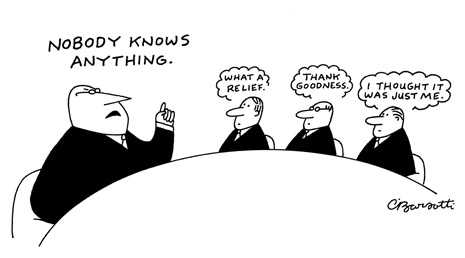
![]() What I’m thinking about, and planning on writing (and podcasting) about soon: Vignettes: My writing is a reflection of what I’m doing and what I’m becoming, and as a result much of the future subject matter of this blog will be the results of my Let-Self-Change activities. Two of the skills I want to learn are paying attention and better story-telling. The best way to deepen one’s skills is through practice. My practice, paying attention and telling stories, often takes the form of vignettes, very short stories where I recount something quite simple but extraordinary that I’ve noticed by paying attention, focusing on and memorizing the details, and then deepening those memories by retelling these internalized accounts. Like good short films or poems, these vignette stories need to have a point: there has to be something important (usually not obvious, often ambiguous) about them. My holiday Monday post tomorrow will be my latest vignette.Improv: Another skill I want to learn is improvisation, the ability to adapt, to converse, to do things spontaneously and effectively without planning. That has a lot to do with listening and paying attention, and even more to do with practice. I’m not sure how I’m going to do this yet (any ideas?) but when I do, I’ll be documenting it. Blog-Hosted Conversations: I’ve now got the tools, thanks to readers’ advice, especially Lavonne and Johnnie Moore: Pamela for recording the Skype conversation, Audacity for editing, and the Internet Archive for hosting the big .mp3 files. Plan is for 30-minute conversations, once a week, on the subject of identifying and acquiring the essential skills and relationships we need to be models of a better way to live, and what those models might look like. What are the skills you’ve been trying to develop, the changes you’ve been trying to bring about in yourself, the important conversations you’ve had recently? New Yorker cartoon by Robert Weber. You can buy prints ofhis work here. |
May 19, 2007
Saturday Links for the Week – May 19, 2007
![]() Portrait of Final Fantasy character Tifa Lockhart by Canadian digital artist sleepar. Reality is no match for the imagination. What’s Important This Week: Losing the War on Disease: Inevitably, an NIH/WHO study shows, almost all dangerous infectious diseases are morphing to forms that are resistant to all antimicrobials, leaving their victims, mostly (for now) in struggling nations, condemned to die. Part of the problem is overprescription and misprescription of antibiotics and antivirals. Part of it is ignorance and poor hygiene. But part of the problem, the one we refuse to acknowledge, is that it is unnatural for any creature to live in crowded conditions. Infectious diseases are nature’s way of saying “too many, and too close together”, and solving the problem to rebalance populations for the benefit of all-life-on-Earth. When will we listen, pay attention, change? The Fragility of Having to Spend More Than You Earn: A NYT story profiles a family that, like the average US family, now spends more each year than it earns, and depends utterly on increases in value of their home and their investments and low interest rates on ever-growing debt. If these things start to drop in value, as they are now, or if inflation or interest rates spike, there is no way out except bankruptcy. Yet More Poison from China: This week it’s diethylene glycol, a cheap, toxic replacement for glycerin, in toothpaste. Time to shut the door on these criminal corporatist clowns, and jail the negligent importers, before thousands die. Last Chance to Prove String Theory?: Scientists refuse to believe that nature would play the ultimate trick on us: Making space infinitely large and complex and the microcosm infinitely small and complex, with no start, no end, and no ‘fundamental building blocks’. If she has done that (and my instincts say she has), our much-sought ‘grand unifying theory of everything’ will elude us forever. As Liz Kolbert reports in the New Yorker this week, string theory, the wildly convoluted and complex theory requiring 11 dimensions, is on the line when the hugely expensive new European CERN accelerator tries once again to prove the existence of hypothesized particles. If they fail, theory may end up being just that, forever unprovable, and the end of the line for those seeking Nobels for making further theories unnecessary. Discover What Toxins Are In Your Cosmetics: EWG’s Skin Deep cosmetic safety database rates the safety of 25,000 brand-name cosmetic products and tells you what dangerous and untested ingredients are in each. (Heh…now we need a Deep Throat food safety database to tell us about the ingredients in fast and processed foods.) Corporatists Telling You to ‘Cease & Desist’? Here’s Help: More and more oligopolies are suing customers who find workarounds to their price-gouging. Now, the Berkman/EFF Chilling Effects Clearinghouse can translate the threatening letter you received intounderstandable terms and tell you how — and if — to respond to their threats. Thanks to my sister-in-law Morva Bowman for the link. US Health System the Worst of Affluent Nations’: A lesson in how to let greedy health industry oligopolies give you less for more. Thoughts of the Week (both, as it happens, appear on the same page of this week’s New Yorker): From ‘Atheists with Attitude’ by Anthony Gottlieb, reviewing several recent books on the problems of modern religion (yep, including The God Delusion): God is merely the answer that you get if you do not ask enough questions.
Unknown Age, by WS Merwin For all the features it hoards and displays whether morning or evening it is a moment of air while I stand remembering light in the trees with no way of telling whether the leaves at that time and no knowledge of what happened to the reflections the bird lies still while the light goes on flying |
May 18, 2007
Designing for Emergence
![]() In his post today, complexity guru Steve Barth suggests that since it is not in our nature to prepare for emergencies, we should instead try to design for emergence. In other words, since we know that we won’t know what emergencies will arise, or when, or how severe they will be, or how we will react, nor can we possibly envision or plan for all eventualities (such as telephone switches being under ten feet of water, for a month, after a hurricane) we should, instead of planning, figure out how we are going to figure out what to do when the emergency occurs. We need to be ready, which is different from planning. I replied that there are probably five ingredients in a prescription for how to figure out how to figure out what to do:
So what would a ‘design for emergence’ that incorporates these ingredients look like? I’m just starting to think about this, but I think finding an answer to this is important. Help me, and Steve, co-design it? Category: Complexity |
May 17, 2007
Learned Helplessness and Your Chances of Dying
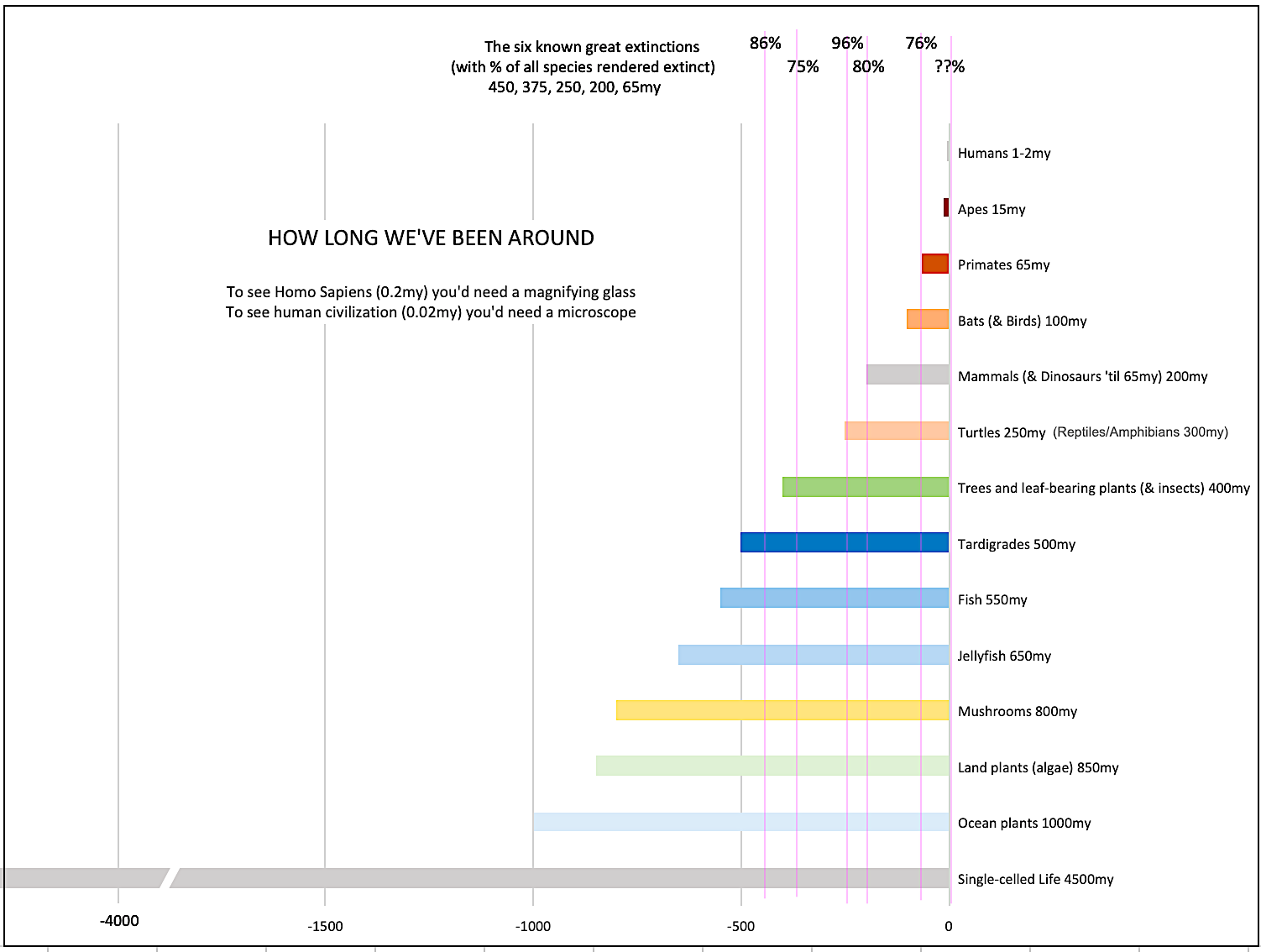
![]() Yesterday I received an intriguing report whose purpose was to point out the very real risks in taking medications as part of a preventative or disease management regimen. The article researched the risks of various ‘voluntary’ activities: non-critical medical therapies, job and transportation choices, and hobbies, and computed the comparative risk of fatality (in annual deaths per 100,000 persons engaging in these activities for an average length of time each year). Some of the data are shown in the upper part of the chart above. These data are global averages, and clearly the danger varies greatly according to your place of residence and work, your age, current health and other variables. Nevertheless, it was an interesting illustration of the degree to which we mentally miscalculate the risks we face in our everyday lives, seeing some things as much safer than they really are (e.g. firefighting) and other things as much more dangerous than they really are (e.g. drowsy driving). I’ve written about this before, reviewing Gladwell’s article on Learned Helplessness, and I concluded then:
So, for example, insurance company stats show your risk of fatality is significantly lower in a convertible than in an SUV, because (a) the convertible is more agile than the clumsy, overweight SUV, so it can avoid accidents the SUV can’t, and (b) since you feel safer in the SUV, you tend to drive more aggressively in it. Nevertheless, people continue to buy SUV’s as ‘safe’ vehicles and shun convertibles as ‘unsafe’.
Since we seem somewhat preoccupied these days with infectious diseases, I thought I would add the comparative data (as best as I can determine it — data for some countries is iffy and diagnoses sometimes overlap and are often wrong) for the top 7 groups of infectious diseases. The results are shown in the lower part of the chart above.
A number of obvious conclusions:
Although bioterrorism risks aren’t on the chart (and throughout history, as deadly as war is, it rarely catches up to disease as a killer) there’s a new book that lists the seven most deadly potential bioterrorism diseases (anthrax, botulism, hemorrhagic fever, plague, radiation poisoning, smallpox and tularemia). That’s because there’s no ready antidote to any of them, and because, if weaponized, they could spread rapidly and be extremely virulent (read Richard Preston’s Demon in the Freezer). Even more deadly (perhaps 100% fatal), but even harder to harness, are the prion diseases (like mad cow and CJD).
It there a real risk here? Of course, but for all kinds of reasons it’s improbable, like the equally potentially catastrophic but low-probability threat of an earthquake on the Eastern North American fault lines. And if bioterrorist activity happens, you can bet it will be an inside job, and probably small-scale. Risk = consequence x probability. Low probability, low risk, no matter how horrific the consequences. We could also be invaded by aliens, or struck by a meteor, tomorrow, but it is foolish to lose sleep over it. When it comes to infectious disease, however, more sizeable threats are the candidates in the ‘emerging diseases’ lottery that suddenly emerge or re-emerge every year. Our arsenal against these diseases is dwindling rapidly as we exhaust more and more classes of antibiotics and antivirals — these clever, adaptive creatures can mutate much faster than our science can keep up with them. The size of the candidate list is impressive: dengue, e coli, flesh-eating disease, hantaviruses, hep C, lassa, lyme disease, meningitis, MRSA, mumps, nipah, salmonella, SARS, West Nile, as well as the endemics we currently seem to have under some control: AIDS, influenza, malaria and TB. A little bit of nature’s ingenuity and any of these could evolve into a new, virulent, resistant strain that could jump to the top of the chart above.
If there’s any justification for learned helplessness, it’s these little bugs. If we continue to sit by and allow industry and agriculture to poison us and destroy our immune systems, and continue to help diseases morph in new and dangerous ways by our reckless and extravagant use of antimicrobials, we’ll soon be justified in feeling helpless. That’s why I’m so interested in pandemic preparedness: It’s only a matter of time, and worldwide we know so little and are still so unready. Until then, we have no excuse for learned helplessness — if we really want to live in a world that is healthy and safe, we need to stop the politically expedient and insanely expensive distractions of the ’war on terror’ and the ‘war on drugs’ and the ‘war on crime’ and focus on the real, and very controllable risks, we create for ourselves: cleaning up our planet, taking responsibility for our own (and our loved ones’ and community members’) health and safety, putting corporate polluters behind bars and shutting them down, and making it easier to eat right, easier to know when we shouldn’t be driving or working, and easier to know when medical treatments are moredangerous than the disease. Category: Our Culture
|
May 16, 2007
Twelve Ways to Stay Well
It took 55 years and contracting a chronic disease, but I’ve finally learned to look after my health. The steps required to stay well are pretty intuitive, and it makes sense to invest effort and money keeping people well, instead of treating them when they get sick. But you’d never know it from reading most healthcare websites. While some might believe that’s deliberate (Big Pharma and a lot of doctors would be out of business if we stopped getting sick) I think the main problem is the blind spots that those in the healthcare industry have, because they’re too close to one perspective to see the forest for the trees.
So here’s my simple, obvious list of twelve ways to stay well:
I’m doing all these things, and I’ve never felt better, never been in better physical condition and (according to my recent tests) never been in more perfect health. Don’t wait until you’re 55. Stay well.
Categories: Let-Self-Change and Health
|
May 15, 2007
Ten Lessons from Katrina on Our Ability to Cope with Crises
![]() Relief workers in Guatemala rescue victims of mudslides caused by Hurricane Stan Yesterday I provided my answers to the questions I will be asking others in upcoming Blog-Hosted Conversations about what we need to know, to learn, and to do to prepare ourselves and our loved ones for whatever the future will hold.
An editorial in today’s NYT, lamenting how little has been done to rebuild and protect New Orleans since Katrina, provides some important lessons about the current state of our civilization and its ability to cope with such crises. Here are, I think, the ten most important lessons:
Category: Why Our Civilization is Unsustainable
|
May 14, 2007
Interview Questions for Blog-Hosted Conversations
The podcast conversations I want to host on this site are with, and between, people who believe we have a responsibility to begin acting now to cope with, and help our children and grandchildren cope with, the impending crises that our overpopulated society and overextended economy will inevitably produce.
I want to let these conversations go where they will, but to have a common jumping-off point – a ‘leading question’ if you will. In typical left-brain, analytical style, I had originally thought of asking people which crises they predicted we’d face when, and how they thought they’d adapt to them.
But then I thought: What if the people who have some of the best ideas, those who will be best equipped to cope with these crises, are uninterested in predicting how they will unfold? I have argued for the importance of resilience and ability to Let-Self-Change, so perhaps what we are doing to prepare for future eventualities, to educate and enable those we love, or just to make the world a little better right now, is more important than the predicted context in which these abilities will be applied. Perhaps it might be better to avoid the prognostications and lead off the interview with questions like this:
These are tough questions. I wouldn’t want anyone to spring these questions on me in an interview, without having the time to consider my answers. So it’s only fair that I ‘interview myself’ first. Here are my answers:
If you have experience as an interviewer, I’d welcome your thoughts on additional (or different) questions to ask, how far off track to let the conversation go, what types of answers and tangents to anticipate in advance, or anything else you can counsel before I start this process. Another thought: I’ve been intrigued by some recent interviews I’ve heard on CBC where the interviewer’s questions are edited out. I wonder how this would work in blog-hosted conversations? Is it still a ‘conversation’ if all you hear is one voice? Category: Other Blogging Articles |
May 13, 2007
Sunday Open Thread – May 13, 2007
What I’m thinking about, and planning on writing (and podcasting) about soon:
Just about the same as last week’s list — got sidetracked last week on some heavy metaphysical and epistemological internal dialogue. Needed to think out loud, and thanks to all for your forbearance and guidance on that. Still feeling that something big is about to happen in my life — many synchronicities happening all last week and the week before. Have to slow down and enjoy the ride, or as Siona advised — breathe. Here’s what’s coming up:
Good Working Models of Social Networking: I mentioned last week that what’s missing in Web 2.0 are good working models, ‘templates’, forms, stories that we can use to sell the concept and to illustrate to the unfamiliar what is possible with these tools and methods. I’ve done some research on this, because I may be doing a presentation on this now in the fall, or perhaps even an ‘unconference’. I realize that such models and templates are very context-specific, but they’re still valuable, even to those who don’t share the context. We are capable of replicating success by analogy if we have a good story to work from. But when it comes to good working models of wikis and blogs in organizations, I’ve found very few good success stories, and some of the ones I’ve investigated are suspect. Maybe we need to get together and co-design some for each other?
Staying Well: Lately I’ve been asserting that we don’t do anything unless and until we must, even if it’s good for us. Need that scare to get religion, and all that. Since I’m doing some work in emergency preparedness these days, this is a problematic point of view. It’s a challenge as well when you have a chronic disease you’re trying to determine the cause of and cure for, and are otherwise telling yourself and others of the importance of staying well because of all the important work we have to do (among other reasons). How do we take the steps needed to stay healthy (physically and mentally) when it’s not in our nature to be preemptive? Blog-Hosted Conversations: Still planning on making my first few podcasts really focused on the subjects that intersect on this blog, and planning the way forward with readers who are where I am:
As I think about it, most of the important conversations I’ve had in the last few years have really been about these subjects. I’ve received some great suggestions on BHC’s over the past week, and I’m still looking for more, including the best editing tool for sound recordings. What have your important conversations been about thesedays? |
May 12, 2007
Saturday Links of the Week – May 12, 2007
![]() Photo: The Canadian Shield near Thunder Bay by WB Skinner The Opposite of Poverty is Self-Sufficiency: That brilliant quip is from Sharon Astyk. Read why it’s so. Excerpt: We need to recognize that our food dependence affects not just what we eat, but the fundamentals of our democracy and our political power. We should not owe our lives to entities we deplore. And the only possible escape from that bind is to declare food independence – to meet as many of our basic needs as possible ourselves, and through small, sustainable farms with which we have real and direct relationships. And that means not just growing food, but ensuring a stable food supply, reasonable reserves and a dinner that depends on no one.
Sharon also explains the paradox that the first sign of acknowledgement of Peak Oil may be an increasing exodus from rural areas to the city. Thanks to David Parkinson for the link.
All the Plastic Ever Manufactured is Still With Us and Always Will Be: Plastic, the garbage that never goes away, is aggravating the already horrendous crisis in our oceans. Thanks to Craig De Ruisseau for the link. Mothers’ Day’s Roots in Feminism: Long before it was co-opted by Hallmark, Mothers’ Day was created as a rebellion by women against the elite of war-mongering, hate-mongering, heartless, pro-slavery males. Some women are trying valiantly to make it that again. Here’s what they stand for: We will be standing for the world’s children and grandchildren, and for the seven generations
beyond them. We dream of a world where all of our children have safe drinking water, clean air to breathe, and enough food to eat. A world where they have access to a basic education to develop their minds and healthcare to nurture their growing bodies. A world where they have a warm, safe and loving place to call home. A world where they don’t live in fear of violence–in their home, in their neighborhood, in their school or in their world. This is the world of which we dream. This is the cause for which we stand The Globalists’ Rush to the Bottom Forces Us to Eat More Poisons: Despite recent US lip-service to the need for social and environmental protection in so-called ‘free’ trade agreements, the clauses of such agreements continue to require dismantling of such protections. The latest casualty — Canada’s prohibitions on toxins in foods imported from the US. The US has some of the weakest regulations on pesticides and other poisons in food in the world, and Canada is not much better. Under NAFTA, both countries will have to lower their standards to those of the lowest country in the agreement, or face massive fines and penalties. Current limits are up to 1400 times higher than those in Europe. Now, they will become worse still. …But We Still Can’t Match the Chinese as Deliberate, Deadly Poisoners: Every week it seems there is more and more evidence that the ‘free’ market in China is willing to do anything — even kill — for a profit. After last week’s report on deliberate spiking of food with toxic melamine, a zero-nutrition fake substitute for protein, comes a report of Chinese corporatists’ deliberate substitution of cheap and deadly diethylene glycol (antifreeze) for glycerine in medicines, killing thousands of unsuspecting patients, most of them children, most of them in struggling nations. We now have yet another reason to haltall imports from China. |