![]() Why Gas is So Expensive: As my chart from last year (above) suggests, I can’t figure out why it’s so inexpensive. Since 2004, crude oil has tripled in price yet the price at the gas pump has only doubled. Andrew Leonard suggests this is because the cut by refiners has fallen by 2/3 in this period, to the point refineries are actually losing money. Why don’t the refineries care? Because they are owned by the same Big Oil companies that own the oilfields and sell to the refineries, at market. But don’t expect any more buffering from the intermediaries. As soon as the US election is over, $7/gallon gasoline is a near certainty. Ironically, liquid natural gas terminals sit empty — the US is unwilling to pay the soaring global market price to import it. Carbon Emissions Per Capita Lowest on West Coast, Highest in Rust Belt: The tough emission standards of West Coast states are vindicated. They really do make a difference. Canadian Research Group Prescribes Way for Canada to Meet Kyoto Targets: The Calgary-based Pembina Institute reviews existing and proposed regulations and innovations and proposes a blueprint for Canada to become green, The Worst Way of Farming: Two new reports damn confined animal feeding operations — factory farms. As both of these reports make clear, the so-called efficiency of industrial animal production is an illusion, made possible by cheap grain, cheap water and prisonlike confinement systems. In short, animal husbandry has been turned into animal abuse. Manure ó traditionally a source of fertilizer ó has been turned into toxic waste that fouls the air and adjacent water bodies. Crowding creates health problems, resulting in the chronic overuse of antibiotics. And, because the modest profits in confinement operations require the lowest possible labor costs, including automated feeding, watering and manure-handling systems, these operations have helped empty and impoverish rural America.” [If you're wondering why it continues, it's because of that green stuff in your wallet, and the oligopoly of Big Agriculture -- Cargill, ADM and Con-Agra.]
Kucinich’s Chief Economic Advisor Explains Why the US Has Been Deliberately Bankrupted: Michael Hudson, in a long, brilliant interview, describes how the political and economic agendas of a small US elite bent on a world order under their control has led to assassinations, destroyed nations, pushed the US and China into a teetering economic co-dependency, and massively redistributed wealth from the poor to the rich. Thanks to the Deconsumption blog for the link. Another Approach to Meditation (for Those Who Find It Hard): A couple of weeks ago I was referred to a fascinating paper and book on the Beginner’s Mind approach to meditation. Now, Chaitanya has referred me to another well-written, understandable explanation of the mindfulness state of meditation and how to achieve it. How to Save the World Selected as Leading Social Enterprise Blog: I’m delighted that this blog has been picked, along with some much better-known blogs, as ‘best in class’ by Guy Kawasaki’s new Alltop aggregation service. I’m honoured, guys. Thought for the Week: Want to buy local, quality goods instead of Chinese crap? Consider buying from Etsy, where artists and craftspeople offer a dizzying array of hand-made, one-of-a-kind products, rated by previous buyers. |
May 31, 2008
Saturday Links for the Week — May 31, 2008
May 30, 2008
Friday Flashback — The Importance of Place
![]() Three years ago I wrote an article on the importance of place — how important the place(s) we live are to who we are, and how as we learn about ourselves we also learn where we belong, where is our place. In that article I included the following excerpt from David Ehrenfeld’s book Beginning Again: Because the turtles [I was studying in Costa Rica] come out to nest after dark, much of my work was done at night. There was a great deal of waiting between turtles, plenty of time to sit on a driftwood log and think. In the first years of my research I was often the only one on the beach for miles. After ten or twenty minutes of sitting without using my flashlight, my eyes adapted to the dark and I could make out forms against the brown-black sand: the beach plum and coconut palm silhouettes in back, the flicker of the surf in front, sometimes even the shadowy outline of a trailing railroad vine or the scurry of a ghost crab at my feet. The air was heavy and damp with a distinctive primal smell that I can remember but not describe. The rhythmic roar of the surf a few feet away never ceased — my favourite sound. I hear it as I write in my landlocked office in New Jersey. And then, with ponderous, dramatic slowness, a giant turtle would emerge from the sea.
Usually I would see the track first, a vivid black line standing out against the lesser blackness, like the swath of a bulldozer. If I was closer, I could hear the animal’s deep hiss of breath and the sounds of her undershell scraping over logs. If there was a moon, I might see the light glistening off the parabolic curve of the still wet shell. Size at night is hard to determine: even the sprightly 180-pounders, probably nesting for the first time, looked big when nearby, but the 400-pound ancients, with shells nearly four feet long, were colossal in the darkness. Then when the excavations of the body pit and egg cavity were done, if I slowly parted the hind flippers of the now-oblivious turtle, I could watch the perfect white spheres falling and falling into the flask-shaped pit scooped into the soft sand. Falling as they have fallen for a hundred million years, with the same slow cadence, always shielded from the rain or stars by the same massive bulk with the beaked head and the same large, myopic eyes rimmed with crusts of sand washed out by tears. Minutes and hours, days and months dissolve into eons. I am on an Oligocene beach, an Eocene beach, a Cretaceous beach — the scene is the same. It is night. The turtles are coming back, always back; I hear a deep hiss of breath and catch a glint of wet shell as the continents slide and crash, the oceans form and grow. The turtles were coming here before here was here. At Tortuguero I learned the meaning of place, and began tounderstand how it is bound up with time. |
May 28, 2008
Science as Ideology, and the Environment as a ‘Charity Case’
Although it has recently disgraced itself by promoting hate propaganda, CBC radio’s Ideas series still occasionally comes up with some thought-provoking programs. One of these is the series How to Think About Science, which has been running Wednesday nights since last November, and whose first 20 programs are now up on podcast. Tonight’s episode #24 featured a number of scientists and philosophers talking about how science is sometimes guilty of being unconsciously ideological, and how it uses myths and analogies (like Dawkins’ ‘selfish gene’) to advance an ideological position that (because of the power of myth and analogy) can interfere with our ability to appreciate other, competing theories of how the world works. And science is, after all, just theories, models, approximations and representations of reality, that are interesting and, sometimes, useful.
One of the philosophers criticizing this unconscious ideology, interviewed in the program, was Mary Midgley who, after reiterating her now-famous criticism of Dawkins, said something so remarkable (perhaps because it was so obvious but I’d never realized it) that I had to pull my car off the road to stop and digest it. She said: Before human beings can change their behaviour, they have to change their way of thinking.
When humans (including scientists) believed that other animals were unthinking, unfeeling robots, for example, we had no qualms about subjecting them to unimaginable torture and suffering. Even today, in many cultures and religions, ‘nature’ is viewed as a savage, hostile force to be subdued by humans (exemplified by shows on the wingnut networks like Fox — Survivor, When Animals Attack etc.) I was listening today to a speech by our ghastly prime minister Harper, who is misrepresenting what his government is doing to protect biodiversity at an international meeting somewhere (he’s actually doing less than nothing, with policies whose effect is to accelerate loss of biodiversity). What struck me was his comment that much of the alleged work protecting Canada’s biodiversity was being done by — get this — “environmental philanthropists”. A philanthropist is someone who donates to charity. So Harper was admitting that he views “the environment” as a charity case. This is, of course, completely consistent with the conservative worldview. Nature is put here by God to be conquered, bent to man’s will, and used as he sees fit. Defeating nature is God’s test of our strength and valour. Once it’s beaten, it’s really of no use. Harper buys this myth completely; it is beyond his comprehension to see humans as just another, not especially extraordinary, creature that evolved as an inseparable part of the environment, dependent on that environment. The only way in this ideological worldview he can ‘make sense’ of spending money on environmental protection is by viewing it as an act of charity. My point in writing about this is two-fold. First, we should not presume that the environmentalists’ worldview is devoid of mythology and ideology either. I think that Gaia theory (and the ever-evolving theory of evolution) is a brilliant scientific theory, one that intuitively resonates with me as having great explanatory power and predictive value. It’s very useful. It’s fascinating, even exciting. But it is only a theory, a model, a representation of reality. Like reality, it continues to evolve; it evolves as we learn more about how the world appears to work. It is not “the truth”. This is not a defence of creation theory, which is an utterly indefensible misrepresentation of reality, and hence completely useless (except perhaps as a tool for propaganda and subjugation of the ignorant and fearful). But as useful and consistent with observation as Gaia and evolution theories are, they are only ways of thinking. They are not The Truth. In fact, as another interviewee on the program commented, the more we learn through science, the more likely it seems that The Truth is unknowable. Learning is a journey without end, and we will always find new models, new ways of thinking that make ‘more sense’ than what we thought before, and cause us to change our way of thinking and discard that old thinking. Secondly, that italicized sentence above gave me a huge rush of appreciation for the value of writing, blogging, and being a generalist. I’ve been enormously restless and self-critical because I keep thinking out loud and writing about what I think needs to be done, what I think perhaps my Purpose is, but somehow never really get started doing anything about it. But maybe I’m not meant to be an activist, founding communities and enterprises and creating models of a better way to liveand make a living. Maybe instead my Purpose is to change people’s way of thinking. And for those of you who write as obsessively as I do, maybe that’s your Purpose too. What do you think? Category: Science
|
May 27, 2008
Talking to Myself
…In which Dave the Introvert and Dave the Extrovert debate who he is, what he’s meant to do, and where he belongs. Perhaps, as a good friend suggests, it’s a process of elimination?
Dave the Introvert: OK Mr. Love-Conversation-and-Community-are-Everything, let me get this straight: You, the guy who doesn’t like most people very much (you clearly prefer the company of animals), you, the guy who is not very good at loving, or conversation, or community (they are conspicuously absent from your who-you-are and what-you’re-meant-to-do three-circle charts), you are going to (a) start an Intentional Community, with all the persuasion and selling (which you hate) to get members, all the messy emotional negotiation and organization (which you’re inept at), all the compromise (tough for an idealist like you), and then (b) create this think-tank-thing you call AHA!, with more persuasion and selling (to get members and clients), all the organization (which you have no patience for), all the facilitation (which you have neither talent nor passion for), and all the stress (remember your nerve-wracking innovation consulting career?) that you can’t handle. What in the world are you thinking?
Dave the Introvert: You know you have neither the talent nor the stamina to be the heart and soul behind an IC or your AHA! centre. You keep coming up with these ideas, but they’re stillborn. You get comfort from them as ideals, but you’d never dare really try to make them work because you know you couldn’t. Fear of failure, man. You know that, like Pohangina Pete described, as soon as you get an idea you already start to think about, and understand, why it wouldn’t work. Listen to your instincts. Time to get real and move on. Dave the Extrovert: Move on to what? Things are the way they are for a reason. If my Sweet Spot isn’t imagining possibilities, in AHA! or writing fiction, and isn’t being a model in an IC, or creating a model for Natural Enterprises in non-fiction, then it doesn’t exist. Dave the Introvert: Your problem is you mistake what the world needs, from someone, with your Purpose. You say that one’s Purpose is what is needed that you care about. And perhaps the world needs models of ICs and Natural Enterprises, though I doubt the world is ready for them. And if they are, then you might have the prescription for them, but you’re not the one to implement. You hate the details of implementation, they bore you. And you’re no good at them. And your prescriptions, clever as they are, are just ideas. Hollow. Dime a dozen. Dave the Extrovert: Your problem is you’re a defeatist. You’re the one who’s afraid to try. It’s easier for you to rationalize inaction, just going on doing what you’re doing. Your small, faithful, patient blog audience deserves more of you. You want to stop feeling like you’re letting people down? Then do something hard, bold, and stick with it until it works, so no one is let down. What have you got to lose? If you discover that wasn’t the Sweet Spot for you, then pick yourself up and find out what is. And while you’re at it, write the damn novel, keep at it until it’s done, or realize that it’s another lame idea, take it off the list, and try something else. You’re running out of time. Dave the Introvert: And what if I find out, we find out, that none of our Gifts, our Passions and our Purpose overlap, that for us there is no Sweet Spot? How are we going to feel if we realize that what we’re good at has no Purpose? That what we love doing has no Purpose? Dave the Extrovert: Always the dramatist! Maybe our Gifts and Passions have no Purpose yet — that’s the quandary of being Too Far Ahead. You can’t make people want or need what they aren’t ready for. In the meantime we have to be pragmatic — maybe spend 1/3 of our time doing something we’re good at that’s needed that we don’t really love doing (e.g. helping Natural Enterprises), and 1/3 of our time doing something we’re not that good at, that’s needed, that we really love doing (and work to get better at it, e.g. conversational skills). And then 1/3 of our time doing something we love doing, whether it’s appreciated or not — fun stuff (e.g. writing). That’s not so bad, if you can suppress your insufferable idealism. . . . . . Perhaps Dave the Introvert and Dave the Extrovert both think too much. There is much wisdom in my friend Siona‘s advice…to just be myself: To me it seems that there really is only one requirement (for you to be fully yourself) and that the authentic realization of this can’t help but embrace what you’re good at (no one is going to be better at being you than you are) as well as what you love (what other joy would there be than to truly be your own genuine self?). It’s hard for me, frankly, to pull those three rings apartóI want to be nobody but myself; it’s what I do best; it’s what’s required of me; it’s what I love doingóbut then I don’t really feel the need to. I think Mariella makes a beautiful point, too. I could no more distill an essence, or even a constellation of uniquely defining characteristics, than I could count the drops in the ocean. Who I am (what I’m being) changes from moment to moment to moment, and watching and accepting that constant change, the birthing and dying of emotions and thoughts and sensations, is part of the joy of beingness itself. This impermanence is affected by and interconnected with all those beings around me, and allowing myself to rest comfortably with these shifts affords them a similar freedom. A question, if you have the time, and if you’d like to indulgeme: If you felt at home in the world, what would you do next?
I love Siona’s final question. How would you answer it? I asked Patti the other day: What do you most need yourself to be? How would you answer that? Enough of this. Tomorrow, something completely different. |
May 26, 2008
Know Who You Are –> Know What You’re Meant to Do –> Know Where You Belong
My friend Paul Heft, in response to my article about the difference between what you’re meant to do and what you’re meant to be, wrote:
As soon as you use comparisons or quantification (“uniquely good at”) you are talking about doing, not being. “What is X good at doing” is a fine utilitarian question for an Intentional Community (IC) to ask of its members, and especially candidates for membership, in order to decide how to best use their talents and capacities. One may be good at farming, or parenting, or leading, or planning, etc.
The English language is wonderfully loose, but let’s not confuse that with “being”, as in being genuine, being compassionate, being a friend, being aware–which are each aspects/modes of being yourself. Being yourself is not an activity, or a set of capacities for action (talents, skills, knowledge, etc.) Being yourself (“authentically nobody-but-myself”) is, perhaps, resting in your true nature (once you have managed to see through the conditioning that generates personality along with its biases, defenses, beliefs and rationalizations).
In that position I suspect you might feel at home wherever you are, and from that position you will do what you know is appropriate. Where can you call “home”? What you do uniquely well, and love doing, which enables others to change for the better, might not belong in any land-based intentional community. (It seems that the ICs we discuss are land-based, such as farms and ecovillages–with the exception of the IC being created in Second Life.) Instead I see you serving a large number of communities and organizations, and in return receiving material support from them. This is analogous to an itinerant preacher or circuit judge, except you may be able to do a large portion of your travelling through cyberspace rather than across the land. I suspect that, even as you help others identify and live well with the land, you will identify with something much larger (Gaia?). Your home may be merely a home base, from which you will travel in service, and to which you will return to take pleasure in dear friends and familiar surroundings. In that case you will not be tied to a particular habitat like a farmer, or a hunter, or a bear, or a salmon.
I would love to say that my distinctive capacity, what I am uniquely good at being, is perceptive, aware, but I know that is not true. Some of my distinctive Capacities are intuitiveness, what is called ‘lateral thinking’, and pattern-recognizing ability. While they can be applied in what I ‘do’, these capacities are, of themselves, elements of my being, part of who I am. I would do them even if I had no ‘use’ for them. If I were to let-myself-change to become more aware, more perceptive, more sensual, that would become part of who I am — and I aspire to be that. But it is not (yet) who I am, and if I try to live as if it is, I am not going to be happy; I will be constantly feeling as if I’m letting people (and myself) down. I don’t think I’m playing fast and loose with language here, though I may be communicating badly. Everything in any of the circles is, I think, to some extent, a part of who we are or intend to be. The more qualities that are in that central Sweet Spot the happier we are. To become happier, we strive to find people who need and value our Area 2 (unappreciated) qualities, and we strive to come to appreciate these qualities more in ourselves. To become happier, we strive to acquire competency in Area 4 qualities. To become happier, we strive to appreciate and enjoy our Area 5 qualities. Success in any of these efforts moves these qualities to the Sweet Spot in the centre. What we’re good at being often determines what we’re good at doing. What we love (or would love) being can correlate to what we love doing. And what people need us to be can determine what they need us to do. So the Capacities/Joys/Requirements list (what we’re meant to be) should offer us clues about what our Gifts/Passions/Purpose might be (what we’re meant to do). The things that I am that make me happiest (being articulate and provocative and imaginative), for example, map pretty closely to the things that are in my Gifts/Passions/Purpose Sweet Spot (expository writing, facilitating self-change in others, imagining possibilities) — what I think I’m meant to do for a living. But these are all fairly introspective, intellectual qualities and activities — perhaps not those of someone aspiring to start an Intentional Community, and lead the charge for better ways to live and make a living? In learning more about who we authentically are (nobody-but-ourselves), and about who we are not (the qualities ‘adventurous’, ‘courageous’, ‘perseverant’ and ‘persuasive’ are conspicuously absent, for example, from my chart) will a better understanding of who we are meant to be, and what we are meant to do, emerge? And once we have this better understanding, will we be able to better figure out where we belong, where is home, to us? Paul suggests that perhaps ‘home’ for me (and for others in our increasingly tiny, global, unreal world) might be just a stopping-off place, not a place where I make a living at all. Even if flying all over the world is ecologically irresponsible (and will soon be unaffordable), perhaps my place for making a living is in a virtual world? If that’s the case, perhaps I’m freed from working on the land to embrace the whole Earth as my ‘home’. It’s an interesting idea. But my intuition says that’s all it is, that, as physical, visceral creatures, our home is some tangible Earthbound place. Paul may be right that technology will one day separate the place where we make a living from the place we call home. Perhaps it will even separate the place where those that we love live, physically, from the place we, individually, call home. Somehow, though, I doubt it. The essential enterprises of all species are all about providing the necessities of life — love, food, learning, play — and these can all be provided, as long as we are not reckless in ournumbers and consumption, easily, and are best provided close to home. Now all we need to do is figure out where that is. Category: Being Human
|
May 24, 2008
Saturday Links of the Week — May 24, 2008
![]() Adopt a Shelter Pet: From Wild Ginger, a heart-breaking story I Found Your Dog Today, by an anonymous author. When you’re figuring out how to make the world a better place, please don’t forget our animal friends. Living as If…: PS Pirro describes a spin she discovered on an exercise called Morning Pages, in which you write, longhand, each morning, as you start your day, what you’re thinking about. The spin: “Write as if everything you want to happen has happened.” The power of imagination and the power of intention. Texting is Back: Artnixie is blogging for the first time in two years, and still has an astonishing way with words in her article about our disposable society. This is World Vegetarian Week: Bruce Friedrich has Ten Reasons to Go Vegetarian. Improv for Business: Portland-based On Your Feet teaches business decision-makers how to “ignore the script” and become more innovative by teaching them the principles and practices of Improvision. Thanks to Creative Generalist for the link. Free Full-Function Videoconferencing: If you want to have a virtual meeting with all the functionality of face-to-face, Vyew is looking better and better. Everything you get from the expensive services, for free. I like the fact that it’s completely web-based (nothing to install on your machine), and you can use it just-in-time. This should be GMail’s next add-on. And if all you want is video chat for a group, try MeBeam. Simple, ubiquitous, real-time: This is what Social Media is really about. Make Yourself Over, Virtually: Looking at the list of the 75 people I’ve communicated with most over the last three months (other than work-related communications) I was astonished to discover that I’ve only ever met 20 of you face-to-face. If that’s the world we now live in, are we going to see more and more people whose online photos have been ‘shopped? There are tutorials on how to do this, and some of them are amazing. On the Internet, nobody knows you’re beautiful. The Slow End of Civilization: Rob Paterson writes about the End of Oil, and references an article from 2005 predicting exactly what has happened since…the credit crunch, the collapsing US dollar, $4/gallon oil etc. I really like the world oil production chart (above) from that article, which shows that the cascading crises that will bring an end to our civilization will happen sloooowly, by our attention-deficit standards, not in our lifetimes, but certain within our grandchildrens’. Real-Time Data: Steve Hinton points us to Worldometers, continuously updated demographic and economic data. Addicted to Orgasm: A new book suggests that our obsession with orgasm can actually weaken love. Thanks to Amy Allcock for the link. Thought for the Week: A lovely new poem from Sharon Brogan at Watermark: At Sixty |
May 23, 2008
Friday Flashback: The Fear of Nature
Four years ago I wrote a long article trying to understand and explain the physical, psychological and intellectual evolution of the human species through the advent of ‘civilization’ and how that has given rise to a physical and psychological separation from nature, and a culture of living inside our heads, all of which have disconnected us from, and made us ignorant of, how natural systems work, and hence instilled in us a deep-seated fear of nature.
I said that, as I was able to relearn and rediscover how natural systems work, the fear disappeared and I was filled with awe and wonder. I concluded: If you were to ask me if, at age 52, I would be willing to give up the rest of my life for the chance to experience five years as a songbird (an average lifespan for such birds — though crows and geese live 15-20 years and parrots 80 or more), to give up the security and intelligence and property I have accumulated and live free of the demands of human life, spending an hour or four each day finding food, and the rest of the day simply living, just being alive as part of this wonderful, magical world, to be completely free of any demands orrestrictions, to be able to fly, I would say: In a heartbeat.
|
May 22, 2008
AHA! Again
![]() —————————————————- This afternoon I met up with Jeremy Heigh, a very successful young entrepreneur whose Sift Everything blog has been on hiatus for awhile. Jeremy has moved from venture capital advisory to strategy advisory work, built on foresight (using scenarios, market intelligence, environmental scans etc. to help clients see what’s coming next and how they should respond) and innovation techniques. He’s able to do this because he’s extraordinarily gifted. He’s extremely intelligent, imaginative and articulate. He is an exceptional networker. He has extraordinary self-confidence and an ability to listen and probe for deep understanding of problems. He asks brilliant questions. And he value bills. I’m not sure what he does is replicable or teachable, but I’d love to have him working on an assignment with me. What endears him most to clients, I think, is his ability to meld progressive values and knowledge with a very pragmatic assessment of situations. Some of his recommendations and ideas might chagrin leftie idealists like me, but they make sense, and they’re very creative. We met initially with Mark Anielski, who has a new book The Economics of Happiness, and then chatted about Intentional Communities and eco-villages, innovation and knowledge management, sustainability, consulting, social software, open space, improvisation and a bunch of other topics. We spoke about an article (not available for free download) in the recent Harvard Business Review that recapped the qualities of ‘Wicked Problems’ (which I’ve written about before) and then presented a case study on how PPG (the paint conglomerate) addresses strategy using a combination of environmental scanning, scenario analysis, strategic risk/options assessment, experimentation, and non-linear collaborative problem-solving involving all stakeholders, since they appreciate that strategy issues are generally wicked (complex) problems where the understanding of the problem, and possible approaches to it, co-evolve. It began to dawn on me that I’d seen this model before. Then I realized, I’d designed this model before. It was called AHA! and I described its vision as follows: Our VisionImagine if there was a place where the worldís brightest and most creative minds from widely diverse fields ñ scientists, artists, businesspeople, engineers, philosophers, social and technological and political thought leaders — got together physically and virtually to collaboratively help each other.
Imagine if this place taught the critical skills and techniques needed to envision and realize better ways to do things, quickly and effectively. Imagine if visitors to this place were surrounded by artefacts of the worldís most astonishing human accomplishments: the eradication of smallpox, the moon landing, the abolition of slavery, the unravelling of the human genome ñ and inspired and charged in their tasks by the words from the greatest speeches and most moving calls to action in our history. This is the vision of AHA! , the means to get things done, a catalyst for change, a vehicle for applying human ingenuity and collaboration and passion to bring about extraordinary results: The right people, the right skills and techniques, the right intensity, an environment of creativity and learning, and a spirit of exuberant, reciprocal collaboration. I had given up on this model because, in 2005, I couldn’t see that customers would see the value, or be willing and able to pay for, informed, breakthrough thinking that addressed their ‘wicked’ complex problems. Jeremy has persuaded me, by example, that there is a market for this, if it’s approached correctly. And then we got to thinking about whether, instead of having this Natural Enterprise have to draw its bright and creative minds from all over the world, what if they all lived together in an Intentional Community, such that this Natural Enterprise was the business of the Community? We could spend all our time honing our skills and brainstorming together, instead of commuting or doing some other work (farming comes to mind) that did not match our Gifts or our Passions. We could travel as a team to our clients, or perhaps get the clients to come to us (if the venue for our IC was sufficiently attractive). Or maybe we could use Virtual Reality technologies to bring our clients to where we were, as if they were right here, immersed in our environment, and immersed, with us, in other virtual environments, some projections of real environments (based on our research), and some imagined scenarios, so we could visually show the results of the recommendations we were, collectively, making. Afterwards, it occurred to me that if part of the objective of the IC was sustainability and responsibility, perhaps we would need a second, internally focused Natural Enterprise in the IC, working to these ends, a model of sustainable and responsible and joyful ways of living and of making a living, something like what I wrote about as the Sustainable Living Collaborative. —————————————————- The Collaborative could determine ways by which the members of our IC could live simply and self-sufficiently, and not have to work too hard to do so, so their energies could be focused on AHA! work, and on play. For example, perhaps the community, instead of farming, could sustain itself through replanting native food plants and plants that support their ecosystems naturally — forest gardens, permaculture, that needed no tending or managing, only gathering. The collaborative could also help us determine optimal geographic locations where this could be done — they could help us find our Home. Each member of the IC would be a member of one or both Natural Enterprises, depending on their capacities, skills and interests. In some ways I’ve come full circle from my thinking of 2-3 years ago, except this time, thanks to Jeremy and others I’ve been kicking this around with, the ideas are more integrated, and have passed a feasibility test. There is a need, a market for this. And what a place to live, and make a living! Category: Complexity and Discovery
|
May 21, 2008
Where is Home?
![]() My friend Patti Digh pointed me yesterday to an exercise proffered by Beth Patterson, to write an essay of no more than 750 words that answers the question: Where is home, to you? I have written articles all around this question, from my long, ponderous article about The Importance of Place and my lament that we are all Homeless and Addicted, to my review of Melissa Holbrook Pierson’s book The Place You Love is Gone (“we are a generation weighed down by a sadness we don’t know we feel”) and my more recent Big Question: Where Do I Belong? Home is the place where you are yourself, the place you were meant to be who you were meant to be.
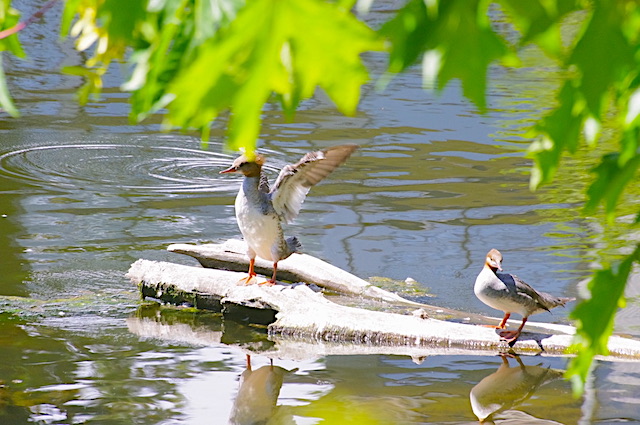
I have often thought I knew where my home was. Places of shelter, wild places, rainforests, warm, inviting places, places untouched by human construction or alteration. Places that called to me, welcomed me, enfolded me in their embrace. Places I just felt, instinctively, that I belonged. That I was a part of, not apart from, connected to everything in that place and though it to all-life-on-Earth. I sympathize with the Procol Harum song whose protagonist sought to explore the world but at every turn “only saw how far he was from home”. For some, the fearful, home is the only place we are not afraid. While I sense, instinctively, that the definition of home above, in italics, is correct, I am still not quite sure what it means. For most of us, including me, I have never found a place where I am myself, perhaps because I am not yet sure who that self is, or is meant to be. At least not in the nobody-but-yourself ee cummings sense. I have argued that the work we are meant to do is that which lies at the sweet spot where your Gifts (what you do uniquely well), your Passions (what you love doing) and your Purpose (what greatly needs doing, that you care to do) intersect. I have called such work Natural Enterprise and although it is rare it is magic. Perhaps, by analogy, home, the place we are meant to be, lies at the sweet spot where our Capacities (what we offer to place and community, what we are good at being), our Joys (what fills us with love and happiness in a place and community, what we love being), and our Intention (what we need ourselves to be, and others need us to be). That is, perhaps, our place — not our place to do, but our place to be, the place where we be-long. When we have found our place, is that place our home, our Natural Community? The challenge here is not only discovering such a place in this staggeringly complex world, it’s knowing ourselves — most of us, I suspect, don’t really know our capacities, what we’re capable of, or what we really love being, if we’ve only experienced being a few different things in a few different places. We probably don’t know what we need ourselves to be, unless we’ve been really tested, and what others need us to be depends on their own ever-changing circumstances, and how those many ‘others’ revolve, as they will, in and out of our lives. I wonder if this challenge is not due, for the most part, to having so many choices. In indigenous communities, and among wild creatures, there are fewer different capacities that can be developed, fewer capacities in demand, fewer different ways to find love and fewer people to find it with. There is less opportunity to visit or learn about other places, so one’s search is limited to what is at hand or described by those one encounters personally. And there is more time to reflect, to ponder one’s options, to learn who one really is, and less cultural indoctrination (necessary in modern civilization to keep us in order in our horrifically overcrowded world) to become everybody-else. We have become so used to defining ourselves by what we do, that we often cease to distinguish that from who we are. My Gifts include imagining and provoking; that is what I do uniquely well. But what am I uniquely good at being? What reflective (as opposed to active) capacity defines me, comprises my unique offering to my place, wherever that may be? My Passions include writing and working collaboratively on complex problems; these are things I love doing. But what do I most love being, that might help me identify my place, the place where I can be this? My Purpose, what I am needed to do, is to enable people to change themselves for the better. But what do people (people in my community, people I love) need me to be? And how can I be more completely and authentically nobody-but-myself? Home is the place that realizes these three ‘existentials’: It is where one can be what one is good at being, where one can be what one loves being, and where one can be what one is needed to be. The ducklings in the photo above, studied so carefully by biologist Bernd Heinrich, will know their home instinctively, even though it will change (from wetland to meadow to tundra, in cycles) many times throughout their lives. Each time they will migrate home as precisely and unhesitantly as a guided missile. They know where is home, for them. For us, discovery of home is harder. It requires us to know who we are. When we became disconnected from all-life-on-Earth, and preoccupiedwith what we had to do, and began living inside our heads, we forgot who we were. Until we remember, we will never know where is home, for us. Category: Our Culture
|
May 20, 2008
Principles for Intentional Community
![]() Yesterday I reported on my visit to Whole Village, an Intentional Community near where I live, and in that report I described briefly the principles that community is guided by in its decisions and operations. I’ve heard and read about similar statements of principles for other Intentional Communities, and wondered if it would be possible to create a generic set of principles for such communities, or at least for those whose objectives include being a model of environmental sustainability, social responsibility, and a self-sufficient, progressive lifestyle. The definition of an Intentional Community is a group of people who live and/or work together to achieve a common purpose or set of shared objectives, and who also share social values, passions or philosophy.
While most ICs are physical communities, they may be virtual, and while the best-known are 24/7 living communities, some are working-hours only. What differentiates them most from casual communities and ‘networks’ is the degree of commitment and time dedicated to making them work. Here’s the list of Principles of Intentional Community that I came up with:
From this list, you can see how much more work and responsibility is vested in the individual members of Intentional Communities than is the case in most ‘neighbourhoods of convenience’. From my discussions, this workload can be anywhere from 10 to over 40 hours per week, depending on the individual community and the degree to which its members get their livelihood right within that community. Members need to know what they’re getting into — while I’d be prepared to invest 10 hours a week in an IC, I wouldn’t invest 40 — like most people I don’t want to work that hard, and I don’t think, if a community has the right members and stays faithful to these principles, it should be necessary to work that hard. At the same time, acceptance and adherence to these principles is setting high expectations of a community’s members. Some might say it asks too much, and that this list should be stripped down to the principles that are absolutely essential to success and sustainability. Personally, I think we’re past that stage. We urgently need models of a better way to live and make a living, and these principles, while they set a high standard of behaviour and performance, are not that demanding or arduous, and their successfuladoption could show the world just what is possible. If not Intentional Community, then what? Category: Intentional Community
|


Although it has recently
…In which 
My friend Paul Heft, in response to my 
Four years ago I wrote a long article trying to understand and explain the physical, psychological and intellectual evolution of the human species through the advent of ‘civilization’ and how that has given rise to a physical and psychological separation from nature, and a culture of living inside our heads, all of which have disconnected us from, and made us ignorant of, how natural systems work, and hence instilled in us a deep-seated