| Now, thanks to a new FEC ruling that says bloggers (online journalists) are journalists, and entitled to the rights and freedoms thereof, How to Save the World can finally reveal the horrifying truth that explains the strange decisions made by global political leaders since 9/11. This journal has learned, from a highly-placed top-secret government source (I promise I won’t tell, CP!) that more than four years ago at a special closed meeting of G8 leaders, those leaders opted, for security reasons, to have themselves replaced by clones created using a new South Korean process, and since then have been living in luxurious retirement in Fiji.
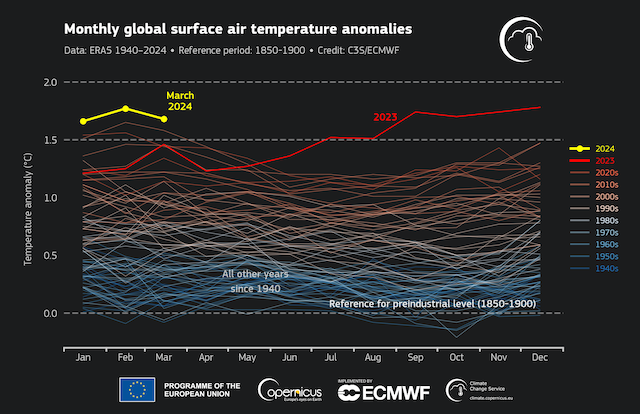
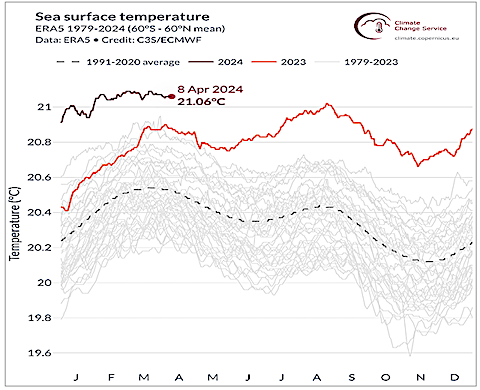
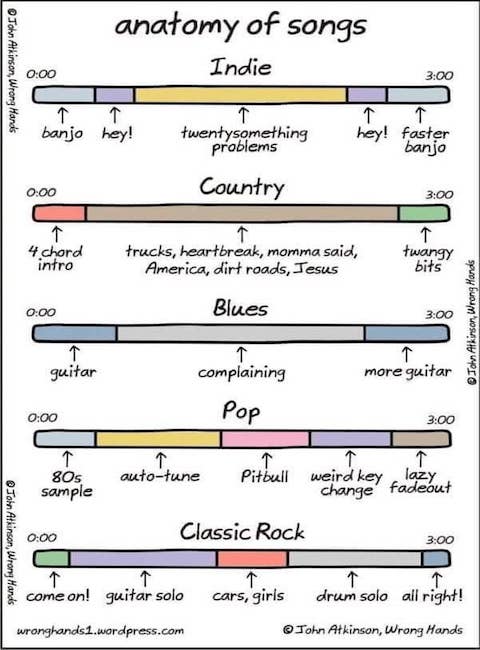
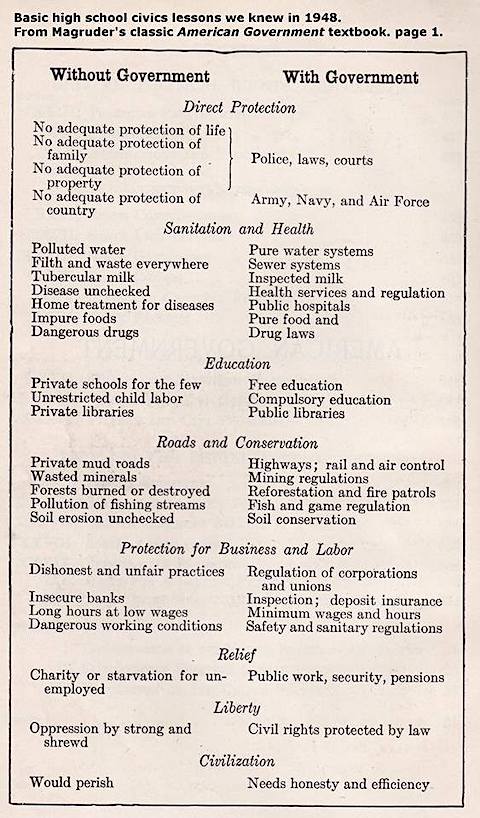
The clones, while physically identical to the leaders they replaced, have periodically behaved in bizarre and unpredictable ways, and have even reportedly regressed to an earlier evolutionary state, exhibiting chimp-like behaviours. While this has not posed any recognizable problem in the case of the clones of US president George Bush or then-prime minister of Canada Jean Chretien, in the case of some other G8 leaders like Tony Blair the simian behaviour has been quite noticeable. The Blair clone has been caught on several occasions mimicking the ape-like behaviour of uncloned fellow Briton Margaret Thatcher, including occasionally throwing his own feces at political opponents. Accordingly, the few advisors to the G8 leaders who were in on the top-secret cloning process, devised the Strategic Dartboard System (SDS) to enable the clones to make plausible decisions even in the absence of these advisors. Under the SDS program, four possible alternatives are devised and attached to dartboards using yellow Post-It Notes, and the clones then select which alternative to pursue by throwing a dart until it lands on one of the yellow notes. If you have noticed that G8 leaders have recently been disappearing completely from view for a few days after national emergencies, this is because it takes some time to train the clones to throw the darts accurately and to absorb the ‘talking points’ given to them to reflect the ‘decision’ that the dart program has made for them. After Hurricane Katrina, for example, the Bush clone became alternatively sullen and hysterical, throwing darts at his own advisors and at the spouses of outed CIA operatives instead of at the board, and became flustered at having to recite multisyllabic words in the talking points like ‘accountability’ and ‘preparedness’. Our top-secret informant has furnished this journal with four photos of decisions made using SDS: In 2002, when the Afghanistan War began running off the rails, and with public impatience over the failure to catch those responsible for 9/11 growing, the George Bush clone made this momentous throw to decide how to resolve the situation: Shortly thereafter, the Tony Blair clone decided how the UK government would respond using this throw: Fortunately for Canada, the Jean Chretien clone, using the identical dartboard, failed in 60 consecutive attempts to hit the dartboard, instead hitting his soon-to-be successor Paul Martin 28 times; as a result, he decided to do nothing about the Iraq situation, and instead turned his attention to the problem of what to do about the threat of Quebec separation. Money was available from the Canadian budget surplus to fund a pro-federalism campaign, so the Jean clone, hitting the board on the first try, made this unexpected and fateful decision on how to distribute the campaign moneys: Of course, successor Paul Martin could not be told of the secret cloning of the G8 leaders, including that of his predecessor, which is why he was completely unaware of the decision. That decision has drawn both men into a scandal that threatens to make federal elections a monthly process in Canada for the foreseeable future. Martin, recovering from dart wounds for months before Chretien stepped down, was never even made aware of the dartboard that was used for several years to determine government policy, and immediately began making government policy decisions using ‘logic’, which has threatened to undermine the entire SDS program. Accordingly, the G8 clones have been working furiously to get Martin’s minority government defeated, by supporting Canadian Conservative leader Stephen Harper’s bids to topple the government. Harper, while not a South Korean program clone, is reportedly a clone of former Canadian prime minister Brian Mulroney, whose bizarre behaviour is not perceivably different from that produced by clones following the SDS program. More recently, the Bush clone used the dartboard to make this critical decision on how to deal with the largest national debt in the history of civilization: The dartboard has also been behind the very quick Bush clone nominations to the Supreme Court. Rather than using yellow Post-It Notes for these decisions, four cards were simply selected at random from Karl Rove’s rolodex. |
November 20, 2005
Exclusive: South Korean Clones Replaced G8 Leaders After 9/11
November 19, 2005
Links of the Week – Nov.19/05
![]() EL Doctorow: “Bush Doesn’t Feel”: The award-winning writer brilliantly diagnoses Bush’s psychopathy in the Alachua Post. Thanks to Dale Asberry for the link. Excerpt: He is the President who does not feel. He does not feel for the families of the dead; he does not feel for the thirty five million of us who live in poverty; he does not feel for the forty percent who cannot afford health insurance; he does not feel for the miners whose lungs are turning black or for the working people he has deprived of the chance to work overtime at time-and-a-half to pay their bills—it is amazing for how many people in this country this President does not feel. But he will dissemble feeling. He will say in all sincerity he is relieving the wealthiest one percent of the population of their tax burden for the sake of the rest of us, and that he is polluting the air we breathe for the sake of our economy, and that he is decreasing the safety regulations for coal mines to save the coal miners` jobs, and that he is depriving workers of their time-and-a- half benefits for overtime because this is actually a way to honor them by raising them into the professional class. And this litany of lies he will versify with reverences for God and the flag and democracy, when just what he and his party are doing to our democracy is choking the life out of it.
Why Agricultural Subsidies Promote Poor Health: An article by Scott Fields in EHP explains how agricultural subsidies not only distort the market and allow giant agribusiness to become wealthy while farmers suffer, they also produce poor public health by making the least healthy foods the most affordable. Thanks to Dale Asberry for the link. Small Retailers Bring Online Shopping Across the Digital Divide: Some savvy small retailers are hooking up with online specialty stores to bring into their own shops unique, customized, and sometimes even local, well-made, socially and environmentally responsible products, so they can be made available to the 80% of the population that have no access to, or ability to effectively use, the web. The NYT’s Keith Schneider reports. Sony Chokes On Its Own Security Technology: Sony/BMG music has been forced to recall millions of CDs with despicable ‘digital-rights’ technology, when the technology was found to expose buyers’ computers to crippling viruses. The NYT’s Tom Zeller reports. Simple, Inspiring Animation: The image above comes from a charming little animation by two students at Canada’s Sheridan College, Jon Klassen and Dan Rodrigues. Thanks to Creative Generalist for the link. Found Poetry: There’s a meme going around the blogosphere on ‘found poetry‘ — prose writing that, with a little reformatting, becomes exquisite poetic work. The best example I’ve found so far is this piece from fellow Salon blogger Bonnie Willow. One does not need any imagination to feel the poetry in this delightful bit of writing. Anyone else discovered great ‘found poetry’? |
November 18, 2005
The Ideal Collaborative Team, and A Conversation on the Collaboration Process.
The Ideal Collaborative Team A New Survey Suggests that Attitude is More Important than Experience in Collaborative Work A recent survey conducted jointly by Mitch Ditkoff and Tim Moore of Idea Champions, Carolyn Allen of Innovation Solution Center and Dave Pollard of Meeting of Minds reveals that most people would rather have inexperienced people with a positive attitude than highly experienced people who lack enthusiasm, candor or commitment, on a collaborative work team. Two criteria, enthusiasm for the subject of the collaboration, and open-mindedness and curiosity, are rated as the most important criteria by virtually all segments of respondents. More than half of all respondents rated these qualities as indispensable in a collaboration partner. By contrast, five experience-related criteria (proven trustworthiness, collaboration experience, previous familiarity with other members of the team, reputation in the field of the collaboration, and business experience), rate at or near the bottom of the 39 criteria assessed by participants. Candor, courage and timeliness of follow-through are also rated very important qualities in a collaborator, along with strong listening, feedback and self-management skills and diversity of ideas. These findings, most of which are based on responses from experienced collaborators, seem to suggest that just about any group of appropriately motivated people can be effective collaborators, and that good collaboration is more art, and perhaps chemistry, than science. Read the rest. Also with this report: A Conversation On The Collaboration Process In order to make the results of this survey even more valuable to readers, we thought it would be useful to provide some insight not only into who are the best collaborators, but how one can better conduct collaborative activities. Rather than conducting another survey, we decided to tap our collective (and collaborative) experience as collaborators, and we concluded that the best way to relate this was through a conversation. The conversation follows the full report. Update!: Carolyn has put a .pdf copy of the report on her blog here. |
November 17, 2005
Why Can’t Real Organizations Be As Collaborative As Virtual Games?
![]() Screenshot from multiplayer online game World of Warcraft Steve Barth is an associate of Dave Snowden’s Cynefin Centre for Organizational Complexity, and that by itself qualified him as an interesting guy to talk to at the KMWorld & Intranets conference in San Jose. As soon as I heard him cite the John Gray statistic about the 16 million bits of information our bodies process every second, of which only 18 bits is conscious, I knew I’d found a kindred spirit. His presentation was about Collaborative Learning and Games, and was brilliant. It is the first presentation I’ve seen in a long time where the audience was so engrossed in the subject that they spoke more than the speaker. Some of the ideas that emerged from the presentation:
I took another look at the chart I put together from my previous post contrasting complicated world and complex world qualities:
and I began to realize that ‘real-world’ business is rooted in complicated world behaviours, precepts and constructs (left side of this chart), while ‘virtual-world’ gaming is rooted in complex world behaviours, precepts and constructs (right side of this chart). Not only is the stuff on the right-hand side of the chart more interesting than that on the left, it is more real. Steve spent a fair bit of time hanging around with the team at Coemergence, a Canadian software company headed up by New York ex-pat Michael Chender, and in addition to Michael I had the chance to meet with Richard Marrs, Nadine Tanner and several other members of the team. I’m planning on reviewing their product, but I was profoundly impressed by the team, and wondered aloud why it is that so many very bright, creative, multi-talented and well-read people have found their niche in technology companies. Michael, for example, is a Buddhist, meditation instructor, and the Chair of the Shambala Institute, a leadership training organization that is focused on awareness, complexity, capacity, learning, innovation and community. In my discussion with Michael, I lamented that most business activities were not nearly as interesting as the discussions and idea play that has been occurring in the intersections and gaps of this remarkable conference. His answer was that we should not worry about most business being dull, and recognize that these special discussions and creative play are their own reward, and that is all the reason needed to have them — and that what was important was making room for more people to participate in these activities which, while perhaps not terribly relevant to the participants’ day jobs, nevertheless enrich, motivate, refresh and stretch us. Another interesting presentation was by Peter Gloor of MIT/Sloan, who talked about the way in which organizations can interleaf (a) innovation networks (people who share an organizational vision or objective), (b) collaboration networks (people who share tasks, learning and capability), and (c) communication networks (people who share interests and news), in such a way that they reinforce and build on each other. He presented this intriguing map of the roles people play in business’ social networks, based on the frequency of their contributions to the network, and whether they send more messages than they receive or vice versa (note that we may play different roles in different networks, and our role in each network can evolve): I have said before that the more organizations I study, the more I see knowledge management and technology as the ghetto for organizations’ brightest, most creative and collaborative people. This conference has shown that when you let those people out of the ghetto and get them together to party, the result is magic. |
November 16, 2005
Wikis: A Tool for a Democratic Revolution in Business?
![]() The Social Networking Landscape The best part of my visit to San Jose has been, perhaps not surprisingly, the social networking between the KMWorld & Intranets presentations on social networking. To any conference attendees visiting How to Save the World for the first time: Welcome! Some highlights of the presentations: Tom Davenport described some research he’s done with Rob Cross on the social networks of identified high performers in organizations. Relative to other people in their companies, these high performers:
Nothing remarkable in this, perhaps, but interesting. Think about the people in your organization or network who you think are most effective — do they fit this profile? Will social network mapping ‘out’ the ‘leaders’ who surround themselves with a small (often sycophantic) cadre of advisors as the ineffective, out of touch, isolated organizational weak links they really are? Ross Mayfield of Socialtext and Many 2 Many fame had lots to say about wikis, of course, but also made some awesome comments about how social networking disrupts many ‘political’ aspects of business and society and ushers in Extreme Democracy:
Ross agreed with me that the biggest drawback with wikis today is difficulty of navigation. I told Ross that wikis need “a map that shows you where you are”. I have a half-formed idea that there is a great opportunity to allow the sections and pages of wikis to be generated and indexed visually by mindmaps. The mindmap could serve as a cognitive representation of the entire landscape of the wiki, so it could be used not only to spontaneously and collectively create the organizational framework of the wiki, but to visualize and navigate that framework as well. Ross co-presented with Jim Bair, who I also had the chance to talk with at length. Jim described IBM’s prediction that we will soon see software that will allow people to more powerfully browse and organize blog content, both of single users and of multiple users as a collective repository. Think of the entire blogosphere as a single large collective knowledge repository that you can reorganize, filter and index according to your own way of looking at that content, or as a giant conversation that you can re-thread in a way that is most coherent and meaningful to you. I had the pleasure of having dinner with Dave Davison, who has been a consistent champion of my AHA! per project. We shared some interesting ideas about the project that you’ll see on these pages soon. This has been, for me, an outstanding conference. Wish you were here. The slides for my Tuesday presentation on Social Networking are here, and those for my Wednesday (today’s) presentation on Personal Knowledge Management are here. |
November 15, 2005
Business Models
![]() Alex Osterwalder and I have been exchanging e-mails on the subject of business models. Alex’s blog is devoted entirely to this subject, and the graphic above is his ‘business model model’, showing the nine ‘building blocks’ for such models from his synthesis of reading on the subject. The right side of the model is about how the business generates revenue, while the left side is about how it manages costs and hence generates profit. I’ve been advising clients and prospective new businesses how to document and evaluate their business model for years, and in my experience there are three types of business models, that organizations look at in sequence:
This sequence of models can apply to anything from a simple marketing program to the launch of an entirely new business. It’s been my experience that most businesses put insufficient work into the viability assessment, the wrong kind of thinking into the business formation decisions, and too much emphasis on the details of the operating model, and hence on ‘micromanaging’ the operations to ensure they conform to the operating plan. The reason for insufficient work on viability assessment is that it’s tedious, and the people who are championing the idea have already concluded that it’s viable. That’s why in Natural Enterprise I encourage an almost excruciating amount of attention and research on viability up front, tough, shoe-leather-wearing work with potential customers, suppliers and partners until you know that it fits a need, that you have the competencies to fill that need, and that you have some competitive advantage in doing so. If that time and effort is invested, the whole approach to business formation changes. The people and partners who will play the key roles will already be onside and will have essentially self-selected to play those roles. Much of the start-up capital may come in the form of advances from customers who have already indicated an interest in the product or service, and who have been active partners in its design. The total amount of capital will be less, capital needs will be rather obvious, and may be already forthcoming, if the viability assessment has been done well first. At this point, I think, trust takes over. You have the right people in the right places. They know what they have to do and how to do it. They’re motivated, and focused on the customer. Why do you need an elaborate operating model at this stage? Not only will it be telling people what they already know, it will be getting in the way of them doing their job effectively, by imposing the inevitable standards, paperwork, and approvals procedures. And worst of all, it will discourage improvisational thinking and continuous sustaining and disruptive innovation, and will be contributing to what David Ehrenfeld calls “a society managed to death”. But giving them that message at the outset is a lot easier than telling them, after spending years of effort trying to make a flawed business model work, and investing their life savings in it, that they should pull the plug. [I'm in San Jose at the KMWorld & Intranets conference, and for the next two days I'll be blogging about what I think are the highlights of the conference, and also including my own (two) presentations, on Social Networking and Personal Knowledge Management.] |
November 14, 2005
It’s Easy to Be Brave From a Distance
![]() The famous lone protester at Tienanmen Square, 1989 I saw the title of this post on a local veterinarian’s sign today. Apparently it’s from Aesop’s Fables, though I’m not sure which one. One of my best-received articles was the one I wrote last year on courage. At that time I said that I disbelieved most of the common wisdom about courage: That it’s in all of us, that it’s false bravado, or moral strength, or superior character. I ascribed it instead to love: “If you love life, others, your world, enough, perhaps you can summon up the courage to do anything.” And I agreed with this wonderful quote from right-wing blogger Bill Whittle: And in this imperfect, flawed nation of ours, perhaps more than anywhere else on Earth, I think about the courage it takes to be poor, to face that sickening knot of worry and despair that comes with not having the money to pay your bills. For there is no more steady and enduring courage than that of a poor family, especially a single parent, who fights a never-ending battle of brutal hours at miserable pay, of perennially unrealized dreams, and of the desperate, numb agony of disappointed children. For people like that, who force themselves to work two jobs while we sleep, to avoid the temptations of crime and dependency while surrounded by luxury and wealth the likes of which man has never knownÖwell, that is dogged courage of a sublime nature that passes all understanding.
And I wondered aloud why day after day, despite my passionate beliefs about what was wrong with the world and what needed to be done, I sat at the computer, and wrote instead of acting. Did I not love the world, Gaia, and its needlessly suffering people and animals enough? Since then, I’ve received some solace and, at the same time, a prod, from philosopher John Gray, who has persuaded me that no amount of energy, organization and ingenuity is going to prevent the end of civilization by the end of this century, but has also refocused me on what I can do and should be doing to make things better here and now at the local level, and to create some working models of intentional communities and community-based enterprises and economies that can help those who survive the end of our civilization to live in peace, harmony and comfort. Supposing you were suddenly blessed with a benefactor who offered you $200,000 per year tax free for the rest of your life. The only condition is that you not accept any money from any other source for doing anything. If you work, it has to be for free. if you gamble or invest, any gains have to be given away. What would you do? Just retire and ‘do no evil’, living a life of ease with loved ones, minimizing your footprint? Write the book you’ve been putting off? Do work for charity — locally? in an inner city or impoverished rural area near you? in a struggling nation? Study and learn and make yourself a better person, and then take it from there? OK, now I’m going to change the supposition. Now you have instead a one-month sabbatical, $25,000 to spend, and a guarantee that your job or other source of income will be intact once the month is over. Same conditions on other income during that month. Would that change your answer? If so, why? Back to the first scenario. It’s now a month later. Honestly, have you started yet, or are you still thinking about it, unwinding, “in transition”? What’s holding you back? Now, just to up the ante, add to both scenarios a $10 million grant that you can spend on any one project, with the proviso that neither you nor any family members can directly personally benefit from the money. What do you spend it on? I’m willing to bet that you make faster progress spending the money than you do changing your lifestyle. If I’m right, why is that? Here’s my answers to the questions above, and why I think they’re probably close to what most people would do:
The reason I would do that is that, if we’re wise, we do things that are at the intersection of what we’re good at, what we love doing, and what’s needed. The market, I think, doesn’t yet know that the world needs the models I outline in my books, so they won’t, right now, pay me for writing them. My ‘benefactor scenario’ would solve that problem for me, moving the writing of these books from intersection 2 to intersection 3 in the chart at right — and ending my procrastination. Once these were written, I would start working full-time and simultaneously on making AHA! a reality, creating a new Intentional Community, and facilitating the creation of Natural Enterprises by young people — for the same reason: these activities would then be in intersection 3 for me. There are some other things on my Getting Things Done list bit they’re things I’m not good at and would need a lot of time to become good at. Even under this scenario I know these would never get done, though I expect I would spend some time acquainting myself with people who are good at these things. In the second scenario, with only a month, I fear I would be much less likely to do much different from what I’m doing now. A month isn’t enough time to make a significant change in what we do, if we know we have to go back to former behaviours at the end of it. The $10 million grant would be easy to part with: It would be simply a matter of deciding whether to finance AHA!, or a new Intentional Community, or a ‘school’ to ‘teach’ Natural Enterprise, or a new animal welfare organization — or all four. In a month, the money would all have been given away. Why? I believe it is human nature (a) to only change when we have to, and (b) to avoid risk until and unless the current pain is high enough that the fear of changing is less than the anguish of not changing. There have been a number of studies that confirm this to be true for most of us. Lack of money (and the fear of not having enough) are currently holding me back from jumping into my writing and then real model creation, bringing the subjects of my books to fruition in the real world. For me to give up the current comforts of home, routine, and lots of time with family, for a cause, no matter how worthy, will only happen when either my intolerance for the status quo gets much higher, or the (financial) risk of that change gets much lower. In this scenario that financial risk is lowered. And giving away money for something you believe in, when if you do not give it away you lose it, is easy — you have nothing at risk and you do not have to change. Does that mean I lack courage, for not doing it now, anyway, with no benefactor or safety net? Perhaps, but I’m not so sure. Look at the best-known heroes of history and myth. They fought for what they did because the anguish of not changing was so high and so immediate, that they had no alternative but to be brave. There was no distance between them and the demons they fought and vanquished. There was no choice but to change. They had nothing to lose. And how about the poor, the ones that live with this anguish every day? They are of course brave, because there is no distance between them and the grinding daily struggle to survive and make a life for themselves and those they love. The fact that they have no choice but to be courageous does not diminish their courage. It simply explains it. If I lack courage it is perhaps not daring to eliminate the distance between me and the potential sources of anguish that might raise that level of anguish to the point I might do something heroic. If I were to go to Darfur and see how the people there are living, if I were to see first hand how animals in factory farms and laboratories are treated, if I were to witness the day-to-day misery of the poor and suffering living just a few miles away, that might change everything. That would change everything. My risk aversion, or cowardice, prevents me from staring that truth in the face, because I know I would have to do something, anything, now and for the rest of my life, if I really knew what I fear is happening now in our world. That is my Cost of Not Knowing, and the reason that, for now, I keep my distance. There is no courage in that, but also no shame. I’m merely human, after all. |
November 13, 2005
The Personal Creativity Cycle and the Organizational Innovation Cycle
![]() Bengt J”rrehult, the KM Director for Swedish paper & packaging company Svenska Cellulosa Aktiebolaget, has come up with a model for creativity that synthesizes some of the more analytical approaches with some more right-brain approaches like those in Creativity Inc, by Jeff Mauzy & Richard Harriman, and Presence, the book by Senge et al that I recently reviewed. Creativity Inc outlines creativity practices that entail learning new competencies, establishing a facilitating environment, and offering creativity programs. The keys to creativity, its authors say, are intrinsic motivation, curiosity, making and breaking connections, and honest idea evaluation. Bengt explains his cycle, diagrammed above, as follows:
Not coincidentally, there is a lot of the ‘suspending’ and ‘letting go’ elements of the Presence model in Bengt’s model. This is a personal creative process. Now let’s put it together with the organizational creative and innovation process we developed for AHA!:
So, to reiterate Bengt’s personal creativity cycle, we, as individuals, (1) draw inspiration, (2) exercise personal courage, (3) break connections, (4) open ourselves to input from without and within, (5) draw on intuition, emotional intelligence and rational intellect to create new connections, and (6) feel the reward — the joy that this creative process gives us (outer circles of this chart). Creative organizations invite us to apply this creative process to organizational creative and innovative tasks. In organizational creative work, we collectively (a) learn, (b) listen/observe, (c) explore, (d) understand, (e) organize, (f) imagine, (g) reach out, and (h) brainstorm (leftmost 8 boxes of the inner circle of this chart). In organizational innovation work, we collectively (i) canvass the ‘crowd’ for confirmation that our ideas meet a genuine need, (j) design, (k) experiment, (l) question/challenge, and (m) realize the idea into a successful offering (rightmost 5 boxes of inner circle of this chart). All six elements of individual creativity in Bengt’s model are applied in all 13 aspects of the organizational creative and innovation process. These are both cycles, and ideas and actions pass through their intersections and give them momentum dynamically, much as electrons are exchanged in chemical reactions. For example, you might be reading about a new type of plastic that dissolves inertly in water, and later about the problems with sorting and recycling of packaging materials (individual creativity cycle step 4). You connect the two learnings together (step 5), and get excited about the possibilities (step 6). You are inspired (step 1) to invent a packaging material that can safely be washed down the sink. You overcome the fear of being thought foolish for such a radical idea, the fear that someone has probably already patented it, the fear that nothing plastic can really ever be harmless to the environment (step 2), and are propelled by your courage to start thinking boldly about the possible applications of such a technology in all kinds of packaging (step 3). At any point in this personal cycle, you may be drawn into, or create, an organizational group that can explore this idea and do what needs to be done to bring it to fruition. It might start with learning from a business colleague more about plastics, and sharing what you know so far (step a), or a casual brainstorming with trusted colleagues over lunch (step h). Someone in the organization may hear about your exploration and authorize a group to explore it (step b), or to design a prototype (step j & k). The personal creative cycle can thus intersect with and be propelled by the organizational creative and innovation cycle at almost any point, and vice versa. Some of the articles I have been reading lately (notably this one by innovation guru Michael Schrage suggest that there may be three more steps in the innovation cycle between (i) canvass and (j) design:
That would increase to 16 the number of steps in the group/organizational cycle. I welcome comments from readers on this revision to our model, and how to integrate it with Bengt’s in a graphic way that is not overwhelming to understand. Why is there so little innovation in most organizations today, when there is so much creative talent and so many ideas and so much information floating around? My hypothesis: Organizations rarely invite people to apply their personal creativity to organizational challenges, so the available ideas and talent are largely unused and eventually dry up. This is because most organizations (a) are not set up to tap this talent, (b) don’t really trust most of their employees to be able to apply their creative abilities and imagination in a productive, effective way, and (c) are averse to true innovation, as Christensen explains, because their intense focus on customers discourages them from doing anything different from what has satisfied customers to date — i.e. what they’re already doing today.
Organizations are not stupid. They have achieved success by effectively meeting customers’ needs. They are not motivated to change what they’re doing until something averse happens — dropping revenues due to a competitor’s disruptive innovation or a dramatic change in the economy, buying criteria or demographics. Too often, by the time this happens it is too late. Successful organizations should be anticipating such averse events and bringing either sustaining innovations or disruptive innovations of their own to preempt such events. They should be putting in place an environment that encourages their employees and others (including customers) to apply their personal creative skills to help in that effort. And they should trust their employees and customers to be a vital force in the organization’s innovation efforts, and put in place programs to demonstrate that trust and tap that creative talent. Failure to do so represents not only a squandered opportunity and a waste of talent, but also guarantees that most of your employees will be bored, disengaged and disinterested in the organization’s success beyond their own personal interest, and likewise guarantees a largely indifferent and unloyal customer base. |
November 12, 2005
Links for the week Nov. 12-05
![]() A Baker’s Dozen of the best articles and sites discovered or brought to my attention this week. Business & Innovation The Key to Innovation is Overcoming Resistance: Michael Schrage in CIO Magazine says innovators need the political smarts and persuasive skill to get their good ideas sponsored, funded and implemented. Thanks to Mitch Ditkoff at IdeaChampions for the link. Bioteaming: Collaborating Like Nature: Ken Thompson’s blog and his new Manifesto with Robin Good explain how much we can learn about collaboration from watching dolphins and other species. When Business Knows Too Much About You: A hilarious but slightly spooky video spoof of how information-sharing gone haywire could imperil your privacy and dignity. Canadian Businesses That Do Good: Both DownBound in Toronto and Ethiquette in Montreal allow Canadians (and others) to find and buy from socially and environmentally responsible companies. And Dale Asberry points out Etsy — a broker that proposes to connect such business around the world. Design a New Wine Bottle and Win a Prize: Hugh Macleod has a contest to design a new bottle and label for his favourite wines from Stormhoek. Contest rules here, ideas to date (including mine) here. Yahoo Online Think Tank: Yahoo Australia is sponsoring a think tank that will allow those looking for ideas, and those that have them, to brainstorm together — 5 minutes per session. You can see the results on a live webcam. Environment Bill McKibben Waxes Optimistic About the End of Oil: Environmentalist McKibben (The End of Nature, Maybe One) says expensive oil will benefit local businesses over global ones, and contribute to community self-sufficiency — but only if we start working on improving community-based infrastructure to improve autonomy and introduce local currencies to enable the shift. Science & Health New Power Source That’s Too Good to Be True: The Guardian reports on a scientist’s claim to have invented a cheap, limitless, clean source of energy., that defies the rules of quantum mechanics. Pardon my skepticism. Thanks to Jeff Gold of the Green Party for the link. Meditation is Good for Your Brain: Science Daily reports on a multi-university study that indicates that meditation improves your brain’s ability to process sensory inputs, ideas and emotions. Thanks to Kalanga Joffres for the link. Social Justice Tracking Business’ Charitable Giving: WhyCharity is an Open Source project to create a mechanism to monitor and report corporate charitable giving, giving consumers one more indication of corporate social responsibility. Helping the Rich Loan Interest-Free to the Poor: Kiva provides a list of community business projects in struggling nations that need low-cost loans, and provides an ongoing log of how these businesses are doing, so you can see how your investment is doing. Thanks to Lavonne at BornFamous for the link. Cartoon by Leo Cullum from The New Yorker — his framed cartoons can be bought here. |
November 11, 2005
Watch and You Will Know
![]() Evelyn Rodriguez is in very expansive mode over at Crossroads Dispatches, and recently wrote about her meeting with a marketing guy at gotomedia.com, whose tagline is: Ask, and people will guess at what they do. Watch them, and you’ll know.
And she quotes Gay Talese as saying that his interviews with people are initially quite meaningless, until he has observed them for awhile. So to some extent, he says, interviewing people who speak a different language is no harder than interviewing those who speak your own. Most of the meaning is picked up in the observation, and most of the journalist’s value is in reporting what was observed, not what was said. This, of course, is Cultural Anthropology 101. From the point of view of a business, the key to disruptive innovation is social insight. The minute you discover something important about your customers that no one else has picked up on, and that perhaps the customers themselves have not articulated, your competitors should be very, very afraid. I see this in my observations in nature as well. The squirrels learned how to defeat my baffles through one part trial-and-error, one part creative thinking, and one part observing, paying attention to every aspect of the challenge at hand. The ritual circular sniffing of dogs when they meet is merely an introduction to a profound process of mutually paying attention. I sometimes think our language is to some extent a distraction from paying attention, or even an excuse for not paying attention to people we are in the company of. Contrast that with the behaviours of new lovers, who are observing and paying attention to each other to an almost excruciating degree. They pick up, and even neutral observers nearby pick up, non-verbal signals and nuances of communication as subtle as the dilation of the pupils and the rhythm of breathing, the more complex rise and fall of voice and the non-verbal gurgles and trills between words — expressions rarely apparent in ‘normal’ human spoken conversation because there’s no point in them if no one is paying attention. I believe instinctively that all animal communications are that rich and that subtle, because they are so much better at paying attention than we are. They must perceive us as unbelievably insensitive, almost unconscious by comparison. Yet we call them ‘dumb’ animals. I recently wrote something that I think (immodestly) is quite profound in Jane Crow Journal where there was some light-hearted discussion of what women (and men) really want. I said: I think what most of us want, male and female, human and other, is attention and appreciation. Everything else is derivative of those two things.
It’s really all about attention, and paying attention. The attention we pay to others, and that others pay to us, defines us, far more than our appearance or our name. And how can we appreciate what someone (a life partner, a business partner, a customer, an employee, a friend, a foe) is about and has to offer unless and until we pay attention to her, really listen and observe with (as much as is humanly possible) no judgement, no personal filters or frames impeding. And once weve paid enough attention that we really understand that person (or for that matter, that creature of any species), how can we not appreciate her? That’s the simplest explanation I can provide for how we have lost touch with nature, and why we see the environment as ‘other’ and fail to appreciate its immense importance. We have lost the ability to pay attention to it, as language and other blunter tools of learning and appreciation have replaced observation and paying attention in human behaviour. And when we no longer appreciate it, we are content to allow it to be destroyed, until one day we can’t observe and appreciate it anymore. “Oh it always seems to be, we don’t what we’ve got ’til its gone”, as Joni Mitchell put it. Things are the way they are for a reason. Watch, listen, observe, pay attention, and you will know that reason. Most genius, most innovation, most emotion, I am convinced, stems from this ‘first-hand’ knowledge. This is the skill, more than any other, that I need to learn. Photo from the Ontario SPCA. |


I would start by writing my three or four books: First clean up