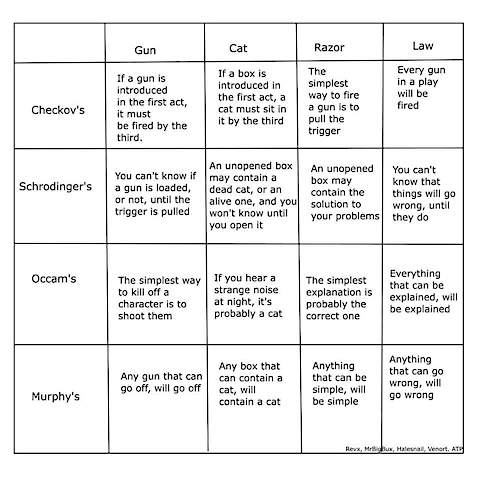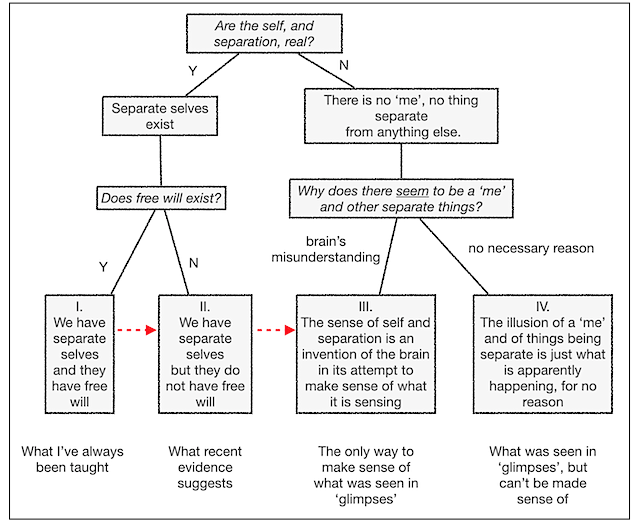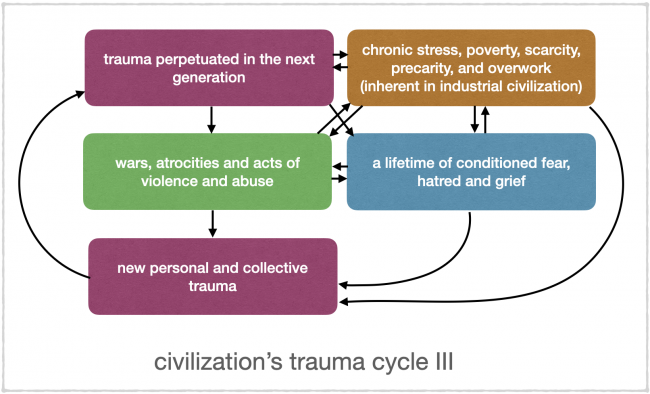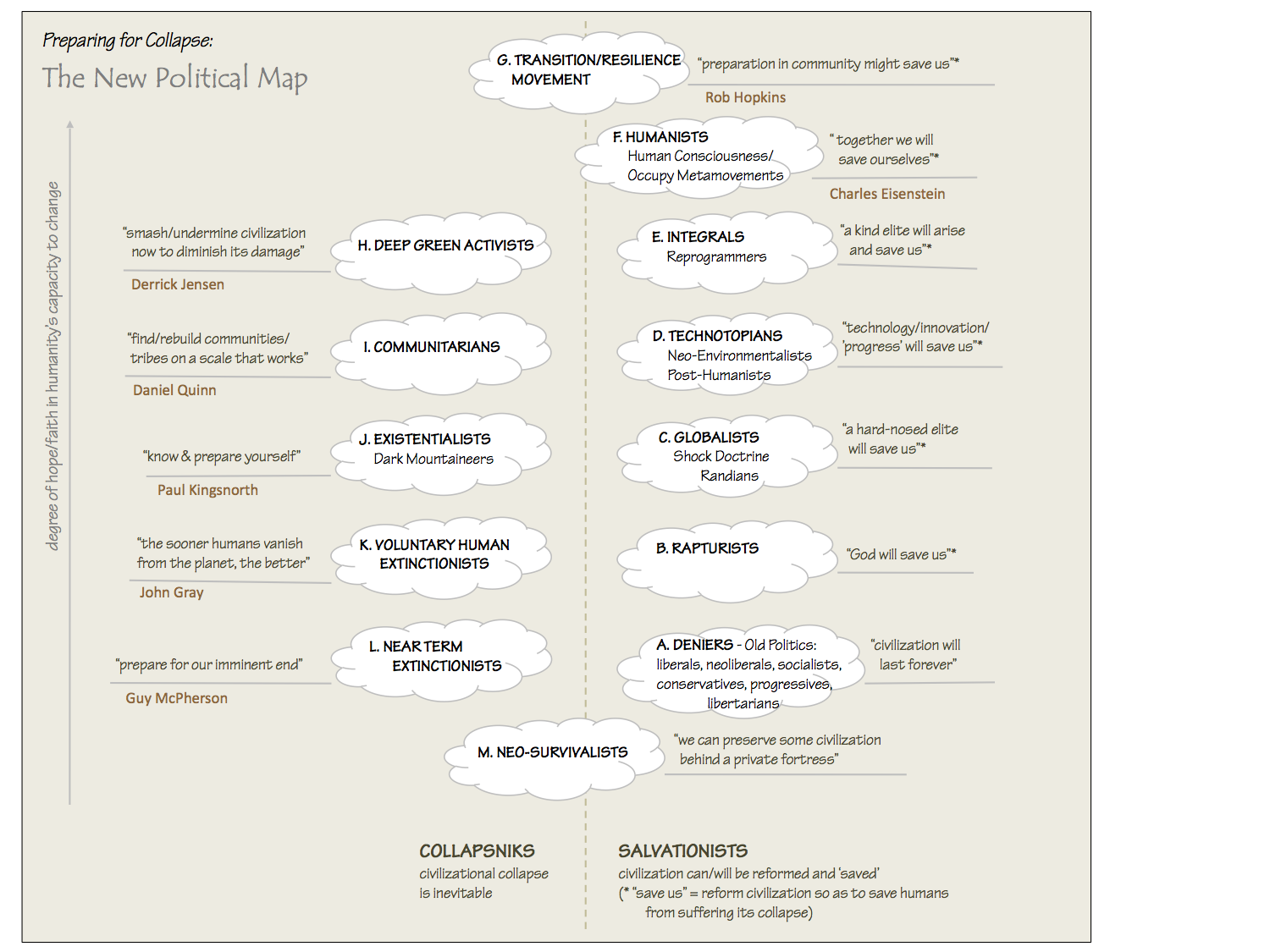
What I’m planning on writing about soon:
What are you thinking about? |
January 21, 2007
Sunday Open Thread – January 21, 2007
January 20, 2007
Saturday Links for the Week – January 20, 2007
![]() Photo: Golden Jackal by traveling New Zealand photographer-poet extraordinaire Pohangina Pete How the World Really Works US Court Backs Corporatists Over Poisoned Citizens (What’s New?): Economist Adam Smith said “the real purpose of government is to protect those who run the economy from the outrage of injured citizens.” Americans whose lives were destroyed by corporate negligence over safety are learning how true this is. The argument that there is “an epidemic of frivolous lawsuits against corporations” is an outrageous lie. Canadian Conservatives’ Long-Standing Racist Heritage: An article by a Guelph University professor reviews the paranoia and racism inherent in Prime Minister Harper’s and other Conservative politicians’ policies and posturings. Thanks to Rajiv Bhushan for the link. US Government Contract ‘Outsourcing’ Just Another Repayment of Political Campaign Contributions: The Democrats are making a big deal of the extraordinary, unscrutinized, uncompetitive and probably corrupt awarding of government contracts by the Bush administration. But don’t expect it to last. These same Democrats are guilty of the same practices to their contributors, many of them the same corporations, and they don’t want to rock the boat too much. Until the two-party oligopoly is smashed, any reforms will be symbolic only. So, this week the Democrats clawed back a $15B gift to Big Oil, but we have yet to see what they will do with the proceeds. Preparing for Civilization’s End Davos Recognizes Risk of Cascading Crises Threatening Civilization: The Davos gang are arch-right-wingers and comfortably in the back pockets of global corporatists, but they’re not idiots. Their new study intriguingly acknowledges the validity of complex adaptive systems theorists’ claim that our most intractable problems do not lend themselves to technological or other simple fixes, and reinforce each other in ways that threaten our civilization’s survival. The biggest threats in severity and probability?: A housing and other consumer/corporate asset value collapse; the collapse of globalization; the End of Oil; collapse of the Chinese economy; breakdown of global information & communication infrastructure; US trade deficit; and, most interestingly, the epidemic of lifestyle and environmental diseases in affluent nations. Experts Debate UK Preparedness for Flu Pandemic: In another appreciation of complexity and the absurd expectation that simplistic plans will cope with complex problems, the regulars of the flu wiki discuss why the UK is unprepared for a flu pandemic, and what would be needed to make it better prepared (mostly, a devolution of authority and responsibility and information flow to the front lines — communities, schools, workplaces and individuals). In related news, the new Egyptian poultry flu mutation appears to be Tamiflu-resistant. Practical Advice for Environmentalists: The best part of Grist is Umbra Fisk’s Q&A column Ask Umbra. She does excellent research, and when she makes a mistake, follows it up with a correction or amplification. This week she advises what wood to burn in your fireplace. An earlier, useful series explained which types of plastic bottles (those with a 2, 4, or 5, not a 1, 3, 6, 7, or 8 on the bottom) can be safely reused. NB: Don’t forget the read the two follow-ups to the latter article. Are We Too Dumbed-Down to Save the World?: Another great Joe Bageant post pointed out by Jon Husband this week. His points are well-taken, and very funny, though I am less pessimistic than he is that most of the population have become automatons incapable of intelligent thought. Some interesting thoughts too on the role of the journalist, those of us prowling the archaic text-based “information community” of the Internet where we will find only what we are looking for and what we more or less know. The Internet is a non-place where information is invited to be filtered through an already developed set of perceptions governing what we think we know, believe or want to believe.
His Conclusion:
With the entire world sold and mostly devoured, and six billion folks in a Darwinian death match for what’s left ó- half of them drinking sewerage and the other half living for the new xBox to come out — I’ll make a wild guess here and say it’s a helluva long way “back to the garden.” Things are not going to turn around, Fritjof Capra be damned.
|
January 19, 2007
2006 Predictions — Results
| This Crowd was none too wise, or else just not large and diverse enough.
A year ago I challenged readers to predict the results of economic data and political events at the end of, or during, 2006. I received 25 responses to the 20 US and World events questions, and 8 responses to the 12 Canadian event questions. Median score, and the Wisdom of Crowds score (the number of times the most popular answer was the correct one), were both 11 out of 20 on the US and World events questions and 4 out of 12 on the Canadian events questions. Due to the few responses there was no prize for the Canadian events questions (Gary and Marty had the top scores, tied at 6 out of 12). Runaway winner for the US and World events questions was Henrik Torstensson, a student at the Stockholm School of Economics with a remarkable 15 out of 20, two more than the runners-up and far better than the Crowd. He wins a 50Ä certificate to a book or music store of his choice. The questions, with the correct answers in bold: US and World Events:
Canadian Events: (contest open to Canadian respondents only)
|
January 18, 2007
Starring in Our Own Movie
![]() Painting by painter-environmentalist Sophie Sheppard, auctioned in 1999 at the Authors United in Defense of Mother Earth festival. No one’s in control. Not the government, not the giant corporatist oligopolies, not some superior being. Not even Gaia, even though she fights a mean battle against those who don’t know their place, and even though she always bats last. In one sense this is bad news. We cannot expect the government or the market to fix the colossal mess we’ve made of this planet. And technology has always created more problems than it’s solved, and that’s not going to change. And if you believe in the Rapture, or any other salvationist cult, well, give your head a shake. In another sense this is good news. We each star in our own movie, and no one writes the script for us, though many may refuse to play the part you write for them. And although we have a hand in the unfolding story, much of the plot is outside our conscious direction. We are, after all, figments of reality, and though we can fight our cultural conditioning we cannot overcome the storyline dictated by our body and our genes. We are who we are, and we do what we do for a reason, though that reason is often unfathomable. We do what we must. If we must, we can do anything. If there is no imperative, we do what’s easy, or what’s fun. What’s merely good, or right, or possible, doesn’t enter into it. There is no time for matters beyond the needs, the musts of the moment. If you want to change the world, make it world a better place, prepare to be unhappy with the world and with yourself. If you must change the world, and only if you must, if for you there is no other choice, then you will do it. I salute you for having the convictions of your courage. In response to my recent post on “making love last” (Tom Robbins’ mantra) my insightful and perceptive friend Siona sent me a long article on rescuing failing marriages by psychologist David Schnarch. For the impatient, here are the key points (emphasis and square-bracketed comment mine): Sexual boredom, low sexual desire and lack of intimacy are so common as to be one of the major complaints of couples who seek marital counseling, and are probably considered inevitable and incurable by the legions of other bored couples who don’t…
People complaining of a loss of the vital sense of connection they once knew often are deathly afraid of the very intimacy and eroticism they are craving. People have boring, monotonous sex because intense sex and intimacy (and change itself) are far more threatening and fearful than they can imagine, and require more adult autonomy and ego strength than they can muster… The essence of sexual intimacy lies not in mastering specific sexual skills or reducing performance anxiety or having regular orgasms, but in the ability to allow oneself to deeply know and to be deeply known by one’s partner. So simple to articulate, so difficult to achieve, this ability of couples to really see each other, to see inside each other during sex, requires the courage, integrity and maturity to face oneself and, even more frightening, convey that self–all that one is capable of feeling and expressing–to the partner… Most…marriages are constructed on the basis of what might be called mutual-validation pacts, in which each spouse implicitly promises and requires in turn the good opinion and emotional acceptance of the other for a fundamental sense of identity and self-worth [what I call the universal longing for attention and appreciation]. Generally, these couples do not really want increased emotional contact during sex, not because their relationship matters too little to them, but because it matters too much. He goes on to tell the story of one couple: After a long, supposedly intimate marriage, he had lost interest in sex because he no longer found his wife’s aging body attractive, but didn’t say so for fear of hurting her feelings. Schnarch suggested to him “if she was so unaware of his emotional state now, maybe the sex hadn’t been so intimate after all. On the other hand, perhaps she did know how he felt, and just didn’t care–she was not nearly as interested in intimacy with him as she was in being serviced by him, and would put up with his distaste as long as he kept it to himself and performed the job adequately”. When the patient, distraught at this possibility, later fights with his wife and confesses all, the tumultuous intimacy they then share leads to bouts of intense sex, yet at the same time “the greater the intimacy (which they claimed they wanted), the greater the anger, distress and anxiety” — having to face the risk of being individual, separate selves, fear of loving and wanting more than the other, and hiding behind the pretense of not caring very much about the other so it isn’t so terrible to lose that love. These two people are each trying to write each other out of their movies. And while Schnarch’s counsel may be illuminating, my guess would be that, for most, it changes nothing. Realizing you’re afraid of intimacy doesn’t lessen your fear. Your fear has a reason, probably long-standing and well-founded. It’s the same among those who go through 12-step programs to overcome addictions. Addicts are who they are, for a reason, physical or emotional, a reason that is likely deep-seated. We are all addicted to something. That’s not to say that our fears and addictions and personal failings are impossible to overcome, just that therapy and counseling and self-help books and good intentions won’t get you there. You will overcome them only if and when you must. That decision rests with ‘you’, the script-writer of your movie, but it is not entirely in your control. ‘You’ are who ‘you’ are, and, as the authors of Figments of Reality explain, ‘you’ are the emergent properties of your body’s semi-autonomous processes — You are a complicity of the separately-evolved creatures in your body organized for their mutual benefit i.e. you are an organism. And your brain, your intelligence, awareness, consciousness and free-will, are nothing more than an evolved, shared, feature-detection system jointly developed to advise these creatures’ actions for their mutual benefit. Your brain, and your mind (the processes that our neurons, senses and motility organs carry out collectively) are their information-processing system, not ‘yours’. You are a collective of creatures, all banded together, complicit for mutual benefit, with ‘your’ brain their humble servant. So while there is no larger power preventing us from having free reign in writing our own movie, there are many tiny powers fighting with us (usually successfully) for control of the script. You are therefore just one of the directors, but if the movie of your life turns out to be a miserable tragedy, a critical flop, you have no one but ‘yourself’ to blame. You just have to laugh at this. Such a paradox, responsibility without authority. And what alesson for each of us on what has to be done! On what we, you, must do. Categories: Let-Self-Change and Being Human
|
January 17, 2007
Missing the Obvious
Driving home today, I passed a traffic cop standing at the entrance to a strip mall parking lot with a radar gun in his hand. It was the usual rush hour crawl on Toronto’s busy Yonge Street, and no one was traveling anywhere near the speed limit, so he looked rather forlorn. But right beside him was a lane of traffic called a ‘diamond lane’, which during rush hour can only be used legally by public transit vehicles and cars with at least two passengers plus the driver. This lane of traffic was traveling about half the speed limit, but (because it had fewer vehicles) much faster than the two left lanes. What was amazing was that nearly all the cars in this lane clearly had no passengers at all. When the light turned red, there was a whole line of illegal users of the ‘diamond lanes’ sitting right in front of the cop. But while the drivers were grimacing at the sight of the cop, the cop was focused on finding (non-existent) speeders, and was utterly blind to the stream of lawbreakers sitting right in front of him, each needlessly dreading being waved into the parking lot and ticketed. The passenger-less driver who was stuck beside me looked over at me as the light turned green again, shrugged guiltily, and drove off.
How often does this happen — that we’re so focused on looking at (or for) one thing we miss something else, something outrageous, obvious, important, right under our noses? If you missed my link to the famous Daniel Simons ‘basketball’ illustration of this phenomenon, go look at it now. I write a lot about the importance of learning to pay attention, to really see. But sometimes we can be just too focused, to the point incredible opportunities are missed. There’s a related phenomenon, one that comes not from focusing too intently but from not knowing what to look for, or not knowing how to ‘make sense’ of what we are seeing. An example: On at least a half-dozen occasions, with different people, friends I’ve been visiting have complained about their dog’s ‘annoying habit’ of running right in front of them when they’re walking and getting underfoot, or cornering the cat, or nipping ankles, or chasing cars. They tell me they’ve done everything to try to ‘correct’ this behaviour, and are convinced their dog is either stupid or doing it deliberately to annoy them. To me it’s obvious: What we’re witnessing is the dog’s inherent herding behaviour. The poor dog is trying to herd his or her people, to get them together where s/he can keep an eye on them. Likewise the poor cat is a substitute lamb, and the car a substitute steer. If these owners could witness their dog’s response to a small group of sheep, they would immediately say Aha! and understand what they’d been witnessing. They just didn’t know what they were seeing. The consequences of missing the obvious are profound: Having the perfect career opportunity pass you by. Not noticing the potential love of your life looking with interest your way. Neglecting to consider the innovation that could solve a huge and intractable problem, when it was right in front of you. Ignoring the self-evident (but alas, only to others) opportunity for Let-Self-Change that could make you incredibly happy, or incredibly useful to society. The most frightening thing about missing the obvious is that, unless someone else catches it and tells us, we’ll probably never know what we missed. What can we do to prevent, or at least minimize the chance of this happening to us? How can we learn to pay attention without losing track of the forest for the trees? How can we better prepare ourselves to know what to look for, and to make good sense of what we’re seeing? Is this what friends are for? How often have you slapped yourself for overlooking something so obvious you’re astounded you didn’t see it, or think of it? Do you have any good stories about people (feel free to change the names to protect the guilty) missing the obvious? (And if there’s a chance we’ll miss the story’s message, even if it’s obviousto you, don’t forget to tell us what it is!) Category: Being Human
|
January 16, 2007
Finding Collective Capacities
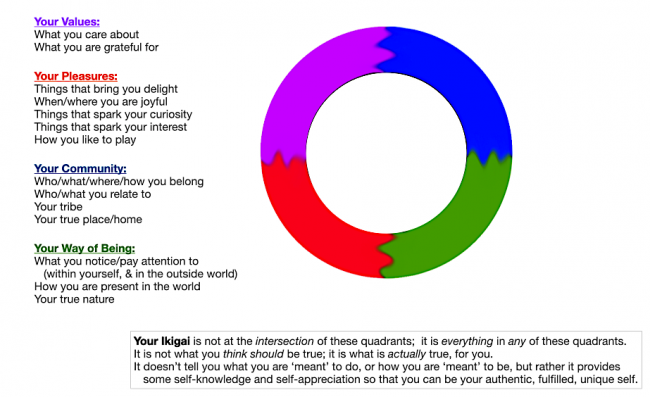
![]() If we’re going to save the world and stuff, we’re going to need to bring some diverse skills and capacities to bear. The two models above, which come from these posts last year, suggest what these needed skills and capacities might be. The problem is, we tend to gravitate towards like minds, people who think like we do, have the values we have, and to some extent have developed the skills and capacities we have. That doesn’t bode well for diversity. The Jungian model of knowledge identifies four orientations for learning, understanding and seeing the world:
None of us is purely aligned with any one of these four orientations, but most of us lean towards one or two. Hedonists lean to the sensual, artists to the sensual and emotional, philosophers to the emotional and intellectual, scientists to the sensual and intellectual, primitivists to the instinctual, naturalists to the sensual and instinctual. As a lifelong philosopher, the intellectual and the emotional orientations (in that order) remain my fortÈ, though as I’ve grown older I’ve refocused on the sensual and the instinctual, though I remain poor at learning and seeing the world through these orientations. We need the artists to help us imagine and perceive and create, the scientists to help us understand and realize, the naturalists and the hedonists to keep us joyful and connected, and the philosophers to help make sense of it all. If you were to look at the collective capacities of those in my communities, or at least, say, the 150 I am closest to and love the most, you’d find a decided lack of diversity: too many philosophers and not enough artists, too many scientists and not enough intuiters, too many dreamers and not enough pragmatists, and far too many disconnected from their senses and instincts and the Earth, and (the males especially) disconnected from their emotions as well, living inside their heads and in their dreamworlds. Or, as Neil Young put it, living in our sleep. If I were not very careful, my ideal Intentional Community would be, collectively, brilliant and imaginative and utterly incompetent at living in the real world. I am strongly attracted to artists and hedonists and naturalists, but I tend to drive them to distraction with my inability to see the world the way they do, despite extraordinary efforts. My relationships with them tend to be fiery and short-lived. Here’s a very rough and highly judgemental mapping from the four Jungian orientations to some of the capacities we need:
none are particularly good at capacities needing patience: suspending, letting come/go, seeing other perspectives So as someone with (if I were to be honest with myself) a primary intellectual orientation and a secondary emotional orientation, I think I’m pretty good at the capacities in the blue and white columns, so-so at the capacities in the pink column, and still awful at the capacities in the yellow and green columns. What’s worse, appreciating capacities we lack doesn’t make it any easier to acquire them. I don’t know enough artists and hedonists and naturalists, but more than that, I don’t know how to love them and get them to love me well enough to live with them in Intentional Communities and make a living with them in Natural Enterprises. I just keep gravitating to others of the same orientations and away from those with different orientations, and these tendencies seem to be mutual. It’s just easier and more fun to spend time and love and work with people who ‘get’ you, who you ‘get’ too. How does this work in indigenous cultures? Are they just more tolerant or more well-rounded in their capacities? Or when it comes to love, does chemistry finally trump everything else? And if not, what can we do to find, and keep together, people of different orientations and diverse skills, to build Intentional Communities and Natural Enterprises thatare collectively competent and resilient? Category: Building a Community-Based Society
|
January 15, 2007
What’s Love Got to Do With It?
![]() My What You Can Do (to Save the World) list How do I put this delicately? Most of the activists I know just don’t have much of a personal life. Just as work/life balance is such a big deal in the corporate workplace, so is the challenge for the attention of activists between their public causes and private passions. And the greater these private passions, one might expect, the less time left for activism. To the extent activism is Let-Self-Change activity, and is a family affair, it might actually be enhanced by love. But if that love manifests itself in indulgence of someone who is complacent or acquisitive, it can be exhausting and leave no time for progressive pursuits. There are only so many hours in a day. Once again it comes down, I think, to doing what we must, then what’s easy, and then what’s fun. Finding and pursuing love is an imperative for the vast majority of us. It’s hard to make love last, and when we find it we dedicate an inordinate amount of time and energy to nurturing it. When we lose it, we become preoccupied with its absence and rediscovering it. It is a lifelong imperative. How can philosophical or political passion compete with that? If we have to spend much of our waking hours as wage slaves, in a job unrelated to our real passion, and then we dedicate an additional block of time to those we love, how much time can be left? My guess would be that for many, the cost of putting activism first is putting both job and family second, and sometimes losing both in the process. And for even more, the risk of that happening is too great, so activism gets relegated to the back burner, and becomes one of those ‘do when I have have time’ tasks that never get done. My observations about love:
All of this would seem to mitigate against us having many cycles left over to make the world a better place, beyond Let-Self-Change and our own small circles of loved ones. That’s just the way we are, obsessed with the personal needs of the moment. And this is, perhaps, the Achilles’ heel in my idea to create a world of self-sufficient intentional communities of people of like minds that we love. In pre-civilization times we were limited in our choice of who to love to those in our tribe. But now we have such vast choice, and so many perfect, idealized, larger-than-life models to dream about, that (in every sense of the word) we are no longer willing to settle. So even a polyamory community of self-selected people is likely to leave us unsatisfied, restless to know what we’re missing. We’ve let the genie out of the bottle and s/he won’t go back in. In his book, The Upside of Down, Thomas Homer-Dixon says the determinant of whether we will rise to the occasion and overcome panarchy (the cascading crises that result when a whole series of related systems become overextended and collapse) through catagenesis (building resilience and healthy renewal following collapse) is whether we have the moral and existential values needed to care enough, to transcend our utilitarian preoccupations. Homer-Dixon sees the majority of the world sliding into automatic behaviours, becoming less than human, mere consumers. He may have a point, though I think the growing anomie of our society is more complex (a consequence of learned helplessness etc.) than this. But in any case our moral and existentialvalues cannot compete for our time with the needs of the moment. We are who we are. Category: Let-Self-Change
|
January 14, 2007
Sunday Open Thread – January 14, 2007
![]() Photo of Nathan Philips Square by City Hall, by Toronto photographer Payam Rajabi What I’m planning on writing about soon:
Over to you: What’s keeping you awake these days? And, what’s holding you back? |
January 13, 2007
Saturday Links for the Week — January 13, 2007
![]() Preparing for Civilization’s End Rob Paterson Creates a Trusted Space to Save the World: “My intent is to Host a space where you can read about the stories of people who are making progress in the Great Work that has to be done if we are to have a chance of getting though this century.” Photo above is from Rob’s collaborator, Fred First. Being What We Dare: Great article by Jeremy Heigh on enabling and encouraging greatness. Excerpt: “Maybe my purpose will be to grab the bullhorn and find the soapbox – I donít know. Maybe my life will be spent finding those few people who miraculously made it through with the ability to walk through walls. If I canít play, at least I could protect those that can.” A Real Natural Enterprise: An amazing, inspiring story from the CBC about a bakery in my former home town of Winnipeg reveals how Natural Enterprises emerge to meet urgent human needs. This is the model we need to follow. Thanks to Evelyn at Linsomniac for the link. How the World Really Works A Nation of Children: Incisive ranter Joe Bageant tells us who we really are. Thanks to Jon Husband for the link. Excerpt: Here in China’s global landfill, tens of millions of Americans are prisoners — including me. And that is not counting the quarter of the world’s incarcerated population who are America citizens physically held in US prison system. The rest of us serve a life sentence, released on personal recognizance to pull our time in our own homes, processing goods for the Great Asian Goods Landfill Culture, here at the end of their new globalized Silk Route of Confucian capitalism. At this end of the electronics Silk Road we are prisoners of consumption, rather like those caged French geese that are force fed corn so as to produce fatty livers for pate. But in a marvelous marriage of psychology, psychometric marketing and the gulag, our system imprisons its people from the inside out. We even punish ourselves without supervision — to doubt the system is its own punishment, purely for the social and personal anxiety it causes. Given enough insight, a thoughtful person can nearly question himself or herself to death… On the whole though, our infantilized citizenry is having too much fun to question itself. In the drive for a harder hard-on, faster everything, and round the clock stimulation, we have created an artificial and frivolous citizenry, one that is incapable of serious thought or deeper humor — a nation of children completely happy to stay that way. America’s childish material gratification is so grotesquely satisfying that it smothers the most basic sort of reason, much less philosophical thinking. Fuck it all. Nietzsche and Rimbaud are too goddamned hard to read anyway. Calling Greens Together: Grist’s David Roberts says it’s now or never for Greens to get political traction in the US, and to do that we need to get our act and message together. Thanks to Craig De Ruisseau for the link. Excerpt: Each nuke plant is fantastically expensive, uninsurable, subsidized out the wazoo, vulnerable to terrorist attack or accident, and constantly generating waste that we still don’t know what to do with. Nuclear is a market Frankenstein, kept alive with jolts of taxpayer cash and bully-pulpit support from political, military and business elites… The same focus is behind the perpetual push to drill and mine more places (offshore, ANWR, Rocky Mountains, Appalachian Mountains). It’s behind the implacable opposition to carbon emissions limits. It goes to the very animating spirit of U.S. power elites. The green agenda threatens all that. The decentralization and democratization of energy production and the development of a more conscious, thoughtful consumer lifestyle will yield an economy powered by less cheap oil and more valuable human laboróalong with a foreign policy conducted from a position of security and independence. Justifications for imperial adventures will be harder to come by. If greens hope to make any progress, they must use this time of immense possibility to join together and push in the same direction.
Help Protect the Polar Bear: Another petition, and only for Americans, alas, but for an important cause. Working Smarter First, Does It Fill a Need?: Kathy Sierra explains the seven levels in the hierarchy of customer needs. Enchantment is the seventh, but first a product or service needs to meet the first six: Fills a need, Does it effectively, East to learn,Efficient, User-friendly, and Intuitive. More Great Info on How to Make Open Space Work: From Peggy Holman’s Open Circle Company. |
January 11, 2007
Tech Trash Talk
![]() The release of Appleís new iPhone immediately made me groan: More encouragement to continue to throw out old cell phones and ‘obsolete’ high-tech toys. Consumers will buy over a billion cell phones this year, and the rate is growing by 10-20% per year. The average life of a cell phone is a year. Virtually none of them are recycled. They all end up in landfills, largely in struggling nations. A billion a year. Deliberately shoddily manufactured garbage, laced with cadmium, beryllium, lead and other toxic materials. Disgraceful. Last summer I charted the pathetic cradle-to-grave agribusiness food production system and all the atrocities and waste it produces. This is what the process looks like for high-tech products (and in fact for most manufactured goods):
There are three recent books out lamenting this sorry state: Heather Rogersí Gone Tomorrow, Giles Sladeís Made to Break and Elizabeth Grossmanís High Tech Trash. Their lesson is the same: Technology never creates less waste. Piled on top of the billion cell phones are the equally shoddy and toxic computers, MP3 players and other toys, as well as more traditional personal care, media and entertainment devices. Analogue TVs and CRT monitors, with their especially toxic components, are added to the pile, often replaced by energy-gulping plasma units. And some municipalities like New York and Washington DC, after being bribed or coerced by the tight ‘waste disposal’ oligopoly, actually stopped their recycling programs before consumer outrage forced them to be reinstated. Consumer protection legislation and education are too late in the process to change this. The answer is quite simple, but it would take more balls than we’ll ever see from a politician:
There are a lot of problems in our world that are complex and intractable, but this isn’t one of them. All itwould take is political will. Don’t hold your breath. |


Driving home today, I passed a traffic cop standing at the entrance to a strip mall parking lot with a radar gun in his hand. It was the usual rush hour crawl on Toronto’s busy Yonge Street, and no one was traveling anywhere near the speed limit, so he looked rather forlorn. But right beside him was a lane of traffic called a ‘diamond lane’, which during rush hour can only be used legally by public transit vehicles and cars with at least two passengers plus the driver. This lane of traffic was traveling about half the speed limit, but (because it had fewer vehicles) much faster than the two left lanes. What was amazing was that nearly all the cars in this lane clearly had no passengers at all. When the light turned red, there was a whole line of illegal users of the ‘diamond lanes’ sitting