|
In May 2005 I wrote this post that, after it was picked up months later on Digg and other popularity lists of web articles, turned out to be my most-visited article ever:
|
July 18, 2008
Friday Flashback: Twelve Ways to Think Differently
July 16, 2008
Reframing Questions
Kathy Sierra over on Twitter has been throwing two types of teasers at us this week. The first are what she calls ‘rules that aren’t always useful’, that I’d call ‘false myths and limiting generalizations‘, such as:
In case you think ‘false myth’ is a redundant expression, a myth (literal meaning= word of mouth) is anything that has received such a wide degree of acceptance, or such passionate acceptance, that it is rarely questioned. Some myths are true. The problem with the false myths are that they can blind you to the truth if you accept them uncritically. They can constrain your imagination of other possibilities that are contrary to the false myth ‘conventional wisdom’. They can lead you to make very bad decisions. The problem with limiting generalizations is that they can lead you to oversimplify (“to get ahead in business women have to think and act like men”), to draw false dichotomies (“we either have to find new domestic oil or be forever dependent on foreign suppliers”) and to stereotype (“working class whites will always vote Republican” which can lead you to draw false inferences from correlations, to write off classes of people, and to inhibit your creativity. The second teasers Kathy has been tweeting are what she calls ‘perspective hacks’ that I’d call ‘reframing questions‘, such as:
Kathy has a flair for this type of thought-provoking meme. As I thought about what I’d put on my list of false myths and limiting generalizations, and reframing questions, it suddenly occurred to me that these two are linked: for every false myth or limiting generalization, there is at least one reframing question that can get you out of the uncritical, unimaginative thinking trap and help you discover new possibilities and achieve breakthrough perspectives. Here, for example, are ten false myths and limiting generalizations that I encounter nearly every day in business, and how, instead of arguing with those who spout them, I might reframe the discussion with a question to show those people, gently, another way to see the situation.
Isn’t this cool? It’s a bit like the technique in some martial arts of parrying with a deflection, defusing the attacker’s momentum by changing the rules of the contest and putting them off balance. What are the false myths and limiting generalizations that you are struggling with, and how might you use appropriate questions to reframe them, disempower them, put them to rest? Category: Our Culture
|
July 15, 2008
Five Ways to Make a Point
![]() Take a look at this article from salon.com, written by UC Prof Mike Davis. The words that came to mind when I read it were succinct, witty, provocative, and well-researched. He manages to capture the essence of what has led our civilization to the brink of collapse in just two pages, packed with data, rhetorical questions and persuasive argument. This is the kind of writing that moves people to action, to change their minds, and to pass along the essay or its contents in conversations with others, virally. Davis is, I expect, preaching to the largely converted. His work is rhetoric, which despite its modern negative connotations means simply persuasive, effective oratory (the word predates the printing press and hence initially referred to speech, not writing). Whereas some people believe that debate is the best means of persuasion, I have come to believe that most people will only accept an assertion or idea if they’re ready for it. If they’re not, a debate will only tend to polarize their view, put them off. Rhetoric at its worst can inflame ignorance, but at its best it can inform and stimulate those who are already inclined to believe something, so that they can then decide how to act on it, and pass on their learning, rhetorically, to others who are so inclined. A rhetorical question is not (necessarily) one for which the answer is self-evident, but rather one presented for persuasive effect, to provoke thought consistent with the arguments the speaker has just made or is about to make. It is intended to evoke emotion, either positively or negatively. If the audience is ignorant, inclined to groupthink, insecure, frightened or incapable of critical thinking, it can be dangerous (“Are we going to let these people take what we worked so hard for?”) If the audience is informed, independent, self-confident and thoughtful, however, such questions are powerful and useful, because they force you to think, and sometimes to challenge conventional wisdom, to think differently. They are often preceded or followed by another useful device, the rhetorical or oratorical pause. Such a pause (which many speakers are afraid to insert into oratory in case it merely causes audience discomfort) is intended to cause tension, to force the audience to try to anticipate what will come next, or to reflect on what has just been said that was presumably important. Davis’ article is so compelling, I think, because of a combination of new information, provocative questions, and great rhetoric. Recently I’ve been listening, paying more attention to conversations: their flow, their pacing, their iteration of ideas and comprehension and meaning, the power politics often present inside them, their effectiveness. Because Generation Millennium has somewhat rediscovered (texting notwithstanding) the oral culture of the pre-Gutenberg era, I’ve been listening to them practice conversation. Their ability to achieve comprehension (largely by successive approximation, iteratively, Q&A, action and reaction, until consensus is reached) is extraordinary: very effective and hopelessly inefficient, but done so quickly that it succeeds. But it is the opposite of rhetoric. Good rhetorical oratory rarely contains the most frequent two words in Gen Millennium speech: “I mean“. I also find that modern conversation contains few rhetorical questions or pauses: There is simply no time for them. And there is little time for information. When information is presented that is new, and not consistent with the worldview of the listener(s), and not presented in the context of a simple “A or B” dichotomy (“Is Obama better or worse at…?”), it is as if the audience simply doesn’t know what to make of it. If you listen to this speech (thanks to David Parkinson for the link) you can see how new information that makes an oversimplified debate more complex leaves the audience (in this case mass media talking heads) utterly dumbfounded. If the new information doesn’t fit, it is discounted, ignored, considered as outrageous, an affront. You didn’t answer our simple dumb question! Which of course it is: It is intended as an affront (literal meaning of affront: in your face). While this may not work in the context of dumbed-down mass media reporting, it can be extremely effective when the audience has the patience, curiosity and self-confidence to be affronted. Generation Millennium has learned one traditional (and now rare) conversational skill: storytelling. They have discovered that the easiest way to create a context for understanding is to tell a straightforward (“and then...”) story, instead of preparing and presenting an analysis. They ‘get’ that if they understood what happened, and what should be done about it, then so will the audience if they hear an accurate narrative that ‘recreates’ the speaker’s learning. Recently I’ve learned of another effective means of communicating information in a presentation or conversation: the use of simple visuals. I would highly commend to you Dan Roam’s new book The Back of the Napkin, which explains how to use elementary visuals, skilfully sketched by hand on a napkin or whiteboard while the audience watches, to convey information and to persuade (the illustration above is from that book, and a video explaining the ideas in the book is here). It draws on the fact that we are all programmed, in our pre-civilization DNA, to learn, discover and understand visually, not by reading text. One of my most popular conference presentation subjects is Adding Meaning and Value to Information (largely through visuals), and most of my presentations now have no bullet points, just pictures that I talk to. So in short I think there are five techniques that can be used to make a point effectively, in a conversation, presentation or written article:
All of these things take practice. There is no better way to get better at them than by putting yourself out there, and asking your audience for their honest assessment of what you did well and how you could do better. How would you score yourself on the use of each of these five techniques? I think I’m pretty good at #1. I don’t do #2 nearly enough, or well enough. I’m still poor at #3 (I need to craft and memorize my stories). I’m getting better at #4 but I need to practice sketching, and making my visualizations clearer and less dense. Dan Roam says: “All good pictures do not need to be self-explanatory, but they need to be explainable.” And my rhetorical skills need a lot of work: I still often lack the courage of my convictions, and I tend to be too serious and too long-winded. How about you (that’s a rhetorical question)? Category: Conversation & Language
|
July 14, 2008
Making the Transition to a Natural Economy
I‘ve written before about the idea of creating a responsible, sustainable, joyful, Natural Economy, and about how difficult it is to ‘get there’ because the brutal industrial economy we live under is The Only Life We Know. Most of the prescriptions for getting there require (or involve entirely) top-down, government actions. Yes, ideally we should have import duties that prevent products produced by slave labour in ruined environments from coming in. Yes, ideally we should have a tax regime that taxes bads, not goods, and redistributes wealth. Yes, ideally we should have land ownership reform that prohibits absentee ownership and speculative trading. Yes, ideally we should have laws that break up monopolies and oligopolies, and that put megapolluters and corporate criminals in prison with the rest of the mass murderers and thieves. But we’re not going to get them. If we wait for them, we’ll wait forever. Also, ideally, if we were to create working models of a better way to live and make a living, they should attract enough attention that others would emulate them, in sufficient numbers to undermine the old economy. But as my friend Flemming says, sometimes you have to wait for the old deadwood hogging all the sunlight to collapse before the new seeds can germinate (or else you need to be a fungus). So what can we do while we’re waiting? Here are a few ideas:
If enough of us do these things, will it be enough to transform our economy into a responsible, sustainable, joyful, Natural Economy? Probably not. But it will put us in good stead when the industrial economy runs out of steam (and oil). While we can work now to starve the industrial economy of the four things it values from us (our tax dollars, our cheap and obedient labour, our consumption of cheap imported crap, and our attention to its political and commercial propaganda), the scourges of climate change, constant ever-expanding wars, overpopulation, the End of Oil, the End of Water, the Death of the Seas, the Death of the Forests, human pandemics, pandemic diseases of farmed animals and monoculture plants, and bioterror, will collectively bring that economy to its knees. It won’t go easily, however, and as it slowly collapses it will be the poor and the young who will suffer the brunt of its struggle to keep going — desperate and indiscriminate drilling in the oceans and arctic, strip-mining for dirty coal and bitumen sludge, privatization of scarce water, massive incarceration and curtailment of civil freedoms, more cities written off like New Orleans, ghastly famines and floods in struggling nations, the eradication of life savings and pensions, the collapse of health systems, expropriation of property, soaring suicide rates, and unimaginable ubiquitous poverty. At that point those who have started the transition to a Natural Economy will be able to withstand the collapse of the industrial economy, and will be the pioneers of its replacement. The transition is likely to be a painful one for most, unfortunately — all ‘normal curves’ have a sudden and precipitous downside, and studies of past overheated economies and civilizations suggest our economy’s will be no exception.We never seem to learn the lessons of history. Category: Creating an Alternative Economy
|
July 12, 2008
Saturday Links for the Week: July 12, 2008
A Short History of the End of Civilization: Mike Davis is a brilliant and provocative writer. Just go read his brief and incisive summary of what has led our civilization to the brink of collapse. Mike, you need a blog! Teasers: The UNDP…warns that it will require “a 50 percent cut in greenhouse gas emissions worldwide by 2050 against 1990 levels” to keep humanity outside the red zone of runaway warming… Yet the International Energy Agency predicts that, in all likelihood, such emissions will actually increase in this period by nearly 100 percent — enough greenhouse gas to propel us past several critical tipping points…
Let’s just ask: What if the buying and selling of carbon credits and pollution offsets fails to turn down the thermostat? What exactly will motivate governments and global industries then to join hands in a crusade to reduce emissions through regulation and taxation?… And what if growing environmental and social turbulence, instead of galvanizing heroic innovation and international cooperation, simply drive elite publics into even more frenzied attempts to wall themselves off from the rest of humanity?… We’re talking here of the prospect of creating green and gated oases of permanent affluence on an otherwise stricken planet… National Academy of Science…found that the richest countries, by their activities, have generated 42 percent of environmental degradation across the world, while shouldering only 3 percent of the resulting costs. Humans Have 23 Years to Go: IFTF is creating a game set 10 years from now that gives the players 23 ‘years’ to deal with five cascading social, ecological and economic crises that threaten to end civilization. Sounds like fun, if they’ll let us play (full access to members only, and the link above was down at time of writing). Problem is, they’re calling the game Superstruct (literally: build over top). Seems to me that the only viable solutions to this problem will be bottom-up, not top-down. Shouldn’t the game be called Substruct? Thanks to Jerry Michalski for the link. Discover Undiscovered Musicians: Some great hand-made music from unknown artists you can browse and play to your heart’s content — IACmusic.com. Here’s my own ‘station’ collection of what I’ve been listening to there. Pictures Without the Need of Words: My friend Melisa Christensen is the photo director of a sweet little film, lovingly and exquisitely photographed, about human relationships and priorities. Great Green Events Calendar: Leafing Through tells you where to go, greenly, all over the world. See What Global Warming Has Wrought So Far: A couple of years ago I pointed out the NOAA viewer that lets you see a movie of glaciation, coastal flooding and vegetation change over the past 21000 years (since the last ice age). If you haven’t seen it, take a look. What would be interesting would be to project it forward, assuming a hundred-fold or thousand-fold acceleration of rate of change. The Only Diet for a Peacemaker Is a Vegetarian Diet: “Conscience dictates that the grain should stay where it is grown, from South America to Africa. And it should be fed to the local malnourished poor, not to the chickens destined for our KFC buckets.” Even the orthodox churches are starting to get it. Who Are You Trying to Impress?: Justin Kownacki analyzes the politics of conversations, and how disruptive they can be to making the conversation meaningful, valuable, and informative. The Mortgage Lender Implode-o-meter: Keep up to date with the collapse of IndyMac, Freddie Mac, Fannie Mae, and all your favourite wacky trillion-dollar irresponsible lending characters. Google Offers Animated Avatars for Google Chat: The poor man’s Second Life app “Lively”, has just been released. Limited avatar options. Agonizingly slow. Much work needed. Doug Rushkoff on Open Space Democracy: Democracy is a collective choice and emerges through collective action, he says. If we only care about what it means to us individually, and what we do individually, democracy is lost. Branding, advertising, the mainstream media, corpocracy, hierarchy — these are all directed at us as individuals. We have to get past self-interest, past individuation of everything. Don’t ask What can I do?, discuss What can we do? Thanks to William Tozier for the link. Unintended Consequences: George Monbiot’s latest article about the Death of the Oceans raises some more interesting thoughts about unintended consequences in complex systems. Of course high oil prices will reduce (somewhat) demand for gasoline and hence reduce CO2 emissions. But that reduced demand in affluent nations will also allow Asia to continue to pick up whatever oil is not contracted for, pushing emissions right back up again. And while high prices will drive some people to switch to more efficient vehicles, will those more efficient vehicles then be driven further than the gas guzzlers? Monbiot explains that high oil prices are keeping ocean-devastating fishing trawlers in port, but it’s also got fishermen striking for subsidies, pushing politicians who want re-election to divert money from worthy causes to subsidizing uneconomic activities. And environmental laws designed to prevent permafrost and glacial melt and ocean disasters are being abandoned in the desperate search for a little more cheap oil, accelerating global warming that will ultimately require huge taxes on oil to curtail. This is precisely why the “market mechanism” that so many conservatives trust to solve global warming and everything else simply does not work. Complex systems are inertial — they tend to adapt to stay in equilibrium until forced to a new equilibrium by either decisive intervention, or catastrophe. Canada’s Conservatives “The Republican Farm Team”: George Bush’s (last?) lapdog, arch-conservative Canadian PM Harper, is refusing to allow conscientious objectors to the Bush war to come to Canada, ending a two-century-old tradition of providing sanctuary for Americans of conscience. Bush now beckons Harper obediently to his side by barking “Yo Harper!” Meanwhile, as they shrugged off their responsibility for the global food crisis, Bush and Yo Harper and the rest of the G8 gang of thieves chowed down on an extravagant 18-course meal of high-energy, high-cruelty imported foods.(Thanks to Meg Fowler for the links). Alberta Hypes Bitumen Sludge Mining to Obama & McCain: Despite growing realization that the Alberta Bitumen Sludge Mining operation (what the industry prefers to call ‘oil sands’, depicted above) is the most ecologically destructive project on Earth, the government of Alberta, whose economy is utterly dependent on this horror, is busy lobbying both US presidential candidates to endorse buying its dirty oil. They will almost certainly succeed: It’s not in their backyard.
Find of the Day, above, found on top of a baby change table in a women’s washroom in BC. Thanks to Darren Barefoot for the link.
Thought for the Week: Being A Part: I’ve been chatting recently with Andrew Campbell and Beth Patterson about connection with the land and all-life-on-Earth. Andrew has pointed to the work of Gregory Bateson (whose first wife BTW was Margaret Mead) and his discussion of immanence — the quality of remaining within as a part (of the environment, Gaia, the complexity of all-life-on-Earth), while our minds furiously attempt to analyze, to dissect, to set ourselves apart. Beth has collected a remarkable set of stories from readers that answer the question “Where is Home?” I replied to Beth that I thought the most evocative writing I had readabout this was that of Sam Mills of the now largely-lost blogs feral and thistle & hemlock (she now writes the blog bitterbrush); here’s an example of how she tells us what it means to be a part. |
July 11, 2008
Friday Flashback: Beginning Again
![]() In September 2005 I summarized biologist David Ehrenfeld’s prescient 1993 book Beginning Again, in which he lovingly tells the story of the giant green turtles of Costa Rica, who have lived there unchanged for 300 million years, skewers bureaucracy and hierarchy as twin evils of the modern era, laments the loss of the critical skills of craftsmanship and maintenance, insists that there is no adapting to catastrophes in complex systems (so we must learn to prevent them), champions generalists over narrow specialists, calls for restrictions on increase of human numbers, urges adoption of sustainable polyculture and permaculture to replace catastrophic agriculture, and warns (in 1993!) of the looming crisis created by the “bottomless pit of debt” in the US. He likens our modern economy to “a massive flywheel, spinning too fast for its size and construction, coming apart in chunks as it spins”. This, he warns, is what happens when you try to replace an effective complex natural system, with great resilience and redundancy evolved over hundreds of millennia, with an efficient complicated, man-made system, fragile, over-extended, unforgiving of any failure in any of its moving parts. The big losers when it comes apart, he warns, will be the poor and the young. The rich and old, who have hoarded what they need to pull them through, will increasingly closet themselves away from the masses as the cascading crises wreakhavoc on everyone else. |
July 9, 2008
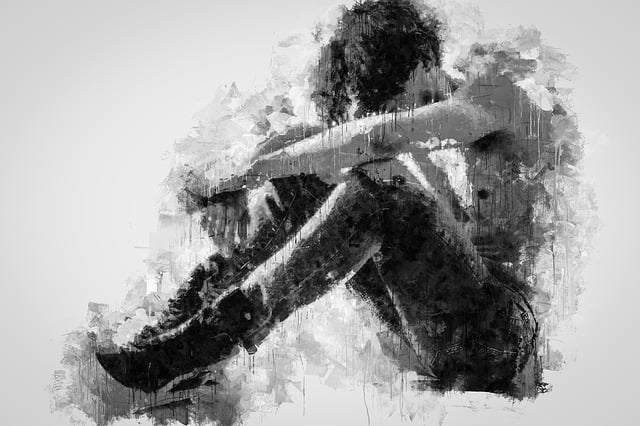
there is an artist hiding inside each of us
| there is an artist hiding inside each of us.
it wants to re-present what we see, sense, feel… it want to create what can only be imagined… it wants to design miniature truths… it wants to tell the world who we are, and what is going on… i’m writing a song. the artist in me is crying out for new means of expression. there is so much that is important that we have to communicate. why are we wasting time debating, analyzing, planning? we know what has to be, and what has to be done, and what we have to be and do to real-ize that. what are we waiting for?
category: creative works
all artworks by the author |
July 8, 2008
Help Me Design the Natural Enterprise Toolkit
![]() My first book, Finding the Sweet Spot: The Natural Entrepreneur’s Guide to Responsible, Sustainable, Joyful Work will be published next month by Chelsea Green. The publisher is sponsoring a companion website/toolkit at http://naturalenterprise.org that is currently under development. I’d love your help with the design. Just as a reminder, the book has six chapters, as follows:
Chapters 2-4 are collaborative processes, and that’s where naturalenterprise.org comes in. The site will offer a simple set of tools that will help you find business partners, research unmet needs, and collaborate to explore solutions to those needs. The diagram at the top of this article shows how it will be organized. Here’s a walk-through: naturalenterprise.org/community will allow you to offer and receive advice about Natural Entrepreneurship, and it will have three parts to it:
naturalenterprise.org/partners will enable you to find partners for your Natural Enterprise, and it will have six parts to it:
naturalenterprise.org/collaboratory will enable you to collaborate with potential enterprise partners and others to research and innovate, and it will have three parts to it:
It seems fairly obvious to me that for 1-3 we will need some kind of discussion forum, for 4-9 we will need a database that anyone can add to or browse in different ways, for 10 we’ll need a wiki or similar tool, for 11 we’ll need a survey tool like Survey Monkey, and for 12 we’ll need some kind of project collaboration space/tool. The question is, dear readers, how easily can we pull this together without the need for a lot of coding? Can we use existing open source forums (as Dick Richards did for his book Is Your Genius at Work?), and open source databases, wikis, survey tools and collaboration tools, and easily put them within the site ‘umbrella’ so users don’t get lost? If so, which specific apps should we use? If not, how much work wouldit be to pull this together? Category: Creating Natural Enterprises
|
July 7, 2008
The Seven Steps to Business Sustainability
![]() Interface Carpets’ sustainability model It’s tough explaining sustainability to executives. When it comes to knowledge, and acceptance of responsibility, they are all over the map. Surprisingly, those in the most polluting industries are often more advanced in their thinking than those in ‘service’ industries. The way to get attention for the subject, and the way to approach the issue, depends on who your audience is. My French teacher likens it to the challenge of getting a very obese man to adopt a diet. If he thinks he’s just ‘big-boned’, or thinks it’s someone else’s fault, or thinks the risks to him are non-existent or overblown, or thinks nothing will work, you have a challenge. If he’s doing his best, but it isn’t good enough, you have a challenge. If he thinks it’s just ‘his problem’, and no one else is being hurt by it, you’ve got a challenge. And let’s face it, diets are tough — hard work, lifelong change, high failure rate, and no fun. And the worst thing you can do is point out how hard it’s going to be, and how far away the goal is. I’ve spoken to a lot of business execs about this subject in recent months — delightfully, it’s part of my job. And I’ve learned that there’s a way to ‘get to’ everyone, if you listen enough first to know what approach to take. And I’ve learned that positive approaches that stress benefits and opportunities generally work better than approbation, though executives are naturally attuned to matters of business risk, if those risks can credibly be portrayed as big enough or imminent enough (a big ‘if’). So I’ve developed a Seven Steps to Business Sustainability model, which I outline below. The trick with this model is not to overwhelm or discourage businesspeople who are still at the early steps by showing them all seven. My approach is to take them through a ‘script’ to discover what step they’re currently at. If they’re like the majority, still at step 1 or 2 (or not even there), I will only talk about steps 1-3. If they’re at step 3 (about 1/3 of business execs are) they’re ready to be congratulated and introduced to steps 4-5. If they’re at step 5 (very few are) they’re ready to be nominated as sustainability leaders, and ready to look at the whole enchilada. What I like about the model is that it follows the process we all follow in dealing with threats, like forest fires or hurricanes or computer viruses. It starts with acknowledgement, and then moves on to short term and then long-term actions to cope with it. Here’s the model and the ‘script’:
I think there will be a huge market for business advisors who will be able to take companies one step at a time from step 1 to step 7. I know there are a few people (like Gil Friend) who do this. We’ll soon need a lot more. Category: Understanding Economics
|
July 5, 2008
Saturday Links for the Week — July 5, 2008 — The Story Edition
![]() (Several of the students from two Melbourne universities that we hosted yesterday said they thought I looked startlingly like Aussie star footballer Jason Akermanis, above top, except for the blond hair. I don’t see it, but I’m flattered. Must be the mannerisms. Used to be told I looked like John Denver or Richard Belzer, above bottom. Who’s your celebrity lookalike?) Creating Space for What’s Important: Another inspiring article by PS Pirro: “I know why I didnít do it sooner, and I know why all that other stuff was cluttering up my list: following a heartís desire is very scary stuff. Itís so much easier and so much less risky to spend your hours doing things that donít really matter, to pursue lesser goals, to do the work that others think is important. When I clear space in my thinking — and in my physical environment — and then hold that space open for my own real and true desires, my heart recognizes the opportunity, and slips right in. And the next thing I know, Iím elbow deep in paper and notes and yes, I’m scared, but I’m also full of gratitude. My heart says thank you, thank you.” A Death Without Meaning: Oncology nurse Karen Crone tells a very short story about some people she briefly knew. The story will stay with you a long time, asking questions that have no answers. Murder in the Park: Cassandra tells an unsettling story, and leaves us to imagine our own ending. How to Use ‘Mystery’ Stories to Engage Your Business Audience: Matt Moore, who I met recently in Toronto, has a new podcast on Story Work featuring Shawn Callahan (who I met in Melbourne in April) and Madelyn Blair. At the end of it, Shawn talks about how scientists are framing their papers as mystery stories that expound on their problem (the ‘murder’) and their discovery of the solution (the ‘murderer’). In another article he explains how that approach (Pose the mystery; Deepen the mystery; Home in on the proper explanation by considering (and offering evidence against) alternative explanations; Provide a clue to the proper explanation; Resolve the mystery; Draw the implications for the phenomenon under study) can be used to engage the audience in any expository presentation. And the best title for such presentations is usually a question. Determined to Do the Only Thing You Could Do: Jen Lemen reminds us of an amazing poem, The Journey, by Mary Oliver. The CN Tower Belongs to the Dead: Our Descent’s weekly YouTube round-up includes this remarkable solo bravura performance of a song about Toronto’s most famous landmark (I work about a block away from it) with some equally remarkable lyrics. Another Great Mystery (Unre)Solved: There is something perverse about human nature that causes us to be dissatisfied with important mysteries that are never solved. The death of JFK (and several other up-and-coming politicians who embarrassed those in high places); the Anthrax Mail murders; the strange way the Trade Centre towers collapsed from below; the truth behind chemtrails; what happened to the plane that struck the Pentagon; the inability to find many of the world’s most notorious murderers and criminals — all of these mysteries beg for a solution. Even the most rational of us, in the absence of anything close to a resolution to these issues, can be tempted to believe conspiracy theories, because as other theories lead only to dead ends, they begin to appear more plausible. One of these unresolved issues back in the news is the perplexing fall of Trade Centre Tower 7, many hours after the twin towers’ collapse, and without an airplane strike to explain it. Many years later, there is an explanation, but its implausibility is already restoking the conspiracy theories. Collective Answers and the End of E-mail: After getting his pro-IM, anti-email article published in the NYT, my friend Luis Suares of IBM in Spain replies to reactionary critics: “Because I no longer have the stress of constantly having to check e-mail, the flow of the conversations is out in the open available to everyone else to contribute as well; it is no longer only me who can action something, my social networks can help chime in and contribute”. Is the Corn Ethanol Lobby Responsible for the Food Price Spike?: A new survey suggests as much as 75% of the recent massive increase in global staple food prices is due to land shifted from food to fuel production. An Artist Shouts Out About Cruelty to Farmed Animals: Twyla Francois is leading an international campaign to raise awareness of the horrific abuse that farmed animals suffer in our society. Caveat: This site is not for the squeamish or easily depressed. What Does the Quality Co-construction of Learning Mean?: Nancy White’s Lisbon presentation on how to build (Velcro) bridges between teachers and learners. Building Consensus in a New Community: Cheryl (“Mira”) and I (“Cal”) are part of an Intentional Community in Second Life that now boasts over a dozen members. We ‘live’ on a deserted island that provides us with all we need to live, but, like people suddenly shipwrecked together, we’re still working out how to get along and what we intend to be and do on the island. We’ve agreed to come ‘inworld’ on a regular schedule (that works for all the members, who live in time zones all across the world) to explore these issues. Mira has documented our latest group conversation, where we try to develop a consensus on the objective and operating principles for our community, with unexpected and interesting results. 16000 Litres of Water to Produce a Kilogram of Beef: Now that you’ve figured out your carbon consumption footprint, and how to reduce it, it’s time to get to work on reducing your water consumption footprint. Thanks to Craig De Ruisseau for the link. Kennedy Airport is Not Part of the US: That’s the weasel ruling of a US court that assessed that Canadian Maher Arar, who was abducted by Homeland Security as he made a connection at the US airport while returning home, and sent to Syria for months of excruciating torture, could not seek damages for his arrest and kidnapping. Have the Young Forgotten How to Read?: Blogger Amanda Kyffin thinks many people today have lost the ability to process text longer than a paragraph, or to concentrate on written material longer than a page. Does that inability pose a challenge to our ability to learn, or does it simply reflect that we need to find other, more visual, means to communicate? And in this attention economy, if it takes longer than a page to communicate a difficult concept, how can we hope to do so? Are stories the answer?
Just for Fun: Coffee Art: Latest craze at some coffee houses is mouthfuls of artwork (like that above) done with coffee, cream and chocolate. Here’s an amazing video showing how it’s done. Thanks to Cheryl Long for the link. Thought for the Week: Literature as Remedy for What Ails Us: Alberto Manguel’s book and lecture series The City of Words meanders through some of the great works of fiction throughout history and urges us to rediscover fiction as source of ideas to understand and remedy many of the maladies of our time: consumerism and corporatism (the Frankenstein myth and 2001: A Space Odyssey have much to teach us about inflexible human creations that can destroy their maker), political psychopathy, our fear of other cultures and our inability to synthesize the best of many cultures, our inability to recognize and reject business, political and religious propaganda, our lack of imagination and critical thinking, our lack of appreciation of the advantages and dangers of myth, our learned helplessness, and the oversimplification of what is important. The wise message of the book is simple: If you want to understand the world better and make it a better place, you would be better off reading great stories than books that offer oversimplified analysis and prescribedsolutions. |

Our minds are like our bodies — fail to exercise them and they atrophy and break down. We live in an age of specialization, where we are encouraged to narrow our interests and our activities, to focus and limit ourselves to doing things at which we are very competent. So parts of our brain get a lot of exercise and other parts very little. What’s worse, this can actually narrow our comfort zone, the range of things we enjoy doing or thinking about and are competent in. Many of our cultural activities and artefacts: political debates, win/lose competitions, hierarchies, laws, religions, ‘best practices’, systematization, uniforms, and monolithic architecture and design — all tend to reinforce ‘one right answer’ thinking that discourages and ultimately excludes and prevents us from thinking differently. Even the mental exercises we do as we get older are designed to stem the loss of analytical skills and memory rather than broadening our thinking or our thinking ability. We live in a world of stultifying sameness and uniformity: physically, ideologically, intellectually.There is little motivation, little day-to-day
Kathy Sierra over on Twitter has been throwing two types of teasers at us this week. The first are what she calls ‘rules that aren’t always useful’, that I’d call ‘