Dave Pollard's environmental philosophy, creative works, business papers and essays.
In search of a better way to live and make a living, and a better understanding of how the world really works.


November 23, 2010

ready as Noah

Filed under: Creative Works — Dave Pollard @ 18:45

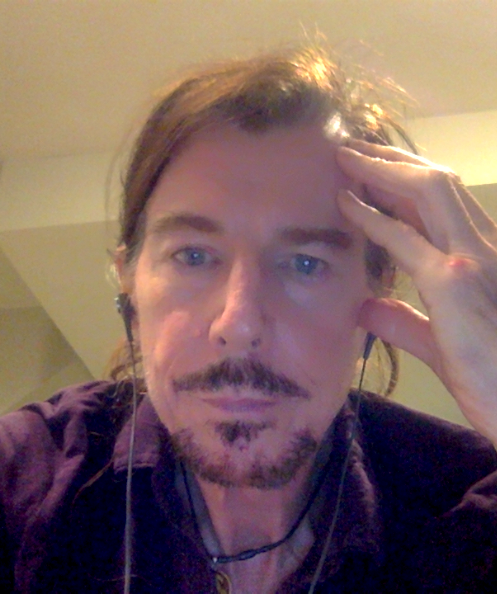
dave in portland

(photo by Cheryl Long)

ready as Noah

so i gathered the members of my community
and we prepared our Transition Plan:
we’re set to handle a world without cheap oil,
without a stable climate,
without an industrial ‘growth’ economy,

and i’ve done the Work That Reconnects
so i’ve come to grips with the unbearable grief for Gaia
that has weighed on me all my life, and moved on,

and every day i read the latest post-civ advice
from Casaubon, the Druid, and the Automatic Earth
and the newest evidence that the Long Emergency‘s begun,

and each evening i learn to play the sad music
of world-weary worried singer-songwriters
who sensed what was going on years ago
but couldn’t quite put it into words.

i’ve shrunk my dreams and expectations
to such a sustainable degree
that even the “i”s i write are small letters,

and my footprint’s now so small
it doesn’t even leave tracks in the snow.

i should be ready as Noah.

so what do i do now,
when there’s nothing more that must be done
and in this newly terrible world
nothing seems easy or fun anymore?

i thought my role would be to chronicle collapse,
and through my gentle fiction
help the ones still here beyond the end of days
imagine better ways to live

but now that seems a joyless task
whose purpose is not clear
and whose intended readers do not care
what i’d presume to tell them anyway.

i’m learning, much too late in life,
how to be present, self-accept, how to be generous
and love without restraint
and to let go the unreal stories
taught to me by those with best intentions,
and repeated to myself ’til i went mad.

i’m learning now to live a natural life, and value time,
and simply be
the space through which stuff passes.

Derrick Jensen tells us all to listen to the land
and in good time we’ll know exactly what to do,
but i’ve been listening hard
and my land merely whispers words
i cannot hear or understand.

so now i simply wait to learn the role
the world intends for me.

oh hurry up please world i’m waiting now i’m ready
can you tell me
, ’cause i owe you so much
and i feel your suffering
in this dark and empty hole inside my heart:
what can i do to pay you back for all you’ve given me
throughout my privileged western life?

i’ll be your Noah, Gaia, i am ready
but i don’t know what to do…

November 21, 2010

Dave Gets Interviewed for a Podcast on Complexity and Transition

Filed under: _ Uncategorized — Dave Pollard @ 17:04

podcast

A few days ago I was interviewed by Steve Patterson for his regular podcast program Two Beers With Steve, as we talked about complex systems, dependence on industrial civilization, transition, resilience and steady state economics. Steve is well-read and a terrific interviewer, and there are some great podcasts on his site, including, recently, Stoneleigh (from The Automatic Earth) and James Kunstler. You can listen to or download the podcast here, and browse through Steve’s other podcasts here.

November 19, 2010

Too Smart for Our Own Good – Part Two

Filed under: _ Uncategorized — Dave Pollard @ 21:36

too smart for our own good

In an article last month I described how an unintended consequence of the evolution of large brains (the development of and attachment to ego) is that we have become “Too Smart for Our Own Good“. In that article I posted the graphic above which I explained as follows:

In the model above, which I have developed to attempt to illustrate [Eckart] Tolle’s thesis, wild creatures and human beings who have re-learned presence live the conscious, integral life shown on the right side. For such creatures, the triggers that cause suffering for most humans just bounce off; they fail to have any enduring impact. The spirit remains integral, unruffled and unpolluted.

By contrast, most humans live in the unhappy, anxious state shown in the left side. For them, triggers produce a vicious cycle of negative thoughts and “stories” (the “egoic mind”) and negative emotions (the “pain-body”). The stories we tell ourselves about the past, the future, ourselves and others are fictions, but our insatiable human egos grab onto them, and these thoughts trigger emotions like anger, fear, jealousy, hatred, self-hatred, shame, and anxiety, which fester in us and cause our egoic minds to invent even more stories to justify and perpetuate the pain-body negative emotions. Both the egoic mind and the pain-body are easily triggered by negative events (real or imagined) — in fact Tolle thinks they are addicted to them. The ego even casts a shadow over our sensory and instinctive lives, which the egoic mind cannot control and therefore does not trust. We therefore become “possessed” by our egos, which are not us. Our egos would have us believe that our thoughts and beliefs and feelings are “us”, when in fact all along we are really the consciousness that lies behind those thoughts, beliefs and feelings. Presence, then, is developing the capacity to push out and free ourselves from our egos and the negative thoughts and emotions that “normally” possess us, that we “normally” identify with.

Blogger Joe Holmes, in response to this post, sent me a paper he had written entitled Disengage the Simulator, which draws on the Daniel Gilbert TED speech on the brain as an “experience simulator”. And while I don’t buy the argument that only human brains can simulate experiences before their bodies try them in “real life” (watching birds and squirrels at the bird-feeder will convince you otherwise), Gilbert does demonstrate that more often than not, this simulator “works really badly”. Joe picks up on this in his paper and explains that this simulator actually creates a “reality” that we mistake for the real one. Our minds create a veil between ourselves and the real world that both prevents us from “seeing” the real world and gets us dreadfully, even pathologically, upset with the created (synthetic) “reality” that is stuck in our heads. So we end up believing the totally fictional stories that are part of this synthetic reality, and having the negative emotional responses to those stories which in turn convince us that these invented stories must be “true” (else why would we be so upset about them)? Our giant brains become a hellish intellectual and emotional prison in which we are stuck, pinned, unable to escape.

Hence our desire for “presence”, to relearn how to live in the now and let go of those stories. Hence the popularity of meditation and other practices that offer the promise of escape.

Joe goes further, and explains what one might call the Tragedy of the Simulator, in the important areas of art and science:

How much are the wonders of our lives worth when we pass through them in a dream? How much is it worth to see a beautiful painting and really only see the thought-bubble, really only see oneself seeing it? How can we enjoy art when our minds are caught up with what it means and with filtering it through a complex machinery of cognition? When we can’t feel things fully, we are farther on the side of curse than gift… While other animals have their eyes pointed towards things in their natural environment, going left and right and everywhere, humans are forever looking upwards into the content of our thought-bubbles.

Without the [capacity for simulation] we have within our own minds, we would never be able to be trapped inside a simulated reality. We suffer from our strength. But when the simulator can be disengaged, when we can stop mistaking it for reality itself, we have a tremendous new tool to play with…
Science, for instance, could not function without a healthy distrust of the status-quo operating system of consciousness, setting up controls and tests to keep our minds from running away with us, because it knows that our intelligence is purchased at the price of easy self-deception. Art knows it is an illusion, and no one mistakes a fictional story for anything but the allegorical truth. So the simulation is free to exhaust itself, in a way, through this safe region where all of its crevices and hidden structures can present themselves. And the mystics and sages throughout history can be read, quite simply and fruitfully, as those individuals who have fully broken free from the seduction of their simulated perceptions. In so doing they are able, once and for all, to think forever outside of the box. The tenets of mystical philosophy all reveal in their underlying structures the realization that the simulator is a simulator: that past and future are illusions and there is only now; that the isolated self is an illusion and there is only one flow of interconnected experience; that all qualities we ascribe to things are within our own minds and cannot be projected onto the things themselves. Enlightenment is a kind of lucid dreaming, where one experiences the image-play of simulations but watches them with a keen eye toward their unreality. Life becomes fun. As humans we will live in a self-made prison until we can stop [mistaking our thoughts, and the emotions they invoke (which emotions in turn evoke more fictional thoughts), for reality].

In his presentation, Gilbert suggests that this Tragedy of the Simulator can actually work both ways: It can persuade us that our fictional negative stories about our past, our future, ourselves and others (and their invoked emotions of guilt, anger, fear, shame, envy, dread and grief) are true. It can also persuade us that our “unrealistically” positive stories about our past, our future, ourselves and others (and their invoked emotions of unwarranted hopefulness, irrational denial, nostalgia about our past etc.) are also true. Both types of illusions are cruel and diabolical: the first type makes us unhappy for no reason, and the second type makes us complacent, expectant and resistant to change, setting us up for disappointment and then, when we become disappointed, more stories and reactions of the first type. And so on, in a vicious cycle.

The challenge of course, is to get beyond being too smart for our own good, to become truly and persistently present and let go of stories, without becoming desensitized or disconnected from ourselves or all those around us suffering from the unintended consequences of being so smart. That’s a difficult balancing act. Perhaps too difficult for me, and for most people. But knowing what you are striving for is a start, at least.

November 17, 2010

Inured to Pain?

Filed under: Our Culture / Ourselves — Dave Pollard @ 16:25

values quadrants

[On the chart above, 110 values surveyed by pollster Michael Adams are plotted according to where they fall on a 2-by-2 grid. The values that (per the survey) have become significantly more prevalent in Americans since 1992 are shown in bold. An acceptance of violence as inevitable, persuasive and cathartic showed the greatest increase of any of the 110 values. There has been a commensurate drop in the proportion of respondents holding many of the values that both conservatives and progressives hold dear (those in the upper left quadrant).]

values quadrants 2

[This chart shows the median position of people in different demographics on the same values map. Note particularly the median values for young Americans. The survey found a growing proportion of Americans disengaged, disenchanted, and fatalistic, but this small plurality is especially pronounced in young Americans of all stripes, races, regions and economic backgrounds.]

On the ferry home the other day I overheard three attractive, well-dressed teenagers (I’d guess 16-17 years old), one male and two females, engaged in one of the most disturbing conversations I’ve ever witnessed. The conversation had three threads, if you could call them that:

  • Bragging about their theft of people’s umbrellas, just for fun. Explaining that when the owner of the umbrella saw them stealing it and shouted that it was theirs, they would just shout back scornfully that they knew it was, and run away. Discussing that if they saw a cop they would just drop the umbrella and run.
  • Identifying and making fun of shy, unattractive and poorly-dressed kids in their class. Listing what was “pathetic” about each.
  • Engaging each other in sexual bravado. Example: When one of the girls asked the boy, as he was heading to the bathroom, why he cared about a certain issue, he called back (without looking back) “Because I want to fuck you.” The girls looked at each other, and then laughed. They all agreed they wouldn’t be able to function in a world where gender roles were reversed, “where the girls were the more aggressive and the guys had to dress provocatively and wait to be invited out.”

This reminded me of an experience I had last year where a group of us in a restaurant witnessed two young (perhaps underage) girls at the bar draped all over two fat, ugly old bikers, kissing them and sucking up to everything they said. My colleagues said at the time that they weren’t as surprised as I was, and that the girls were probably not prostitutes, just “kids” impressed by the machines and the freedom of their riders.

I don’t know why these occurrences had such a strong, negative effect on me. Maybe I live in a different world from most people, and I’m just very fortunate to have lived a gentler life than most. Mostly, they left me with a bunch of unanswered questions:

  1. Is the ferry conversation evidence of young people’s way of desensitizing themselves to the emotional assaults of the modern world? Are they trying to teach themselves not to care so much?
  2. Is this a new phenomenon, or has it always been this way (just because I wasn’t aware of it when I was young doesn’t mean it didn’t happen)? The charts above from recent surveys suggest it is new, and worsening, reflecting a growing anomie and fatalism especially among the young of both genders.
  3. How much can we attribute this behaviour to (a) media portrayal of sex and violence, (b) teenagers’ lack of interaction with people outside their immediate peer group (i.e. no mentors with more empathetic, responsible values), (c) the unconscious realization that the world is fucked and the situation is going to get increasingly worse?
  4. Are these behaviours and values pernicious? Will they be “outgrown”? Can they be changed, and if so, how? If not, what does this value set suggest will happen when this age cohort has to face an extended cascading series of economic, energy and ecological crises?

The book The Fourth Turning has, compared to the Adams surveys, a more charitable view of Generation Millennium (“obedient and conforming”, “team players”, “accepting of authority”, “upbeat”, “hard-working” and “self-censoring”). That view fits better with the impression I have of the teenagers and university students I know. But perhaps I really don’t know what most people are like at all.

November 8, 2010

An Existential Approach to Bringing About Change

Filed under: Working Smarter — Dave Pollard @ 19:25

change-approaches

Donella (Dana) Meadows was famous for her twelve ways to intervene in a system, one of the most often cited works in the field of bringing about change. What is often forgotten is that she listed the twelve ways in reverse order, from least effective to most effective, and suggested that there were really only three highly effective ways to intervene:

  1. Change the paradigm (way of thinking) that underlies the system, or open people up to operating without any set paradigm at all.
  2. Change the fundamental goal, purpose or function of the system.
  3. Encourage and enhance self-organization: Remove the barriers to self-organization and let the collective wisdom of groups of people continuously tweak the system to serve them collectively.

I have recently been talking with fellow Bowen Islander John Dumbrille about the various change initiatives being supported on Bowen, such as Bowen in Transition and its Visioning exercise, the launch of Belterra, the first co-housing and intentional community initiative on Bowen, and the recent proposal to convert half of the island into a special kind of National Park.

I spent most of my adult life working on various programs that were intended to bring about some kind of desired change: more effective work, more successful organizations, self-improvement of one form or another, increased knowledge, understanding, skill or capacity, a more sustainable world. In retrospect, I don’t believe any of them accomplished much. As I noted in a recent post, the six dominant trends of the past forty years have all been negative and all occurred despite massive amounts of energy, effort and enthusiasm to achieve the opposite objectives.

I have been focusing much of my energy and writing of late on the Transition, Unschooling and Communities movements, because I believe what they stand for. Rather than being change initiatives, all three of these are alternative movements; they represent a walking away from the traditional way of doing things (and an attempt to create a new way of doing them) rather than an attempt to reform current processes and institutions. All three of them embrace all three of the Dana Meadows’ top three ways to intervene in a system. For example, unschooling suggests that the way to optimize learning is by enabling people to learn what they want when they need it in the real world, rather than “teaching” them a standard curriculum in a separated institution. Transition’s objective isn’t to make the current culture sustainable, but rather to transition to a very different culture. And intentional communities are local, self-organized and self-managed, and operate on consensus, the antithesis of the top-down, competitive, “representative”, “we’ll do it for you” political systems most of us live with and try in vain to make better.

So it seemed to me such movements should have the right “stuff” to succeed, if Meadows was right. Yet my instincts tell me that the struggle these movements are having to gain traction beyond a small, informed and eager group of people, is an indication that something is wrong with them. At first I thought this was just that it would take people time to appreciate these alternative models of a better way to live. And that perhaps they would not get the momentum to scale up to widespread popularity and implementation until crises got bad enough that people had no choice but to look for better alternatives — that there is as yet no “burning platform”, as businesspeople put it.

But even before speaking with John I had this nagging sense that these movements were flawed in some other way I couldn’t quite fathom. What accounts for the success of a few large-scale change movements (ending slavery, improving the status of women, reducing tobacco addiction and drunk driving) and the failure of almost all others?

John had a suggestion for how to approach the movements I cared about, that also provided an explanation for the success and failure of other movements. His suggestion was to appeal to potential converts at an existential (visceral and emotional) level, rather than a pragmatic and rational one. So to appeal to potential Transition movement members, for example, instead of asking people the practical question “How can we make the transition to a post-cheap-oil, post-stable-climate, post-industrial-economy society?” we should perhaps be asking the existential question “What does it mean to live a good life?”

Asking such questions in a way that is non-presumptive and non-judgemental is, in my experience, almost unheard-of, except perhaps in Buddhist circles. Many movements attempt to prey on human emotions (the US Tea Party being a stellar example, but  many anti-poverty and animal welfare movements use similar tactics). But what movement has ever stepped back from judgement and ideology and attempted to recruit people by appealing to their ability to ask themselves questions about what it means to be human and to be of use, and to be an integral part of all-life-on-Earth?

I’ve tried to illustrate this in the diagram above. The traditional idealistic approaches that political movements have used for centuries (lower left) have fallen victim to the same failings as all ideologies — they are too inflexible in their thinking (“the market will solve all our problems”) and too blind to complex realities to accommodate how the world really works. There have been two reactions to this failure: employing propaganda (“if they won’t buy the logic of our argument, prey on their emotions instead”) (lower right), and its opposite, pragmatic realism (like what the Transition movement has done to transcend ideology by focusing on disaster-preparation and resilience-building, without playing the blame game)(upper left quadrant).

What almost no one seems to have tried is the existential approach (upper right quadrant) — neither ideological nor dispassionate, but politically transcendent, appealing neither to the emotionally-neutral intellect nor to thought-driven emotions like fear, anger and hatred, but instead to the higher emotions — our feelings of connection and belonging to something greater than all of us.

The reason this hasn’t been tried, I suspect, is that it’s too hard — it’s much easier to appeal to ideology, idealism, pragmatism, or raw emotion.

So how might it work? Let’s stick with the Transition movement as an example. At the moment, a lot of people have never heard of this movement, or say they don’t “get” it. It has successfully transcended politics in its pragmatism, and has attempted to deal with the grief of many people about the damage we have done to our environment (it has an integral “heart and soul” component) but it now appears to be stalled. There are lots of working groups in communities around the world that have done visioning exercises and developed local plans for renewable energy, transportation that is not oil-dependent, conservation, disaster preparation, local currencies and other worthy projects. But now what? Until some of the dominoes fall and there is a great sense of urgency, or no alternative, the conditions do not seem right (and human nature is not currently disposed) to implement these ideas.

If Transition were to take an existential approach, it would begin with an existential question such as “What does it mean to live a good life?” and help each individual to become informed about what is really happening in the world (issues like peak oil, climate change and the economic crisis), not for the purposes of planning how to cope with these issues, but for the purpose of deciding how one should holistically respond to this knowledge, from the perspective of increasing the well-being and health of all-life-on-Earth now and indefinitely into the future.

This is less an intellectual exercise than an emotional, physical, sensual and intuitive one. It is not about responding to facts with rational plans, but instead responding to emergent understanding with appreciation and a connected holistic “knowing” (intellectual, emotional, physical, chemical, sensory, and intuitive knowledge, integrated) of what is, what is needed, and what must be done. When Derrick Jensen writes (to many, cryptically) “Stand still and listen to the land, and in time you will know just what to do”, he is, I think, speaking of this kind of holistic “knowing”.

What is needed to allow such an existential approach to work, however, is a rebuilding of our personal capacity for such “knowing”. That entails relearning how to listen to and trust our instincts, how to become present and to silence our egos (which are busy telling us fictional stories and whipping up our baser emotions until we become mentally incapacitated), and how, as groups, to collect and share information, ideas, and perspectives non-judgementally and process this into holistic and collective knowledge. This rebuilt capacity may then let us “know just what to do”, and move us to pursue consequent collaborative effort that is joyous, sustained, heart-felt, and inexhaustible.

In short, we need to become more functional, healthy, connected individuals first, before we can hope to be part of any viable and sustainable change process.

So how do we do that?

I think self-directed learning programs that combine capacity-building with useful information would be a useful strategy. I’m not a fan of training programs because they’re one-size-fits-all when one size fits none. But we don’t have a framework for self-directed learning the way we have for formal education. From the work that’s been done by unschoolers, we might guess what such a framework might look like:

  • purpose-driven
  • intentional towards that end (with a roadmap and milestones that will likely change along the learning path)
  • suited to the style in which the individual best learns and works
  • a mix of individual and collective work
  • with access to pertinent knowledge (online, and, more important, access to people who have essential and contextual knowledge in their heads)
  • with access to facilitators (enablers) and mentors (listeners)
  • natural (learning the way wild creatures learn, through play)
  • time, and effective methods, for practice

In my case, what I think I need to learn to be able to contribute effectively and usefully to making this world a better place is (a) generosity (including empathy and active listening), (b) living naturally, (c) self-acceptance, (d) presence, and (e) letting go. These are capacities more than skills, but acquiring these capacities requires practice as much as acquiring skills does. This is all I think I would need to be able to bring an existential appreciation to the issues and projects I care about, to know, in consort with others with comparable capacities, “just what to do”.

There is of course lots of knowledge I will probably need to actually do what I discover I must do, but I think I have the knowledge of how the world really works to be able to obtain the appreciation of “what to do”. Many people, I believe, need to acquire more knowledge of how the economic system works (and what happens when it doesn’t), and what the possible effects of peak oil and climate change will be. Acquiring that additional knowledge should be part of their personal self-directed learning program, their preparedness for knowing “just what to do”.

The way to launch such an approach, I think, is to start by inviting people to come together (perhaps in Open Space) to:

  • help them assess what capacities and knowledge they might need before they’ll be ready to be of use (i.e. to know what to do),
  • connect with people seeking the same capacities and knowledge (so they have the opportunity of learning together), and
  • provide them with an unschooling (self-directed learning) framework for identifying what capacities and knowledge they need, and for acquiring those capacities and that knowledge.

This will not be an easy invitation to craft. It asks a lot of people.

When these people are brought together it should be with the intention of reconvening them when they self-assess that they have acquired what they need. So it should include an open invitation: Tell us (all of us — this is a self-organized program) when you’re ready.

And then, when they’re (we’re) ready, we can reconvene and start to ask the existential questions together about what makes a good life, what does if mean to be human, to be of use, and to be an integral part of all-life-on-Earth, and, together, what do we now “know” we must do. We won’t need to assign tasks or set up working groups. It will be, individually and collectively, obvious what the answers to these existential questions are and what that means we must do, as individuals and collectively.

I have no idea whether these “things we must do” will be showing people working models of different ways to live, or blowing things up, or healing suffering, or just waiting in a way that does minimal harm and conveys a deep and genrous love. But we will know just what to do. Right now, most of us do not.

And that is why, I think, all the well-intentioned things we are doing now are not working. It’s not that the world is not ready, that things aren’t “bad enough”. We are not ready. We have much to learn before we will be.

Given that this existential approach is so much more difficult than other approaches, can there possibly be enough of us to make a difference using this approach? That’s another great existential question. When we’re ready, we’ll know.

(thanks to John, and to Paul Heft, for helping me think this post through)

November 6, 2010

Lesson From a Wild Cat

Filed under: Our Culture / Ourselves — Dave Pollard @ 15:13

DSCF0330

Four years ago I wrote about my remarkable experience with PucPuc, the wild grouse who used to greet me every day when I ran laps in my back yard in Caledon, and even climbed up and perched on my shoulder when I sat down beside her. Many readers told me I should see this visit as a sign from Gaia that I needed to reconnect with nature, slow down, pay attention. I was very moved by this experience, and I miss PucPuc to this day, even though I now live thousands of miles away.

About a month ago, while I was hosting a workshop for a group of facilitators, Tree noticed a small orange tabby cat on the deck outside. The cat was peering in through the window of the living room door very curiously, but he took off as soon as Tree opened the door. We noticed a poster a few days later about a lost orange tabby named Elwood, and since then I’ve been leaving food out for Elwood, who has become a regular visitor.

Ryan, who lives about a mile from me on Bowen Island, adopted Elwood and his brother as kittens after they were found abandoned. They both spent days outdoors and came in at night, but at some point last spring Elwood ran off and became feral. Ryan acquired a safe and humane cage trap from the local animal welfare organization, and I have been gradually putting Elwood’s food deeper and deeper into the cage, in anticipation of setting the trap mechanism once he’s come to trust it. The cage sits, locked open, outside on my deck, and is lined with a warm blanket and a towel that Elwood and his brother used when they were together, so it’s familiar to Elwood.

elwood-2

Day by day, Elwood and I have gotten to know each other better, and he has begun spending more time on my deck each day, arriving at 5:30 pm or so for the first half of his dinner, and returning at 11:30 pm or so for the second half. He’s become comfortable enough with me that my presence inside the house, even only a few feet away from him, does not faze him, but the minute I touch the door handle he’s gone. I can be playing music and talking away inside and he’ll sleep comfortably in the cage for hours at a time (he goes in there even when there’s no food, since I think it provides security from attacks by other cats plus warmth and coziness for sleeping).

The evening before last, I propped the living room door open while Elwood was away prowling, sat inside the open door with some food and blankets visible beside me, and waited for him to return. When he showed up he poked his head inside the house but would come no closer. He meowed quietly at me (“hey, put that food outside”) and I spoke back to him for about half an hour. It was a stirring experience. This cat was telling me that he liked the current arrangement and was not prepared to sacrifice his possible freedom for warmth and security. He was showing me that you can be wild, free and intimately connected with nature, and still have a profound, reciprocal and mutually beneficial relationship with a creature (me) who is tamed, constrained and separated from the wild. While I was inviting Elwood into the warmth, comfort and security of the house, he was inviting me into the wild, free and connected world that he lived in. He was giving me some ideas about what true presence in the world is. When Elwood gave up on the conversation and went into the cage to sleep, I closed the living room door.

I think we were both a bit sad.

Powered by WordPress