![]() Hummingbirds flock to a hand-feeder, from Cute Overload. Peak Oil Video: A one-hour documentary by Ronan Doyle explains our civilization’s total dependence on oil and how reaching production capacity will inevitably precipitate catastrophe and decline. Thanks to Peter at Karavans for the link. Real Story of What’s Happening in Iraq: Another one-hour documentary, this one by the British Channel4, shows footage of the carnage and anarchy in Iraq that you’ll never see on the Mainstream Media, and explains why you’ll never see it. Mutual Funds for Democrats: The Blue Fund lets Americans invest their money in companies that support progressive values and support Democratic Party candidates. Impossible to Get to the Edge from Here: A long and remarkable rant by Joe Begeant laments how difficult it is for middle class citizens to break free of addiction to consumption and debt. Thanks to Avi Solomon for the link. Olbermann on Bush’s New Foreigner Indefinite Detention and Torture Without Charge Law: The MSNBC renegade identifies the new Military Commissions Act as the beginning of the end of America. Thanks to Dale Asberry for the link, and the one that follows. The Connection Between Diet and Anti-Social Behaviour: If it wasn’t bad enough that the malnutrition caused by our poor modern diet causes chronic physical illness (and especially auto-immune diseases), now there’s evidence that it also causes extreme anti-social, criminal behaviour. Specifically, there is a near-perfect correlation between the ratio of Omega-6 to Omega-3 in the average diet and the murder and depression rates of people consuming that diet. Imagining a World Without People: An article by Bob Holmes in The New Scientist provides a scientific consensus on how the planet would recover if ever human were suddenly to be removed from the planet. It’s encouraging to know that, even if we are unable to fix the mess our civilization has created on this planet in time, the Earth will recover remarkably well. What is even more remarkable than this consensus is the virulent reaction of the technophiles and humanists to this ‘defeatist’ article, as exemplified by this article and comments thread in WorldChanging. To be a ‘good’ environmentalist, it seems, one must remain relentlessly optimistic and blinkered from any hint that the good fight might be lost. Thanks to Zane at Lichenology for the link. Imagining a World Without Water: An article by Michael Specter in The New Yorker (not online but aninterview about it is) explains why our political and economic systems are causing catastrophic waste of water at an unsustainable level, and how the burden of that waste is being borne, as always, by the world’s poor. |
October 22, 2006
Links for the Week – October 21, 2006
October 20, 2006
Malcolm Gladwell on Neural Networks That ‘Solve’ Complex Problems
In last week’s New Yorker, Malcolm Gladwell describes the neural network systems that have been designed, by two independent groups, to address two complex commercial problems: predicting the success of a new popular song, and predicting the success of a new movie. The article is called The Formula.
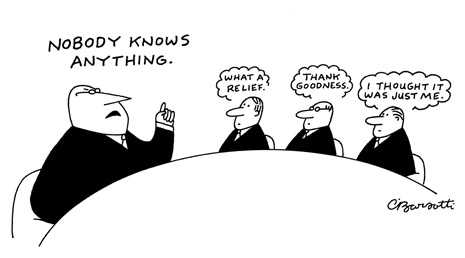
Although neural networks (collectors of massive amounts of data that then seek ‘meaningful’ patterns in that data that can be used to infer causality or at least correlation) have been around for years, most students of complex adaptive systems believe that complex problems (like global poverty, global warming, or lack of innovation in big business) can never be ‘solved’ because there are simply too many variables (perhaps an infinite number) to allow any kind of exhaustive correlation or useful predictive models to be built. The closest we can hope to get, most complexity theorists would tell us, is interventions that would have a positive impact. The complex problems that Gladwell’s subjects have addressed do have a lot of variables — the factors that determine popular opinion on a song or movie are myriad and often seemingly unfathomable — but the number of variables is finite. What’s more, the problem-solvers believed that, in the matters they were concerned with, a reasonably small number of variables (certainly a number manageable by today’s computer systems) were disproportionately responsible for a song or movie’s success or failure. And because we’re talking about a product, something that can be ‘put in a box’, the challenge of identifying these variables is less problematic than the challenge of, say, identifying all the variables needed to predict when and where the next major hurricane or pandemic disease will hit. One could say there are complex problems and there are complex problems, and some are more complex than others. Despite this, the designers of the ‘expert systems’ that are now being used to predict song and movie success — with remarkable precision — faced ridicule and rejection from sponsors and customers because of the prevailing belief that, when it comes to predicting these things, as movie mogul William Goldman put it, “nobody knows anything”. The key to neural network analysis, besides the computing power to do a lot of iterations with a lot of variables to look for patterns, is patience — when the first few hundred variables don’t pan out, you set them aside and look at a few hundred new ones, and keep adding until some pattern finally emerges. The variables used in the song success predictor involve the song’s structural components: melody, harmony, rhythm, beat, tempo, octave, pitch, chord progression, cadence, sonic brilliance, frequency and so on. The predictor, called Platinum Blue, has analyzed a huge number of songs of many different genres and found the same patterns that resonate with us in popular music can be found in classical and folk music from all different eras. Popular songs, it finds, fall into clusters — the variables of those songs, taken in aggregate, exhibit similar sets of patterns. The details, of course, are confidential. If a song falls outside these clusters, the designers of Platinum Blue can tell you which variables need to be changed, and roughly in what way, to get it back into the success strike zone, but beyond that it is up to the artist — how to change the composition is beyond the capacity of the predictor. But once the artist has made the changes, the predictor can tell whether the result is within one of the clusters, and how much the changes mean to the expected revenues from the song. The predictor’s greatest claim to fame is its prediction of enormous success for the CD “Come Away With Me” by then-little-known Norah Jones. What is most remarkable about Platinum Blue is its wonderful vindication of the talents of writers and composers: It predicts the success of the song regardless of its lyrics or performer, based only on its compositional qualities, its mathematical structure. A different group, Epagogix, has found the same thing applies to Hollywood film releases — the ultimate popularity and success of a film depends on the qualities of its composition, not on the ‘stars’ attached to it who get paid all the money. Plot lines, the ingredients of particular scenes, characters, and settings matter. That’s not to say that stars don’t get people into theatres, at least until word of mouth begins to prevail over advance billing. But Epagogix can tell you that if the stars want $40 million and the rest of the movie costs another $20 million, whether the $60 million investment will be a winning or a losing one. Epagogix analyzed the 2005 movie The Interpreter, which went through several massive and well-documented changes before it was finally released. It concluded that the changes had made a probable $33 million film into a $69 million film (within $4 million of the actual revenues), and then pointed out the ways in which it could, with relatively few changes and for very little additional investment, have become a $150 million-plus blockbuster. Epagogix analyzed another (unidentified) film and predicted would make $47 million as scripted and $72 million of three minor changes were made — the changes were not made and the film grossed $50 million. If you’ve seen The Interpreter (I haven’t) you can probably assess better than I can whether the changes they proposed would have made it a better film or not — and the authors of both Platinum Blue and Epigogix both assert that it’s not enough to have the right ingredients — the product has to work artistically as a whole as well, and no neural network system will tell you how to do that. What the neural network systems can’t do is identify and parse the variables to consider. That takes a combination of a knowledge of the art form, and how it’s appreciated by audiences, and also a great deal of imagination, to keep honing and refining and trying new variables until the ones that really matter start to emerge from the pattern matching. This is in some ways as much an art as the writing and making of a song or film itself. The Wisdom of Crowds is another type of neural network system, the difference being that the ‘crowd’ doesn’t explicitly identify the relevant variables it considers in rendering its judgement. The point is that the group using that wisdom is concerned with coming up with the ‘right’ answer (prediction, choice, critical information etc.) and not overly concerned with how the crowd came up with it. One WoC application, the Iowa Electronic Markets, predicted that Bush would win the 2004 election while most of the other expert predictors were saying Kerry would win. How did they know? Among the crowd they had knowledge of thousands of subtle, unidentified variables that individual experts could never know. We would be right to be skeptical of what we’re told about Platinum Blue and Epigogix. Despite what we’re told about their success, there is enough secretiveness about both projects that it is possible that both products are hoaxes, or at least much less accurate than their authors allege. But suppose they are the real deal? What other complex problems could similar neural network systems be applied to ‘solve’? As Gladwell points out, you could apply them to win at the racetrack, and perhaps even in the stock market. You could probably use them to devise the best possible new product design process. But could you use them to analyze all the education programs in the world and come up with the ideal curriculum for self-sufficiency and critical skills learning? Or all the health systems in the world to design a hybrid system that offered the best of all worlds? Or how about using them to develop a revenue-neutral tax system that would actually change behaviours to reduce greenhouse gases sufficient to end the threat of global warming? I’m not so sure, even if neural networks could solve some straightforward complex problems, that they’re up to the challenge of helping us grapple with the ‘wicked’ ones that have defeated us for centuries, and which even threaten our civilization’s demise. Even if it were possible to employ them to such ends, it would take a great deal of passion, patience, commitment and imagination to go along withan astonishingly sophisticated and massive pattern-seeking technology. But as one more tool in the Coping with Complexity toolkit, it sure couldn’t hurt. Image: NASA’s depiction of the neural network of a single plant. |
October 19, 2006
The Cause of Elephant Violence
![]() One of the reasons a lot of readers like my blog is that I summarize, synthesize, compact and distill the essence of long books and articles into short, digestible posts. It’s not often that I ask readers to read something long, word for word, and carefully. But today I’m going to do just that. You’ll need at least an hour to read Charles Siebert’s very long (10 magazine/web pages) article An Elephant Crackup in the NYT Magazine. But set that time aside and do it. I think you’ll find the investment worthwhile. I can’t pretend to summarize this remarkable analysis in a short post, so all I’m going to do is provide some key excerpts to pique your interest, and then tell you what I think its most important lessons are. I’m not going to try to capture the arguments and stories underlying those lessons — you’ll have to read the article to appreciate them. Siebert attempts to understand a recent global phenomenon: The huge increase in violence committed by elephants against humans, against other creatures in their ecosystems, and against other elephants: In “Elephant Breakdown”, a 2005 essay in the journal Nature, [psychologist Gay] Bradshaw and several colleagues argued that today’s elephant populations are suffering from a form of chronic stress, a kind of species-wide trauma. Decades of poaching and culling and habitat loss, they claim, have so disrupted the intricate web of familial and societal relations by which young elephants have traditionally been raised in the wild, and by which established elephant herds are governed, that what we are now witnessing is nothing less than a precipitous collapse of elephant culture.
The factors that precipitated this collapse are eerily and ominously similar to those that have shattered some of the most dysfunctional segments of modern human societies: This fabric of elephant society, Bradshaw and her colleagues concluded, had effectively been frayed by years of habitat loss and poaching, along with systematic culling by government agencies to control elephant numbers and translocations of herds to different habitats. The number of older matriarchs and female caregivers (or “allomothers”) had drastically fallen, as had the number of elder bulls, who play a significant role in keeping younger males in line. In parts of Zambia and Tanzania, a number of the elephant groups studied contained no adult females whatsoever. In Uganda, herds were often found to be “semipermanent aggregations”, as a paper written by Bradshaw describes them, with many females between the ages of 15 and 25 having no familial associations. As a result of such social upheaval, calves are now being born to and raised by ever younger and inexperienced mothers. Young orphaned elephants, meanwhile, that have witnessed the death of a parent at the hands of poachers are coming of age in the absence of the support system that defines traditional elephant life. “The loss of elephant elders,” Bradshaw told me, “and the traumatic experience of witnessing the massacres of their family, impairs normal brain and behavior development in young elephants.”…The elephants of decimated herds, especially orphans who’ve watched the death of their parents and elders from poaching and culling, exhibit behavior typically associated with post-traumatic stress disorder and other trauma-related disorders in humans: abnormal startle response, unpredictable asocial behavior, inattentive mothering and hyperaggression.
UCLA psychologist Allan Shore explains the consequences of this: “In the first years of humans as well as elephants, development of the emotional brain is impacted by attachment mechanisms, by the interaction that the infant has with the primary caregiver, especially the mother. When these early experiences go in a positive way, it leads to greater resilience in things like affect regulation, stress regulation, social communication and empathy. But when these early experiences go awry in cases of abuse and neglect, there is a literal thinning down of the essential circuits in the brain, especially in the emotion-processing areas.”
The result is psychological breakdown, first of individuals and then as it cascades, of whole packs and societies. Ugandan wildlife management consultant Eve Abe describes the parallels between the behaviours of displaced and orphaned humans and elephants victimized by violence during and since the time of Idi Amin: “The families there are just broken. I know many of them…All these kids who have grown up with their parents killed ’Äî no fathers, no mothers, only children looking after them. They don’Äôt go to schools. They have no schools, no hospitals. No infrastructure. They form these roaming, violent, destructive bands. It’s the same thing that happens with the elephants. Just like the male war orphans, they are wild, completely lost.”
Siebert goes on to tell the story of Misty, an elephant treated cruelly by American circuses for decades, as she is treated for both tuberculosis and a horrific case of post-traumatic stress disorder that caused her to become unmanageably violent. The story has a happy ending, and it’s a story that should be told to every child, and to every adult who believes animals are incapable of intelligent thought and profound feeling. It’s a story of tremendous hope and understanding. In fact, Siebert’s entire article will probably stay with you long after you read it, haunting you with its significance not only for what it tells us about our tragic modern disconnection from all-life-on-Earth, but for what it bodes for the future of our profoundly psychologically damaged species. Please, just read it, without judgement, and let yourself think about it, absorb it. Let it change you, as it did me. . . . . .
Wise men have often advised us to study the lessons of history to better understand how to cope with problems of the present. Now we have the opportunity to study objectively what happens when a species that has a peaceful, tens-of-millennia-old largely unchanged culture suddenly faces the breakdown of that culture as a result of stress, and learn what that means for our own species’ fragmenting and horrifically-stressed culture. I have posited that, in natural environments, as illustrated in the graphic above, human population increases with food availability, and decreases with prevalence of natural predators. Usually that keeps numbers of humans and other creatures in balance, a function of the carrying capacity of the land and the interconnectedness of the entire ecosystem and food chain. When numbers get too high, a stress response pulls them back down either by increasing vulnerability to disease, or in extreme cases, as a last resort, by increased violence against their own kind. This is, I believe, what is happening to elephants, which have been shown, in research like that in Jeff Masson’s When Elephants Weep, to be very intelligent and very emotional creatures (much like our species). The difference is that the stress is being caused not by an unnatural increase in numbers, but by an unnatural decrease in their livable habitat, due to relentless human encroachment. In a couple of generations, we are witnessing in a noble and gentle species, one that has thrived on this planet much, much longer than we have, the kind of psychological and social breakdown leading to self-destructive and massively violent behaviour that has taken tens of millennia to manifest itself in our own species, because in our case it occurred much more gradually. There are important lessons here. I hope enough people will take the time to learn them, ponder them, and act on them. Our willingness and ability to do so will be a measure of our humanity, and a barometer for our own species’ future health andsurvival. Thanks to my KM colleague Howard Deane for the link. |
October 18, 2006
Two Legal Outrages
Property Title Theft
The latest twist in identity theft is a variation called Property Title Theft. Here’s how it works: The criminal acquires some compelling evidence that they own your house or business property (corporations are not immune to this con). This can be done by hacking land titles records, or forging documents and then using them to register a transfer of title to your property, or by using phony ‘power of attorney’ documents (having someone impersonate a family member or signing officer of your company). The criminals generally prefer to do this on mortgage-free properties, because if there are other claims on the property there is a risk that, when the mortgage-holder is called to verify their consent to the transfer of title, they’ll blow the whistle on the scam. The irony is that if you own the property mortgage-free, and the land titles office thinks they’re talking to the owner or owner’s legal representative, there’s no way for you to find out about it until it’s too late. Now the criminal sells your property out from under you to an innocent third party, and disappears with the proceeds. And more than likely, the unsuspecting ‘buyer’ of your property takes out a big mortgage on your property to finance the deal. So now you’re out of house and home, and your property is saddled with a large mortgage, the innocent buyer is out the cash s/he put down on the property, and the mortgage company is out the mortgage funds. With the criminal long gone, which innocent party has to pay for the losses? That all comes down to local laws and legal precedent. Where I live, in Ontario, precedent is on the side of the innocent buyer and mortgagor. Put yourself if their shoes — if you bought or funded the purchase of a property and, having laid out the money, then discovered that it was ‘sold’ to you by someone who didn’t really own it, wouldn’t you think it unfair to just kiss your money, and dreams of home-ownership, goodbye? So that means as the true owner of the property, you’re out in the street. You are no longer the legal owner of your own home, and have received nothing for the ‘sale’. Even if you have title insurance, you get compensated for the value of the property in cash, but you’re still evicted from your own home. Outrageous, no? After recent investigations, a large number of Ontario real estate agents and real estate lawyers have been charged and/or disbarred for complicity in these crimes. In some cases they conspired in the frauds by putting through phony ‘quick-flip’ transfers of these properties at inflated prices (not hard to hide in the recent red-hot real estate market here), and using those phony prices as the bases to secure mortgages well in excess of the value of the property. In other cases, these agents have just been dupes taken in by genuine-looking paperwork or computer fraud. So what can you do? There are laws in preparation in some jurisdictions to shift the burden of loss from the ‘seller’ to the ‘buyer’ and mortgagor, but that merely ruins the life and livelihood of a different victim of the fraud. There is no simple answer. Title insurance will keep you financially whole, but won’t save you losing possession of your house or business property. Registering a line of credit secured by your house with a financial institution (which would have to be notified if the house was sold) might work, depending on how diligent the bank offering the line is about questioning changes of ownership or new charges against the property. Doing an annual title search and an annual personal credit search might turn it up, if your timing is right, especially if identity theft is also involved. But, alas, in this big modern high-tech impersonal world, there is no sure-fire way to prevent this crime. Bush’s New Xenophobic Detention & Torture Law That means that, as a Canadian, if I am visiting the US, or just passing through a US port, I can be arrested and sent to Guantanamo or any of the other secret US/CIA prisons abroad, without charge, or access to lawyers, and tortured for the rest of my life, on the say-so of any little American bureaucrat who decides he doesn’t like the look of my face. My only right would be to, eventually, have my ‘case’ heard by a closed-door military kangaroo court. I could go through what my countryman Maher Arar went through, and it would be completely ‘legal’. The new law has already been applied to challenge hundreds of lawsuits filed by tortured and illegally detained prisoners in Guantanamo, as Bush tries to have the new law applied retroactively to ‘legalize’ its previous illegal acts. The new law also poses a huge threat to US troops and citizens overseas. Any country that basically strips foreigners of the right of due process, and deprives them of Geneva Convention rights, can fully expect to have its citizens treated with the same contempt and disregard for their rights by foreign countries, especially those that are not particularly fond of the US government to begin with (and the number of such countries swells by the day under the Bush regime). Outrageous. It is chilling that a large majority of US law-makers support this barbaric, xenophobic law, and the endlessly abusive treatment of illegally confined prisoners, nearly all of them innocent, that has gone on since 9/11. Foreigners traveling or stopping down in the US, or even thinking of going there for a weekend shopping trip — be very afraid. |
October 17, 2006
How Knowledge Drives Innovation
![]() This article is a summary of a 45-minute presentation I’m now offering to various conference audiences. A couple of years ago, I shifted the focus of my consulting business from knowledge management (for which executive enthusiasm is definitely on the wane) to innovation. It didn’t take long before I realized the two are inseparable: Knowledge and imagination are the primary drivers of innovation in organizations. This article shows the connection between knowledge and innovation, and why KM competencies and capacities are essential to any organization aspiring to be innovative. I should probably start with a definition of innovation. Mine (adapted from the Doblin Group’s) is:
The world’s most innovative companies, such as WL Gore, have created processes, systems, practices, and organizational structures that enable them to innovate continuously, as part of their organizational culture. Such companies are, alas, few and far between. But they are also, not coincidentally, among the world’s most knowledgeable companies: knowledgeable about how the world works and what’s happening in markets and sciences and arts far removed from their core business. They are less concerned with what is happening in their own markets and industries because they are leaders — their competitors are constantly kept off-guard by their innovations and struggling to know what these innovators know. Copycat products, repackaged products and incremental improvements are not innovation. This chart summarizes the high-level complex-system innovative process (understanding; engaging customers, co-workers and communities; organizing; imagining; designing; experimenting; realizing; and, throughout these other seven steps, continuously paying attention, listening, observing, exploring, discovering, inquiring and canvassing) that most innovative companies use. Knowledge continually informs each of these eight steps in the process. This chart contrasts the information flow in traditional organizations (top) versus innovative organizations (lower graphic). Innovative organizations are constantly scanning broadly for new ideas that can be adapted for innovative purposes. Their ‘information professionals’ job is to ‘make sense’ of the information from both primary (interviews and surveys) and secondary (Internet and information media) sources. These organizations share what they learn as a matter of course, in the knowledge that sometimes brilliant innovations come from serendipitous learnings. And these organizations engage their customers in continuous dialogue, to co-develop solutions through a knowledge exchange of needs and ideas. The graphic at the top of this articles represents the knowledge-powered innovation process we helped put in place at one of our clients. This client was facing fierce competition from inexpensive offshore manufacturers, and they knew that if they didn’t innovate they would die. The process includes these twelve key components, most of which are knowledge-driven:
The final step in the innovation process is the rigorous stage-gating process (to ensure the ideas, no matter how intriguing, are strategic and economically feasible), and an equally rigorous commercialization process, to take the successful ideas from the drawing board into reality and operation. I think it’s pretty clear that good knowledge processes and resources are not only advantageous, but absolutely essential, to most of the twelve innovation activities described above. |
October 16, 2006
Ten Ways to Take Better Care of the Land


![]() I attended a free seminar today on Stewardship: Caring for Your Land, put on by the Oak Ridges Moraine Foundation and the local Conservation Area authorities. It wasn’t enough to overcome my discouragement at being able to stave off suburban sprawl and pollution in our currently idyllic Caledon, but it was educational. Here are ten things I learned, lessons that, at some scale or other, all of us can use to make the piece of land we call home a little more natural, more inviting to wildlife, and a healthier place to live:
|
October 15, 2006
How Do You Keep the Music Playing?
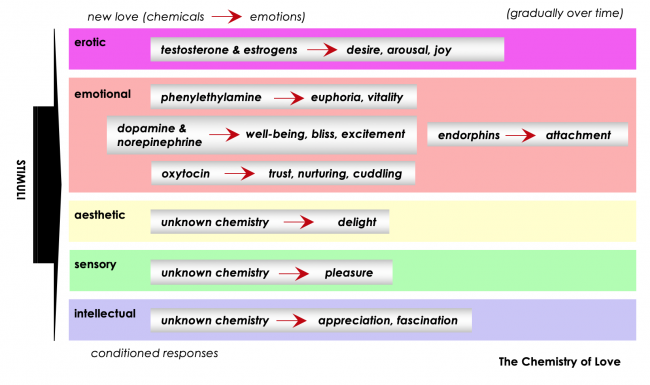
| Maybe it’s the season, but a lot of the relationships of people in my social circles seem to be falling apart these days. Ever since I started reading Tom Robbins’ books, I have been struck by the enormous challenge that he describes in many of his books: How to make love last.
At the time, I wrote this about Robbins’ article: Robbins says the epitome of Crazy Wisdom is the cat. I have seen cats of all ages, cats of amazing wisdom and style who otherwise show themselves to be cunning and astonishingly self-sufficient, chase a piece of string dragged by a child around the house for an hour or more, indefatigably and with enormous concentration, creativity and energy. What is the purpose of this unexpected playfulness? Is this the cat’s way of discharging the tension and anxiety that preoccupies her more sombre and sober moments? Is it her way of teaching the child (or the adult, since I get great pleasure from such games, at least until some intrigued child coaxes the string away from me to learn more about this magic trick) important lessons about instinct, about reflexes, about strategy, about the need for play, and a hundred other lessons we are too besotted with Weltschmerz to appreciate?
Perhaps that rediscovery of playfulness is also the secret to making love last. Expecting us to love one person forever, come what may, is demanding a lot of us, and arguably unnatural. Popular music is full of references to this challenge: You’re here, what if you weren’t, what would have happened to me?
Look at us baby, up all night tearing our love apart
Aren’t we the same two people who lived through years in the dark? Every time I try to walk away something makes me turn around and stay And I can’t tell you why. Nothing’s wrong as far as I can see; we make it harder than it has to be. – The Eagles, I Can’t Tell You Why First you make believe I believe the things that you make believe
and my favourite:
How do you keep the music playing? How do you make it last? Lots of wishful thinking but no magic secrets there. The advice we often get is not particularly encouraging: It takes a lifetime of hard work. You have to compromise, not expect too much. You need to be forgiving. You need to give space. When I was younger, breakups were tempestuous, and usually provoked by an indiscretion. But now, its just as if the force of gravity that held couples together has been repealed, and they’re just drifting apart. Relationships are ending not with a bang, but with a whimper. Perhaps this is nothing new. Maybe it’s been going on for generations and its just that, when you reach a certain age, you start to notice it, you see through the thin veneer and pick up on the signals and tones of estrangement. The pragmatist in me says that you don’t try to “keep the music playing” — when the music stops, you acknowledge its end to your dancing partner and move on. The idealist in me says that the problem isn’t trying to make feelings of love with one person last, it’s that we don’t love enough people throughout our lives so that, when one love wanes, there are dozens of others to keep us loving. Because I do believe that without love we are nothing. If we loved more people, freely, openly, would we feel less grief at the loss of love from one person? I’m not so sure. We might, however, be able to cope with that loss better, because we would see and feel love as an abundant and indefatigable resource. In our terrible modern world where love is treated as a scarce resource, jealously guarded and limited to one person at a time (and in some societies, to one person in a lifetime), its loss is inevitably more profound in its impact on us. Here’s an analogy: People with enormous financial wealth don’t worry much about losing a small part of it. People with no wealth at all, when they acquire something briefly and easily, don’t worry about losing it — easy come, easy go. It’s those people who have just a little wealth, acquired with difficulty and all tied up in one thing, who feel the greatest stress and grief and sense of loss when it suddenly disappears. Is it the same with ‘emotional wealth’? Is that why some people who have lost love become unable, or refuse, to love again? What do you think? How do you keep the music playing? Is more playfulness the answer, and if so, how do we engender that? Is it even important to keep the music playing? And do you see “half the couples you know disbanding” (disengaging psychologically if not legally), or is it justme? Cartoon: By Peter Steiner from The New Yorker, in the Cartoon Bank. |
October 14, 2006
Links for the Week – October 14, 2006
![]() This week, nine articles/videos that are hard to categorize, but very important in what they tell us about how the world works and what we can do to understand and cope with it better. Presenting Single Frames Onscreen: Idiagram produces single frame diagrams (an entire presentation, that would usually be represented with a whole series of graphics and slides, is captured in one massive graphic) online in such a way that, when you scroll over each of the elements of the overview graphic (top image above), the details of that component of the process appear (bottom image above). The challenge with single frames is that they can fill entire walls of a room, so they couldn’t be displayed on a computer screen — until now. This particular single frame is about coping with complexity, and, though I don’t agree with the authors’ overall view on this, the ‘implement’ part represented by the lower image above is right on. Thanks to Anecdote for the link.Complex Decision-Making in Action: Driving in India: Also from Anecdote, a fascinating video showing the tacit rules for driving in India’s bustling city streets (read the user comments below the video for an explanation of the ‘rules’). It’s a self-managed system for coping with complexity and, surprisingly, it works. YouTube and Google Video Show What’s Really Happening in Iraq & Afghanistan: As reported in the NYT, YouTube and Google Video (soon to be one combined service) is a good place to find videos of what life is like in the war-torn world, including insurgent attacks on US and NATO forces. But self-censorship is rearing its ugly head, with Google taking down videos when people who can’t handle the truth (or propaganda that is not US government propaganda) complain. Last Nail in the Coffin for the US Environment: As if the Bush Administration’s anti-environment stance, deregulation and non-enforcement of existing regulation wasn’t bad enough, local ‘property rights’ groups, with the support of an anti-government judiciary, are enacting laws that make it impossible (illegal, in fact) for government to enforce any environmental regulations that affect private property or private property values in any way. So even if the US does elect a government that cares about environmental protection, it will be unable to re-enact or enforce environmental regulations. The Tipping Point: A Visual Demonstration: A wonderfully-crafted and moving YouTube video about ‘free hugs’ shows how public sentiment reaches a tipping point and then shifts dramatically as a result of it. Google is censoring this one too, so catch it while you can. Thanks to Kenn Melvin for the link. Why People Watch Reality TV: In response to my question in a recent post on why people watch this crap, Craig De Ruisseau points us to this survey in Psychology Today. If they’re right, it’s even worse than I thought — not only do people find watching others get humiliated entertaining, they long to be famous (and humiliated) themselves. Sounds like masochism to me (but then so does voting for Bush). Another Encouraging Research Result for Probiotics: The CBC reports on another study supporting the value of probiotics (essentially, ingesting selected bacteria to replace the bacteria thatnormally live and process food in your gut) in treating inflammatory bowel diseases (I have ulcerative colitis) and related auto-immune hyperactivity diseases. This report is more positive than an earlier CBC report. Thanks to Doug Alder for the link. MRSA, The Latest Epidemic Disease You’ve Never Heard of: Also from Doug, another report on MRSA, the flesh-eating bacterial disease that resists antibiotic treatment (thanks to our society’s absurd overuse and over-prescription of antibiotics). The Wired report notes that MRSA is now responsible for half of all skin infections treated in U.S. emergency rooms. The CBC is also reporting on this epidemic. Lou Dobbs on the Disenfranchisement of the Middle Class: CNN’s Lou Dobbs vents anger at corporatist control of the US and how it has disenfranchised the middle class. Thanks to Dale Asberry for the link. |
October 13, 2006
Weblogs — Why They’re Still Not ‘Happening’
![]() My blogging process. The Zahmoo blog, champion of a story-telling-based bottom-up change process called Most Significant Change, is asking bloggers to explain the Most Significant Change that has resulted from their blogging activity since they started blogging. But what I think is most significant is all the changes that have not occurred despite the explosion of weblogs and attention given to them:
Many, probably most, blogs are either (a) channels to specialized non-weblog information (via hotlinks) — the vast majority of links in blog articles are not to other blogs, or (b) personal conversations among a small, close-knit group of people, on subjects of no lasting import. Despite the fact that blogs get high Google-rank on subjects they write about, this does not appear to be creating important or broad new audiences for bloggers — the average visitor to a blog stays around for only 90 seconds, and those that arrive via Google searches stay on average only a fraction of that time. If a virus were to wipe out all traces of the blogosphere tomorrow, the sad truth is that most people wouldn’t care or even notice, and what people do and think wouldn’t significantly change. Maybe that’s why so many people think blogging is just a fad, something that will soon disappear and be forgotten. It’s not essential to anything. Weblogs, like iPods, fill a want, not a need. It’s certainly possible for a want to evolve into a need, but I don’t think that’s happened with weblogs, yet. Any of three things might change that:
Any of these three possible evolutions of the lowly blog would, I think, change weblogs from being a tool for amateur hobbyists into a professional information management tool with powerful commercial application, a tool that fills a real need instead of just a want. The more commonly-discussed evolution of blogs into multimedia sites that offer ‘programs’ instead of ‘posts’ would not, I would suggest, significantly increase the value or visibility of blogs — as YouTube has shown, you don’t need a blog to get a lot of attention for your video. And I think it’s naive to hope that most users of the mainstream media will ever get so disgusted with the lack of investigative reporting, courage, independence and quality of these media to take the time to look for something better in blogs — most readers are just not that discriminating, and don’t care that much about whether they’re getting the truth, or the whole story, or not. Until one of the three evolutions above occurs, we’d be wise not to give up our day jobs or pin our egos to the success of our blogs. It’s getting harder and harder to find the good stuff in the ever-growing firehose of stuff in the blogosphere, and to get our voices heard. When one of these evolutions occurs, then we’ll have a Most Significant Change to write about blogging. So far, however, what’s mostsignificant is how little has really changed. |
October 12, 2006
How to Cope With Bad Environmental (or Other) News
![]() Yesterday I wrote about talking to children about death, and helping them cope with the news of the death of a loved one. A couple of readers said I should write about how adults can cope with bad news in general, and specifically, since this blog is often about environmental matters, how to cope with the relentless barrage of bad news about the environment. I’m learning to manage stress, including chronic stress, but horrific and unceasing waves of bad news are more than just stressful, they can, after a while, fill you with grief. And I wasn’t sure I could proffer any advice about this, since I’ve long struggled with my own sense of unbearable grief about Gaia. Grief, it seems to me, combines a feeling of great sadness or regret over loss with a feeling of helplessness to prevent its recurrence and/or hopelessness that we can ever be truly happy again because of it — not knowing how to cope with the sense that there was nothing we could have done to prevent this loss (or worse, that there was, and we didn’t do it). When you get the toxic cocktail of negative feelings — loss, helplessness, hopelessness and selg-loathing, it is hard to avoid reacting in inappropriate, unhealthy ways that reflect the stages of grief:
So what can we do to avoid reacting to relentless bad news in one of these six ways? Perhaps the best place to start is with an awareness of how our bodies are reacting, and an awareness of the emotions we are feeling. Our bodies react in visceral, instinctive, somatic ways that, over time, can actually cause severe and chronic physical illness. These physical, and our emotional, reactions to bad news are entirely natural, and we should not set ourselves the unreasonable objective of being able to ‘overcome’ them. For three million years the kind of ‘bad news’ we faced was the sudden presence of a predator who threatened to kill us or our loved ones. Our intuitive, largely subconscious reactions to such threats were very effective in generating the ‘fight or flight’ response that, in an evolutionary sense, was entirely appropriate and effective in mitigating that threat. These extreme reactions lasted only a short time, until the threat had passed. They were not chronic. But if the threat turned out to be lethal — a loved one was killed and eaten — then that effective ‘fight or flight’ response would become a debilitating traumatic response. Why would nature have endowed us to respond in this very negative, debilitating way to the loss of a loved one? Surely it could not convey any evolutionary advantage? Well, perhaps it could: Nothing leads us to appreciate life more than the realization of its fragile and temporary nature. “What doesn’t kill us makes us stronger”. We love the others who remain behind even more after such a loss, and protect them more. It is only when the loss leaves us utterly alone, with no one else we love remaining, that we tend to give up. In nature those in that situation are generally unhappy, vulnerable, and, of course, unable to procreate — so it may make sense for those left so alone to sacrifice themselves, to allow themselves to become food for those not so alone. That would be an effective evolutionary survival formula for the ecosystem as a whole. Of course, in modern human civilization, there is no such evolutionary advantage in such responses. But our civilization is simply too new to have allowed our bodies and emotions to adapt and manifest more appropriate responses to grief. And the firehose of modern communications allows us to feel that loss daily, so the trauma and grief become chronic. So one method of coping, I think, is to be aware of our emotions and how our bodies are reacting and to appreciate that this is an entirely natural, explicable response. Self-knowledge gives us back a bit of understanding and control, and that’s a good thing. Another important way of coping is learning to be more resilient so that when we do have these reactions we are able to recover from them more quickly and completely. The stress management techniques I’ve talked about in other articles — meditation, avoiding vexatious people, jobs and situations, self-hypnosis, a healthy, stimulant-free diet, exercise, healthy work habits, massage and physiotherapy, healthy sex, lots of social contact and social activities, generosity activities, play and fun, music, spending time in nature etc. can all help us prepare for bad news and be more resilient when it occurs. Perhaps another way of coping is to deliberately minimize our exposure to bad news that is not actionable. When there is something we can do about a bad news story — the modern equivalent of an immediate ‘fight or flight’ response — and when we do it, then the action usually has a cathartic benefit and our grief will likely be minimal. I’ve stopped reading most environmental news except for local stories, and even then I will only read about local environmental problems if I know I’m prepared to act to do something about them. The only other ways of coping I have found are social: Talking it out with sympathetic others so your grief isn’t bottled up inside. Keeping your sense of humour and exercising it with others at every opportunity. Learning something new, ideally with or from someone else. Accepting help from others and offering help to others. And, when you’re acting to do something about a local environmental or other problem, doing so with others. Being aware of and understanding our physical and emotional response to grief, building up our resilience, minimizing exposure to unactionable bad news, and engaging in lots of social coping activities — all of these can help mitigate the sorrow and damage that bad news can produce in our modern society. They can reduce its intensity and duration, but they won’t deaden us to it. And I think that’s a good thing. We can’t numb ourselves to pain without also numbing ourselves to joy. This is an incomplete solution, I know. What other techniques have you found that help you cope with regular, relentlesslybad news? And if you’re a believer in prayer then, as James Taylor says in his song Gaia, “For God’s sake say one for me — poor wretched unbeliever.” |


In last week’s New Yorker, Malcolm Gladwell describes the neural network systems that have been designed, by two independent groups, to address two complex commercial problems: predicting the success of a new popular song, and predicting the success of a new movie. The article is called 

Property Title Theft

A couple of years ago, Robbins wrote an article in Harper’s called